
Getting a house ready to sell can feel like a long list of projects, but decluttering is one of the most practical places to begin. These Southern Maryland home decluttering tips can help you prepare your rooms for listing photos and showings while getting an early start on the packing you will eventually need to do.
The goal is not to make your home look empty. It is to reduce distractions, make everyday spaces easier to see, and create a home that is easier to keep ready when buyers schedule a showing.
Here is a room-by-room approach for homeowners preparing to sell in St. Mary's, Calvert, and Charles counties.
Why Decluttering Matters Before Listing Your Home
Decluttering and cleaning serve different purposes. Cleaning takes care of dirt, dust, fingerprints, and other signs of everyday use. Decluttering determines what should remain visible in the first place.
The National Association of REALTORS® includes decluttering and depersonalizing among the steps sellers can take before showings. Its seller guidance also recommends clearing kitchen and bathroom counters and putting away everyday items.
For sellers, that makes decluttering useful at several stages of the process:
-
Listing photos have fewer unnecessary objects competing for attention.
-
Buyers can more easily see countertops, floors, closets, and other features.
-
Rooms can be easier to maintain between showings.
-
Packing begins before moving week arrives.
Start before the photographer or first showing is scheduled whenever possible. That gives you time to make deliberate decisions instead of simply moving clutter from one room to another.
Start With a Keep, Donate, Sell, and Discard System
Trying to organize an entire house without a system can turn into moving the same belongings from room to room.
Instead, sort items into four basic categories:
Keep: Items you regularly use and want accessible while the home is listed.
Donate: Usable belongings you no longer need.
Sell: Items worth selling when you have enough time to handle the process.
Discard or recycle: Damaged, expired, unusable, or recyclable items that should not make the move.
Add a fifth category for items you want to keep but do not need before moving. Pack those items now and label the boxes clearly.
This method is particularly useful for seasonal decorations, extra cookware, books, collectibles, out-of-season clothing, and rarely used household items.

Southern Maryland homeowners also have local resources for dealing with unwanted belongings. St. Mary's County maintains reuse and recycling information, while Charles County maintains a reuse directory for organizations accepting different types of usable items. Calvert County provides current guidance on materials accepted at its convenience centers and landfill. Always check current acceptance requirements before loading the car.
Declutter the Rooms Buyers Notice Most
You do not have to tackle your entire house at once. Work room by room, finishing one space before starting another.

Kitchen and Pantry
Kitchen counters tend to accumulate small appliances, mail, charging cables, paperwork, bottles, and everyday supplies.
Start by clearing items that do not need to stay out. Keep the appliances you use regularly, but consider packing specialty equipment and duplicates.
Then move inside the cabinets and pantry. Remove expired food, mismatched containers, duplicate utensils, and anything you know you will not move.
The objective is organization rather than completely empty storage.
Before a showing, NAR recommends clearing kitchen counters and neatly storing unnecessary items.
Living and Family Areas
Living areas can collect furniture, electronics, toys, books, photographs, decorations, and hobby supplies.
Look at each room based on its main purpose. If extra furniture makes it difficult to move naturally through the space, consider storing or removing pieces you do not currently need.
Pack excess decorations and collections. Organize cords and chargers. Put loose everyday items into designated storage rather than creating piles.
Personal photographs do not necessarily need to disappear completely, but reducing highly personal collections and excessive décor can put more attention on the room itself.
Bedrooms and Closets
Closets deserve attention because buyers may look inside them.
Start with clothing you have not worn recently, followed by out-of-season items, extra shoes, unused luggage, and duplicate linens. Pack what you want to keep and donate appropriate items you no longer use.
Avoid solving bedroom clutter by stuffing everything into a closet. That simply relocates the problem.
For bedrooms, clear unnecessary objects from nightstands and dressers, organize visible belongings, and make it easy to maintain the room during the listing period.
Bathrooms
Bathroom counters can become crowded quickly.
Keep daily necessities together in a small container or basket that can be stored before a showing. Remove expired toiletries, nearly empty bottles, excessive products, and extra towels you do not need.
Prescription medications should be securely stored rather than left accessible during a showing. NAR's current seller checklist specifically recommends putting prescription medications and valuables away.
Don't Forget the Garage, Basement, and Storage Areas

One of the easiest decluttering mistakes is moving everything from the house into the garage.
That may improve the living room, but buyers can still see the garage.
Use the same keep, donate, sell, and discard system in storage areas. Pay particular attention to:
-
Empty moving boxes
-
Broken tools
-
Old sporting equipment
-
Unused outdoor furniture
-
Excess building materials
-
Unneeded seasonal decorations
-
Old electronics
-
Paint, chemicals, batteries, and other materials requiring special disposal
Do not put hazardous household materials into regular trash without checking local requirements.
For example, Calvert County publishes specific guidance on accepted materials and notes that certain household hazardous waste is handled on scheduled collection dates. Charles County similarly provides guidance for chemicals, oil-based paint, batteries, pesticides, and other household hazardous materials.
Checking the appropriate county resource before disposal can save an unnecessary trip and help ensure materials are handled correctly.
Declutter With Listing Photos and Showings in Mind
Once the major sorting is finished, walk through the house as if you were seeing it for the first time.
Look for surfaces that have gradually become storage areas: the kitchen island, dining table, bathroom vanity, entry table, stair landing, and top of the refrigerator are common examples.
For listing photos, pay particular attention to what will be visible rather than simply what is clean.
Consider removing:
-
Loose papers and mail
-
Excess countertop appliances
-
Refrigerator magnets and paperwork
-
Visible charging cables
-
Excess toiletries
-
Cleaning products
-
Pet supplies when practical
-
Overflowing baskets
-
Excessive decorations
Also think about privacy and security before buyers enter the property. Secure jewelry, financial paperwork, medications, electronic devices, collectibles, and other valuables. NAR recommends securing valuables and prescription medications before showings.
Once the house is ready, establish a simple showing routine. A designated basket or container for everyday items can make it easier to clear counters without starting the decluttering process again each time.
What Should You Do With Everything You Remove?
Decluttering creates a second challenge: deciding where everything goes.
For items you are keeping, clearly labeled moving boxes can work well. If boxes begin taking over living areas, consider whether another secure storage option makes sense for your situation.
For usable belongings you no longer need, local reuse resources may help.
St. Mary's County encourages reuse before recycling or disposal and maintains information about organizations accepting reusable items. Its source-reduction guidance also recommends donating usable household items, clothing, and appliances rather than throwing them away.
Charles County's Reuse Directory lists organizations and the categories of items they accept. The county recommends confirming requirements with the organization before delivering materials.
Calvert County residents can use the county's solid waste and recycling resources to determine which materials are accepted and where.
Acceptance policies, locations, and schedules can change, so verify current requirements before making a drop-off.
What Comes After Decluttering?
Decluttering is an early step in preparing a Southern Maryland home for sale, not the entire preparation process.
Once excess belongings are removed, it becomes easier to see where the property may need additional attention.
Your next steps may include:
-
Deep cleaning the interior.
-
Completing appropriate minor repairs.
-
Touching up areas that show normal wear.
-
Cleaning windows and improving available natural light.
-
Preparing exterior areas and the entry.
-
Deciding whether additional staging would help present particular rooms.
-
Preparing the home for listing photography.
This is also a good time to discuss the property with a local real estate professional. The preparation priorities for one home may be different from another, and it can be useful to identify which projects deserve attention before spending time or money on them.
Homeowners who are considering a sale can also review The Southside Group Real Estate's Southern Maryland seller resources as they plan their next steps.
Southern Maryland Seller Decluttering Checklist
Before scheduling listing photos or showings, walk through the property one final time.
Kitchen
-
Clear unnecessary items from counters.
-
Organize the pantry and cabinets.
-
Remove expired food.
-
Pack rarely used appliances and cookware.
Living areas
-
Remove unnecessary furniture.
-
Pack excess décor and collections.
-
Organize electronics and cords.
-
Clear tables and other visible surfaces.
Bedrooms
-
Clear dressers and nightstands.
-
Pack out-of-season clothing.
-
Organize closets.
-
Remove items stored unnecessarily on floors.
Bathrooms
-
Clear counters.
-
Organize toiletries.
-
Remove excess linens.
-
Secure medications.
Storage areas
-
Sort garage and basement belongings.
-
Donate usable unwanted items.
-
Recycle appropriate materials.
-
Check county requirements for hazardous or specialty waste.
Before photos and showings
-
Put away everyday clutter.
-
Secure valuables and private documents.
-
Check kitchen and bathroom counters.
-
Make beds and straighten rooms.
-
Do a final walkthrough from a buyer's point of view.
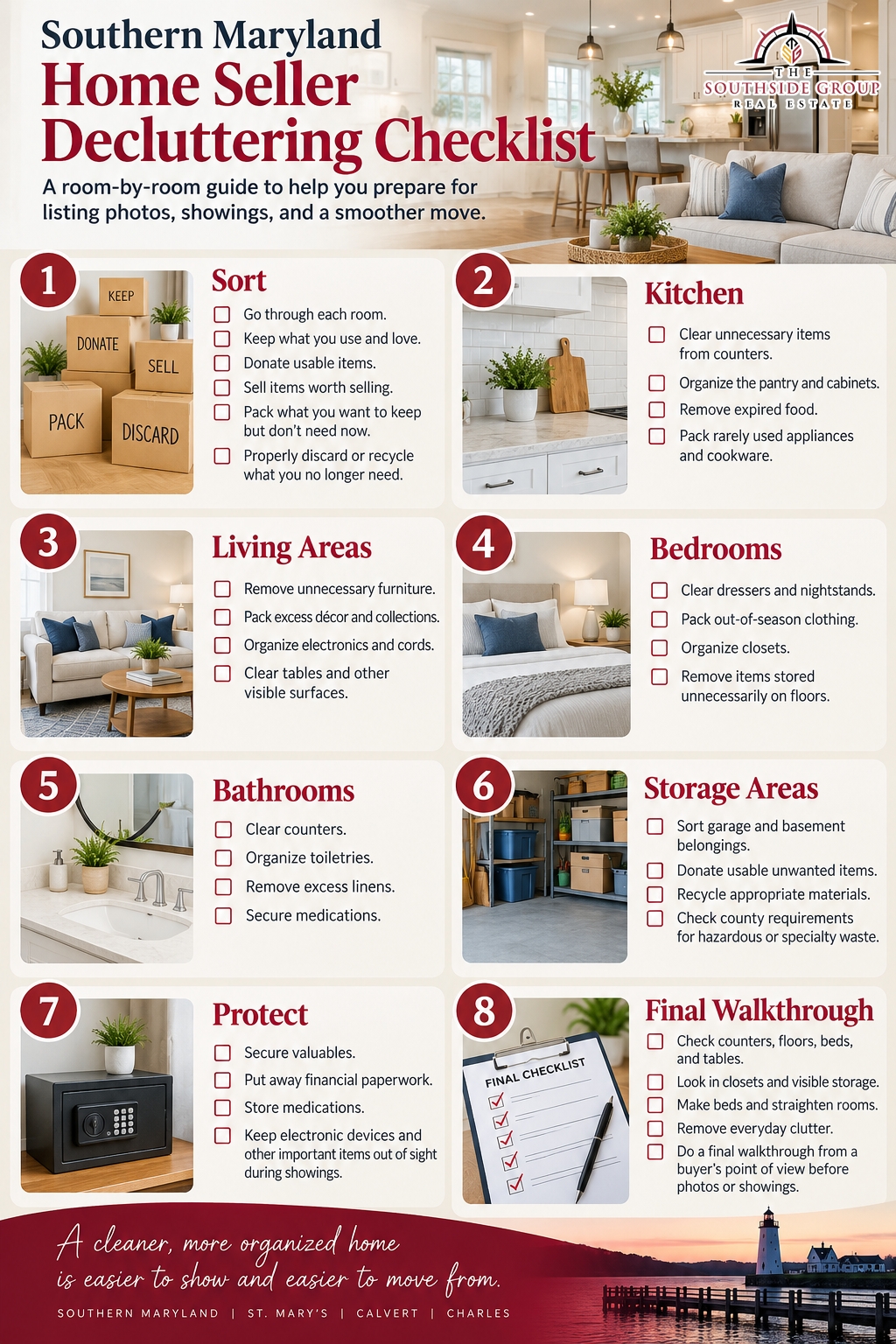
You do not need to create a completely empty house. Focus on making the property orderly, manageable, and ready to present while reducing the amount you will eventually need to move.
Frequently Asked Questions About Decluttering Before Selling Your Home
How much should I declutter before selling my house?
Focus on excess belongings, crowded surfaces, unnecessary furniture, overflowing storage, and items you will not need before moving. The goal is not an empty home. It is an orderly property where buyers can easily see the rooms and their features.
Should I empty my closets before showing my home?
No. A completely empty closet is unnecessary. Remove items you do not regularly use, pack out-of-season clothing, and organize what remains so the storage area can be viewed without excessive clutter.
Where should I put my belongings while my house is for sale?
Pack items you want to keep but will not need during the listing period. Depending on how much you remove and the storage available in your home, you may choose a secure off-site storage option rather than filling the garage or basement with boxes.
Should I declutter before having listing photos taken?
Yes. Decluttering before photography helps remove distracting objects from countertops, floors, tables, and other visible areas. It also means you will not have to repeat the same large-scale cleanup before the first showing.
Preparing your home for the market involves more than cleaning up before photos. If you're considering selling in St. Mary's, Calvert, or Charles County, The Southside Group Real Estate can help you think through the steps that make sense for your property. Explore our Southern Maryland seller resources or request a home valuation when you're ready to start planning.
FROM OUR BLOG


Charles County Community Events | October 1–4, 2026
Charles County events this weekend offer plenty of ways to welcome October throughout Waldorf, White Plains, Indian Head, Marbury and other communities across Southern Maryland. From October 1–4, 2026, the calendar includes seasonal craft shopping, pumpkin-patch adventures, live jazz, educational ac

St. Mary’s County Community Events | October 1–4, 2026
St. Mary’s County events this weekend are bringing fall fun to Leonardtown, Mechanicsville, and communities throughout Southern Maryland from October 1–4, 2026. If you’ve been searching for things to do in St. Mary’s County this weekend, this is a busy start to October. The calendar includes Leonard

Understanding Real Estate Commissions: Maryland Buyer FAQs
Real estate commissions in Maryland can feel confusing for home buyers, especially after recent changes to how buyer-agent compensation is discussed and documented. If you're planning to buy a home in Southern Maryland, understanding your agent's compensation before you start touring homes can help