
Owning a home in Southern Maryland comes with plenty of responsibilities, but some of the most expensive repairs start with maintenance tasks that are easy to overlook. A clogged gutter, a slow plumbing leak, or a neglected HVAC system might seem minor today. Left unaddressed, these problems can turn into extensive repairs.
Understanding Southern Maryland home maintenance mistakes can help homeowners protect their property, avoid unnecessary expenses, and prepare for future resale.
Whether you own a home in St. Mary's County, Calvert County, or Charles County, preventative maintenance deserves a place in your annual budget.
Here are ten common mistakes worth avoiding, along with practical steps you can take to protect your investment.
Why Home Maintenance Matters in Southern Maryland
Southern Maryland homeowners deal with a combination of humid summers, seasonal storms, heavy rainfall, and occasional freezing temperatures.
These conditions can affect roofs, foundations, crawl spaces, siding, plumbing, and heating and cooling systems.
Homes in communities such as Leonardtown, Prince Frederick, and Waldorf can have different maintenance needs depending on their age, construction, drainage, and surrounding landscape.
For example, a home with a vented crawl space may require a different moisture-management approach than one built on a concrete slab. Properties surrounded by mature trees may also need more frequent gutter inspections.
The key is identifying small issues before they spread into other parts of the home.
The 10 Home Maintenance Mistakes That Can Lead to Expensive Repairs
1. Ignoring Clogged Gutters and Downspouts
Gutters direct rainwater away from your roofline and foundation. When leaves, pine needles, and debris accumulate, water may overflow into areas it was never intended to reach.
Potential consequences include damaged fascia boards, deteriorating exterior trim, basement moisture, and soil erosion near the foundation.
How to prevent it: Inspect gutters regularly, especially after major storms and during the fall. Remove debris and make sure downspouts discharge water away from the house.
Homes beneath large trees may need additional attention throughout the year.
2. Putting Off Minor Roof Repairs
A missing shingle or deteriorating flashing might not seem urgent when there is no visible water inside the house.
However, roof leaks can develop gradually. Water may enter the attic, damage insulation, stain ceilings, or contribute to wood deterioration before the homeowner notices.
How to prevent it: Check for visible roof damage from the ground after severe weather. Look for ceiling stains, damp attic materials, or signs of water near roof penetrations.
Have a qualified roofing professional inspect suspicious areas rather than climbing onto a potentially unsafe roof.
3. Neglecting HVAC Filters and Routine Servicing
Southern Maryland's hot, humid summers and colder winter periods put heating and cooling systems to work throughout the year.
Dirty air filters can restrict airflow, while neglected equipment may operate less efficiently or develop problems that could have been caught during routine servicing.
How to prevent it: Check your HVAC filter according to the equipment manufacturer's recommendations. Replace it when necessary and schedule professional servicing appropriate for your system.
Pay attention to unusual noises, reduced airflow, inconsistent temperatures, and unexpected changes in system performance.
The U.S. Department of Energy's HVAC preventative maintenance guidance provides additional information about maintaining heating and cooling equipment.
4. Overlooking Crawl Space and Basement Moisture
Moisture is one of the most important maintenance concerns for many Southern Maryland properties.
Crawl spaces and basements can experience damp conditions caused by groundwater, plumbing leaks, drainage problems, or humid air.
Persistent moisture may contribute to mold growth, damaged insulation, wood deterioration, and poor indoor environmental conditions.
How to prevent it: Look for standing water, musty odors, condensation, and visible staining. Address the source of moisture rather than simply covering up the symptoms.
Depending on the construction, appropriate solutions may involve drainage improvements, vapor barriers, dehumidification, or professional evaluation.
The EPA's guide to mold and moisture in your home explains why controlling moisture is essential.
5. Ignoring Small Plumbing Leaks
A dripping pipe beneath the kitchen sink or a slow leak behind a bathroom fixture can cause more damage than homeowners expect.
Water may gradually affect cabinets, subflooring, drywall, and nearby building materials.
Hidden leaks can be especially troublesome because the damage may spread before becoming visible.
How to prevent it: Periodically inspect accessible plumbing beneath sinks, around toilets, behind washing machines, and near water heaters.
Watch for unexplained dampness, stains, persistent dripping, or changes in water usage.
The EPA's WaterSense home maintenance resources offer practical guidance for finding and addressing household leaks.
6. Allowing Water to Collect Near the Foundation
Rainwater should generally drain away from the home rather than collect beside the foundation.
Improper grading, blocked drainage paths, or poorly positioned downspouts can allow water to accumulate near basement walls, crawl spaces, and foundation materials.
Over time, repeated moisture exposure may contribute to water intrusion and deterioration.
How to prevent it: Observe how water moves around your property during rainfall from a safe location.
Look for standing water, erosion, or downspouts that discharge directly against the foundation.
If drainage problems persist, consult a qualified drainage or foundation professional. Avoid changing grading in ways that redirect water toward neighboring properties.
7. Neglecting Exterior Caulking, Siding, and Trim
Exterior surfaces help protect the home from rain, wind, and changing temperatures.
Cracked sealant, damaged siding, and deteriorating trim may create openings where moisture can enter.
What begins as a small exterior defect can eventually affect sheathing, framing, or interior finishes.
How to prevent it: Inspect accessible areas around windows, doors, siding transitions, and exterior trim.
Repair damaged materials promptly using products and installation methods appropriate for the home's exterior system.
Not every joint should be sealed, since some assemblies require drainage and ventilation. When uncertain, consult a qualified contractor.
8. Failing to Clean Dryer Vents
Dryer vent maintenance is easy to overlook because much of the exhaust duct is hidden behind appliances or inside walls.
Lint buildup can restrict airflow, reduce drying performance, and increase fire risk.
Cleaning the lint screen alone does not remove debris that may accumulate farther inside the exhaust system.
How to prevent it: Clean the lint screen as recommended by the manufacturer and inspect the exhaust vent regularly.
Have the duct cleaned when necessary, particularly if clothes take longer than usual to dry or airflow at the exterior outlet appears restricted.
Follow the U.S. Fire Administration's appliance and electrical fire prevention guidance for additional safety information.
9. Ignoring Decks, Porches, and Exterior Woodwork
Decks, porches, railings, and outdoor stairs experience constant exposure to moisture, sunlight, and temperature changes.
Over time, wood may deteriorate, fasteners can loosen, and connections may weaken.
These issues can create both repair expenses and safety concerns.
How to prevent it: Visually inspect exposed wood, railings, stairs, and accessible connections for signs of deterioration or movement.
Keep drainage paths clear and maintain protective finishes where appropriate.
If you notice significant movement, rotting structural members, or questionable connections, have the structure evaluated before continued use.
10. Skipping Seasonal Home Maintenance
One of the most costly home maintenance mistakes is waiting until something breaks before paying attention to it.
Southern Maryland experiences enough seasonal variation that different parts of a property need attention at different times of the year.
For example, outdoor plumbing may need winter preparation, while spring storms can reveal drainage and roof problems.
How to prevent it: Establish a recurring maintenance schedule rather than relying on memory.
Keep a record of inspections, repairs, equipment servicing, and recommended follow-up work.
A simple maintenance calendar can make important tasks easier to manage.
How Small Maintenance Problems Become Major Repair Expenses
Many expensive home repairs develop because an original problem goes unnoticed or remains unresolved.
Consider a small roof leak. The initial repair might involve a limited section of roofing or flashing. If water continues entering the attic, additional work could eventually involve insulation, ceiling materials, or damaged wood.
A plumbing leak can follow a similar pattern, affecting cabinetry, flooring, and adjoining materials.
The final cost depends on the severity of the damage, how long it has existed, accessibility, materials, and local contractor pricing.
There is no reliable universal dollar amount for these situations.
The practical lesson is to prioritize problems involving water intrusion, structural deterioration, electrical hazards, or other safety concerns. Addressing the source promptly may reduce the extent of additional damage.
A Seasonal Home Maintenance Checklist for Southern Maryland
A seasonal schedule makes routine maintenance more manageable.
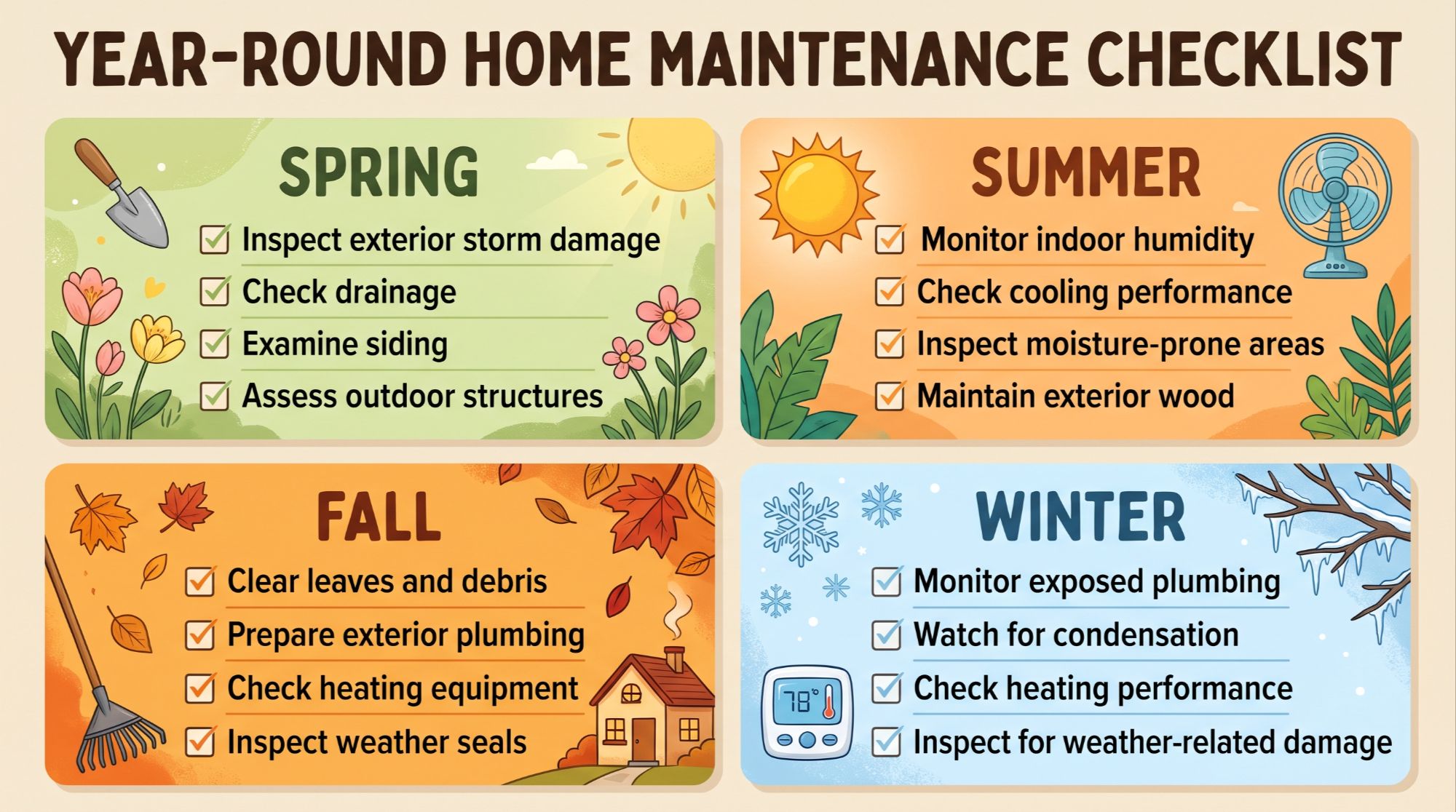
This schedule is a starting point. The frequency of individual tasks should reflect your home's construction, equipment, surroundings, and manufacturer recommendations.
Which Home Maintenance Tasks Can You DIY?
Not every maintenance task requires hiring a contractor.
Many homeowners can handle basic visual inspections, replacing accessible HVAC filters, checking for leaks, and maintaining simple records.
However, some work involves significant safety risks or requires specialized training.
Roof repairs, electrical problems, structural concerns, complex plumbing repairs, and extensive moisture damage are generally better evaluated by qualified professionals.
Before beginning a project, consider whether the work requires permits, specialized equipment, or a licensed contractor under applicable Maryland and local requirements.
A professional inspection may also be worthwhile when the cause of a recurring problem is unclear.
How Maintenance Records Can Help When Selling Your Home
Routine maintenance can also play a role when preparing to sell.
Buyers often pay attention to the condition of major systems, roofing, visible water damage, and exterior structures during their due diligence.
A documented history of maintenance may help explain when equipment was serviced or repairs were completed.
Useful records include contractor invoices, equipment service reports, warranties, permits when applicable, and photographs of completed work.
These documents do not replace a home inspection or eliminate a seller's disclosure obligations, but they can provide useful context.
Before listing a property, homeowners may benefit from reviewing visible maintenance concerns and deciding which repairs deserve attention.
The Southside Group Real Estate offers Southern Maryland seller resources to help homeowners understand the selling process and prepare for the next step.
Protect Your Home With a Practical Maintenance Plan
Avoiding expensive home repairs does not require replacing every aging component or tackling every project at once.
Start with the items most likely to affect safety, water intrusion, and major building systems. Create a schedule, keep maintenance records, and consult qualified professionals when problems fall outside your experience.
For Southern Maryland homeowners, consistent preventative care is a practical way to maintain property condition and prepare for future real estate decisions.
Frequently Asked Questions
What is the most expensive home maintenance mistake?
There is no single mistake that is always the most expensive. Unaddressed water intrusion, major structural deterioration, and neglected building systems can lead to extensive repairs. The actual expense depends on the severity and extent of the damage.
How often should homeowners inspect their property?
Homeowners should perform routine visual checks throughout the year and more thorough seasonal inspections. Equipment manufacturers may recommend specific service intervals. Additional inspections may be appropriate after severe weather or when warning signs appear.
What maintenance is especially important in Southern Maryland?
Moisture management, drainage, roof condition, HVAC servicing, and seasonal plumbing preparation deserve attention because Southern Maryland experiences humid weather, rainfall, storms, and occasional freezing conditions.
Should you fix maintenance problems before selling a house?
Not every maintenance issue requires repair before listing, but unresolved leaks, safety concerns, and visible deterioration deserve evaluation. A real estate professional can help prioritize preparation based on property condition and current market expectations.
How much should homeowners budget for maintenance?
Maintenance budgets depend on the home's age, size, construction, equipment, and condition. Homeowners can plan for routine servicing and set aside additional funds for unexpected repairs. Obtain current local contractor estimates for major work rather than relying on a universal budget figure.
Thinking About Selling Your Southern Maryland Home?
Maintaining your property is one part of protecting its long-term condition. Understanding how that condition relates to current buyer expectations is another.
If you're considering selling in St. Mary's, Calvert, or Charles County, The Southside Group Real Estate can help you evaluate preparation priorities and understand your home's potential market position.
Start by requesting a home valuation and explore your next steps with a local real estate team.
FROM OUR BLOG


Southern Maryland Housing Market Update November 12, 2026
Numbers to Know: Southern Maryland Real Estate Market Update for November 12, 2026 This week's Southern Maryland housing market update shows a noticeable shift. More homes are available, new listings are increasing, properties are taking longer to sell, and fewer homes are going under contract compa

Southern Maryland Homeowners Insurance: What Does It Cover?
Homeowners insurance is one of the most important protections for your property, but understanding exactly what your policy covers can be confusing. Whether you own a home in St. Mary's County, Calvert County, or Charles County, knowing what your insurance includes can help you avoid costly surprise

Calvert County Events This Weekend | November 12–15, 2026
Calvert County events this weekend offer a fantastic mix of family-friendly activities, local vendor markets, educational experiences, seasonal workshops, and live entertainment throughout Southern Maryland! Whether you're searching for things to do near me, planning a weekend outing, or looking for