
Homeowners insurance is one of the most important protections for your property, but understanding exactly what your policy covers can be confusing. Whether you own a home in St. Mary's County, Calvert County, or Charles County, knowing what your insurance includes can help you avoid costly surprises.
Southern Maryland homeowners insurance typically provides financial protection for your house, personal belongings, certain liability claims, and additional living expenses following a covered loss. However, not every type of damage is covered, and exclusions can be particularly important when considering flooding, coastal storms, and water damage.
This guide explains what Maryland homeowners insurance generally covers, what it commonly excludes, and what local homeowners should review before purchasing or renewing a policy.
What Does a Standard Maryland Homeowners Insurance Policy Cover?
Most standard homeowners insurance policies include several types of protection. The exact coverage depends on your insurance company, policy form, endorsements, exclusions, and coverage limits.
Dwelling Coverage
Dwelling coverage generally helps pay to repair or rebuild your home when it is damaged by a covered event, such as a fire, lightning strike, or certain windstorms.
This typically includes the home's main structure and attached features, such as an attached garage.
For example, if a covered windstorm damages the roof of your home in Leonardtown, dwelling coverage may help pay for eligible repairs after your deductible.
Other Structures Coverage
This coverage generally applies to structures on your property that are separate from your house, including detached garages, storage sheds, and some fences.
Coverage limits and exclusions vary, so homeowners with multiple outbuildings should confirm that their policy provides sufficient protection.
Personal Property Coverage
Personal property coverage helps protect belongings such as furniture, clothing, electronics, and appliances against covered losses.
Some policies reimburse based on actual cash value, which accounts for depreciation. Others provide replacement cost coverage, subject to policy conditions.
Expensive items, including jewelry, collectibles, and certain electronics, may have special coverage limits.
Personal Liability Protection
Personal liability coverage may help with covered legal expenses or damages if you are legally responsible for someone else's bodily injury or property damage.
For example, if a visitor is injured on your property and you are found legally responsible, liability coverage may apply.
Policies also commonly include limited medical payments coverage for certain injuries to guests, regardless of legal fault.
Additional Living Expenses
If a covered event makes your home uninhabitable, loss-of-use coverage may help pay for qualifying additional expenses while repairs are completed.
These expenses can include temporary lodging and certain additional meal costs.
Coverage is subject to the policy's limits, conditions, and applicable time restrictions.
What Does Homeowners Insurance Usually Not Cover?
One of the biggest misconceptions about homeowners insurance is that it covers any damage that happens to a home.
In reality, standard policies contain important exclusions.
Common exclusions include:
- Flood damage: Rising surface water, storm surge, and certain other forms of flooding are generally excluded.
- Routine wear and tear: Aging materials, deterioration, and ordinary maintenance are generally the homeowner's responsibility.
- Earth movement: Earthquakes, landslides, and certain ground movements are commonly excluded.
- Preventable maintenance problems: Damage resulting from long-term neglect or deterioration may not qualify for coverage.
- Certain valuable possessions: Standard coverage may limit reimbursement for jewelry, fine art, collectibles, or other expensive items.
Homeowners should also understand that policies may exclude or limit certain losses involving mold, pests, and water intrusion.
The Maryland Insurance Administration's homeowners insurance resources provide consumer guidance for understanding coverage, exclusions, and insurance decisions.
Important: Never assume an event is covered simply because it caused substantial damage. The cause of the loss and the wording of your policy determine whether coverage applies.
Flood, Wind, and Storm Coverage in Southern Maryland
Southern Maryland's location near the Chesapeake Bay, Patuxent River, Potomac River, and their tributaries makes it especially important to understand how different types of storm damage are insured.
A property does not have to sit directly on the waterfront to warrant a review of its flood exposure.
Wind and Hurricane Deductibles
Many homeowners policies cover certain wind-related damage, including damage caused by hurricane winds.
However, coverage is not identical across policies.
Some Maryland homeowners policies have separate windstorm or hurricane deductibles. These may be calculated as a percentage of the insured dwelling value rather than as a fixed dollar amount.
For example, a hypothetical home insured for $400,000 with a 2% applicable wind deductible would have an $8,000 deductible for a qualifying claim.
This is an illustration, not a statement about current Maryland insurance costs or a recommendation for a particular deductible.
Before purchasing coverage, ask your insurer:
- Is windstorm damage included?
- Is there a separate hurricane or named-storm deductible?
- What event triggers that deductible?
- Are there exclusions or special limitations for certain storm losses?
Flood Insurance for Waterfront and Inland Properties
Standard homeowners insurance generally does not cover flooding.
Flood insurance is typically purchased separately, either through the National Flood Insurance Program or a private flood insurance provider.
Flooding can result from storm surge, overflowing waterways, or heavy rainfall that causes surface water to accumulate.
Homeowners considering properties in areas such as Lusby, Hollywood, or Indian Head should review property-specific flood information rather than assuming that an entire community has the same risk.
Flood insurance requirements may also depend on a property's flood-zone designation and mortgage financing.
For official flood-risk information, homeowners can consult the FEMA Flood Map Service Center.
A property outside a mapped high-risk flood zone is not necessarily free from flood risk.
Does Homeowners Insurance Cover Water Damage, Roof Leaks, and Fallen Trees?
Water damage and storm-related repairs are among the situations where homeowners may be uncertain about their coverage.
The circumstances that caused the damage matter.
Burst Pipes and Plumbing Problems
A sudden and accidental plumbing failure may be covered under a homeowners policy.
For example, a pipe that unexpectedly bursts and damages flooring or drywall may qualify for coverage.
However, a slow leak that has continued for months may be excluded, particularly when the damage results from deterioration or lack of maintenance.
Policies may also treat the cost of repairing the failed pipe differently from the resulting water damage.
Sewer and Drain Backups
Water entering a home through a backed-up sewer or drain is commonly excluded from standard homeowners coverage unless the policy includes an applicable endorsement.
Maryland homeowners should ask their insurer about optional water backup coverage, including limits, deductibles, and exclusions.
This is different from flood insurance, and the two types of protection should not be confused.
Roof Leaks
A roof damaged by a covered windstorm may qualify for insurance benefits.
A roof that leaks because of aging shingles, deteriorated flashing, or deferred maintenance may not.
The age and condition of the roof can also affect underwriting, coverage availability, and claim settlement.
Fallen Trees
If a tree falls during a covered storm and damages your home, your policy may help pay for eligible structural repairs and tree removal.
Coverage for removing a fallen tree that does not damage an insured structure may be limited or unavailable.
Tree removal benefits, dollar limits, and applicable conditions vary by policy.
How Much Homeowners Insurance Coverage Do You Need?
Choosing insurance coverage involves more than matching a policy limit to the price you paid for your house.
Homeowners should evaluate the cost of rebuilding, their belongings, liability exposure, and the amount they could reasonably pay toward a claim.
Rebuilding Cost Versus Market Value
Your home's market value is not necessarily the same as its reconstruction cost.
Market value can reflect land, location, and buyer demand.
Reconstruction cost focuses on the estimated expense of rebuilding the insured structure using applicable materials, labor, and construction standards.
For example, a home in California, Maryland, may have a market value that differs significantly from its estimated rebuilding cost.
An insurance professional can help evaluate an appropriate dwelling coverage limit.
Replacement Cost Versus Actual Cash Value
These terms affect how eligible losses are settled.
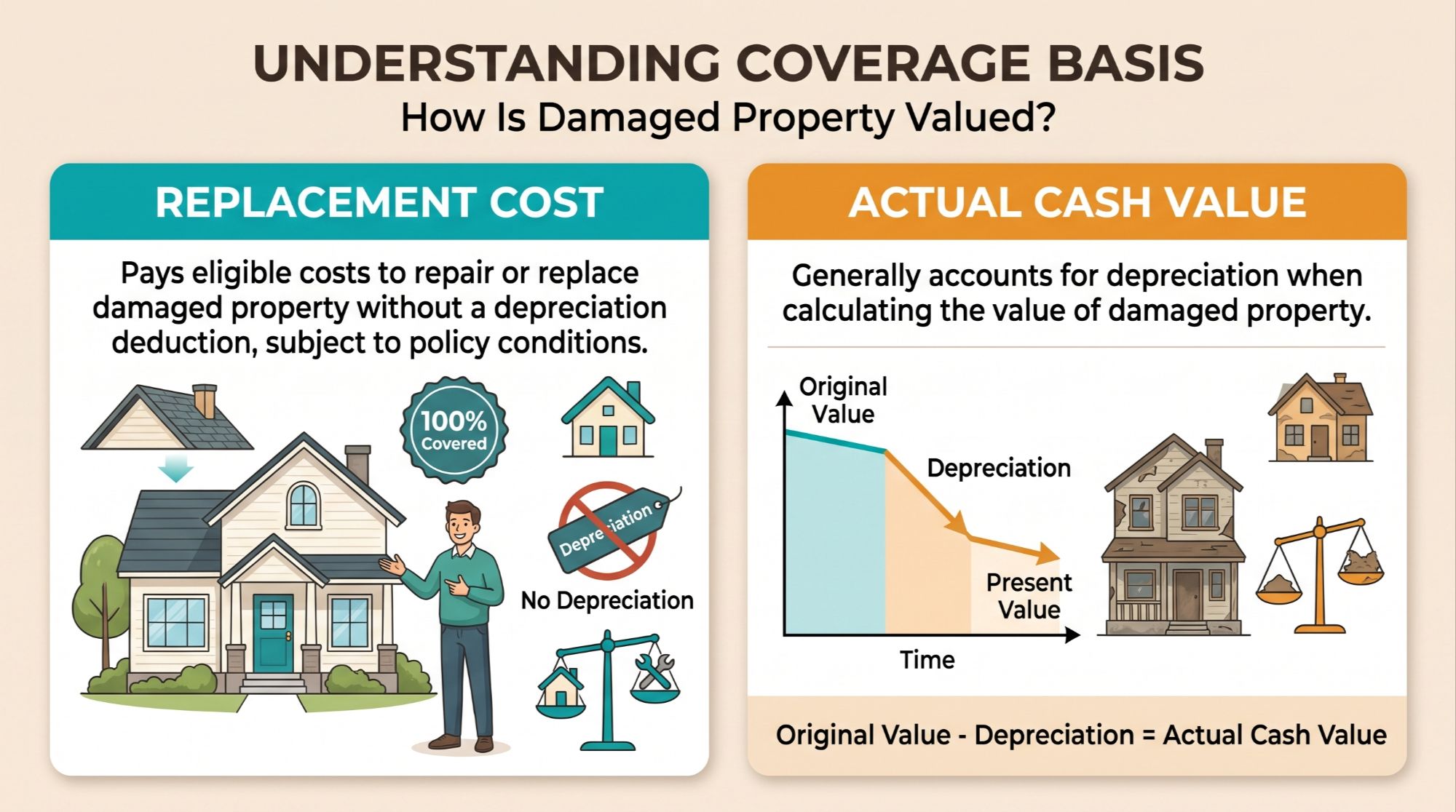
Some replacement cost policies initially pay an actual cash value amount and release additional eligible reimbursement after repairs or replacement are documented.
Review Your Deductible
A deductible is the amount you are responsible for paying toward a covered claim before applicable insurance benefits are paid.
A higher deductible may reduce the insurance premium, but it also increases your potential out-of-pocket expense.
Be sure to review both your standard deductible and any separate deductibles for wind, hurricanes, or other specified events.
Evaluate Personal Property and Liability Limits
Consider whether your belongings would be adequately protected after a major covered loss.
A home inventory with photographs, descriptions, and available receipts can make it easier to document personal property claims.
Also review your liability limits with a licensed insurance professional, especially if your circumstances or property features have changed.
Optional Insurance Coverage Worth Reviewing in Maryland
Standard homeowners policies may leave gaps that can sometimes be addressed through endorsements or separate insurance products.
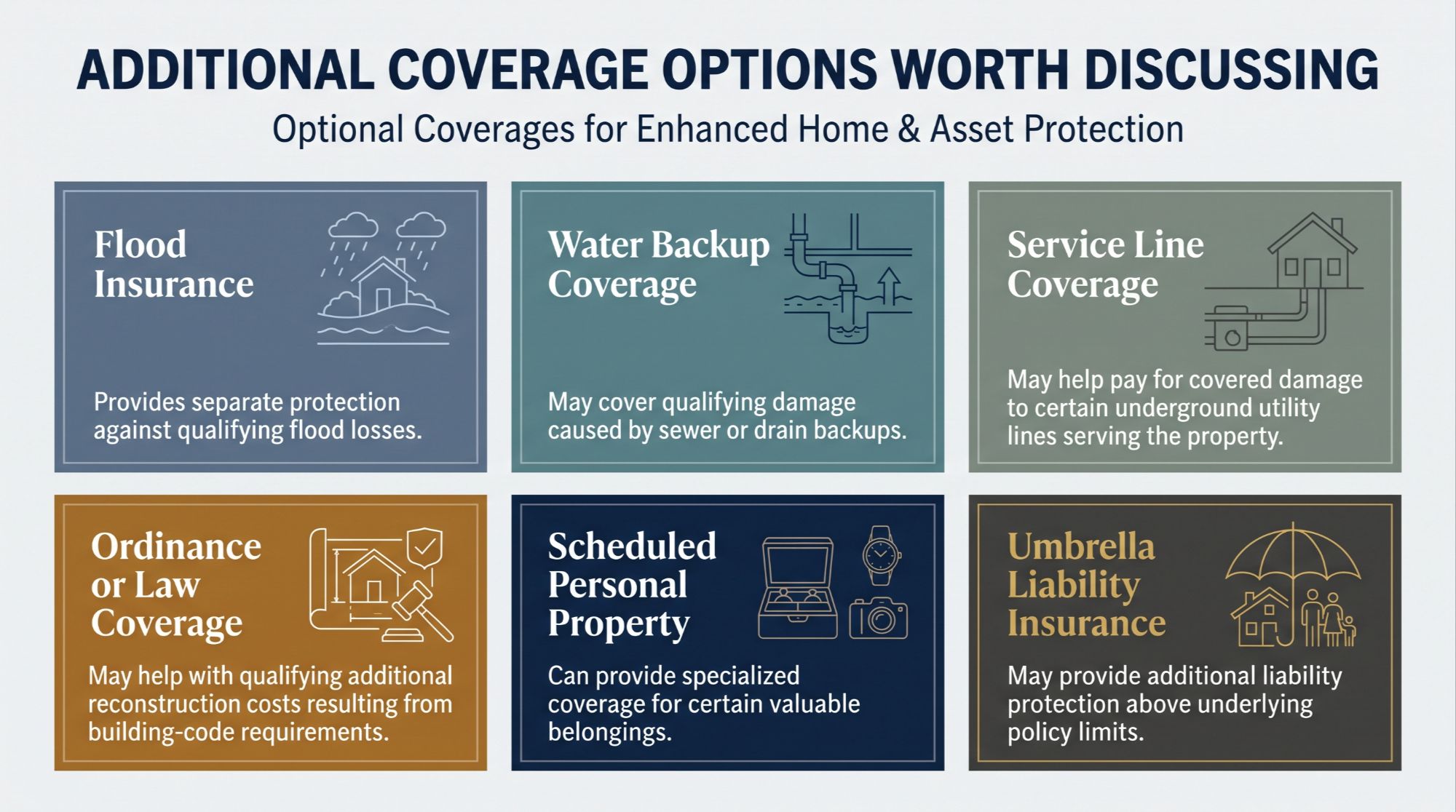
Not every endorsement is available from every insurance company, and each has its own conditions.
A useful approach is to ask your insurer to explain the largest gaps in your existing policy before deciding which additional protections make sense.
What Should Southern Maryland Homebuyers Check Before Closing?
Homeowners insurance is an important part of preparing to purchase a property.
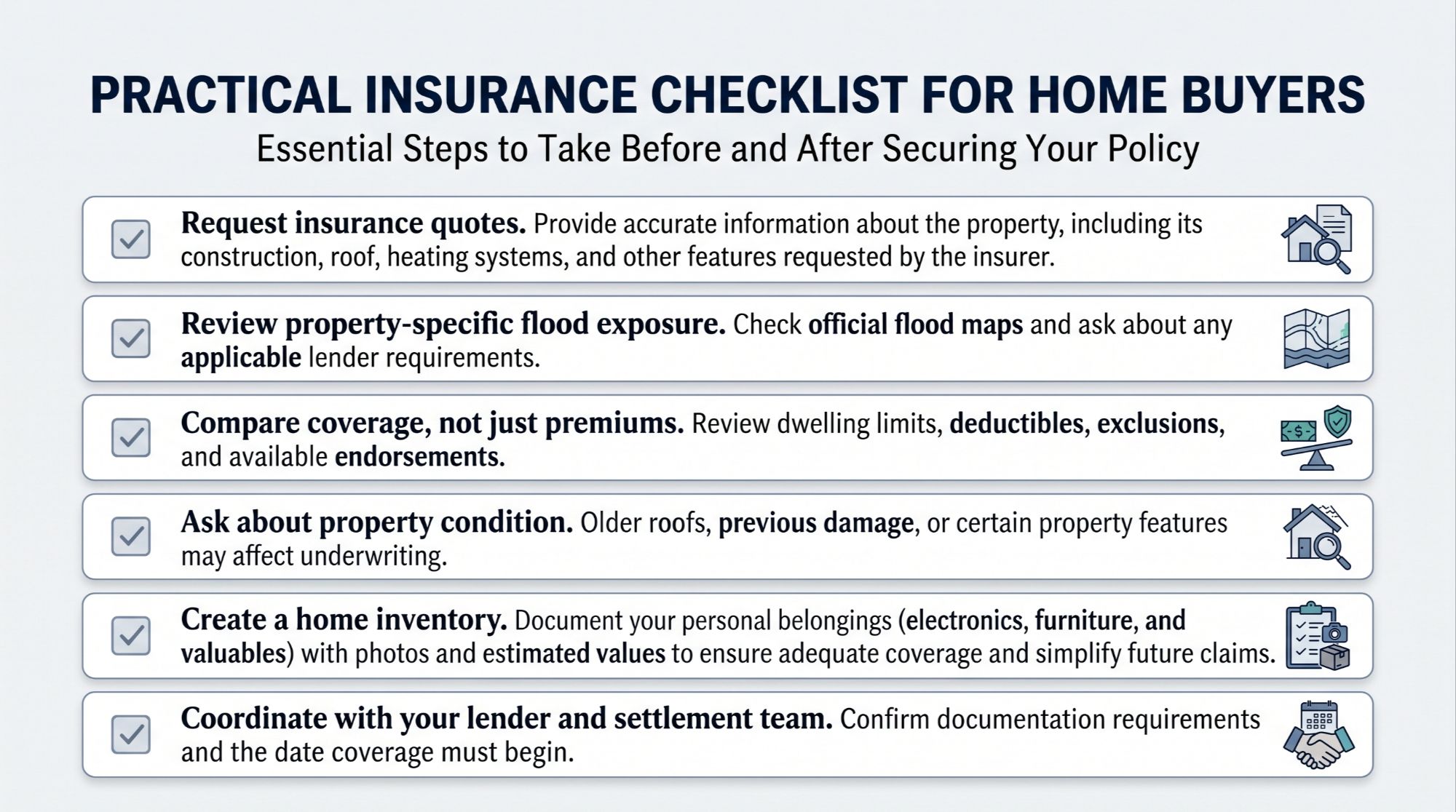
For buyers using mortgage financing, the lender will generally require acceptable homeowners insurance coverage.
Instead of waiting until the final days before settlement, start reviewing insurance options early in the transaction.
Buyers can also review Southern Maryland homes for sale while comparing property types and locations.
Remember that homeowners insurance and a home inspection serve different purposes. Insurance helps address qualifying future losses, while an inspection evaluates the property's observable condition at the time of inspection.
How to Review Your Homeowners Insurance Policy Each Year
Your insurance needs may change even when you have no plans to move.
Home improvements, renovations, new belongings, and changes in reconstruction costs can affect whether your existing coverage remains appropriate.
Before renewing your policy, review the following:
- Declarations page: Confirm the insured address, coverage amounts, deductibles, and listed endorsements.
- Dwelling coverage: Ask whether the reconstruction estimate reflects significant renovations or changes to the property.
- Personal property inventory: Update your records after major purchases.
- Exclusions: Check for changes in policy language or limitations.
- Discounts: Ask whether any available discounts apply to your property or circumstances.
- Insurance company notices: Review renewal documents for changes in premiums, coverage, or deductibles.
If you are considering selling your home, insurance is also one part of the broader ownership picture. You can review Southern Maryland seller resources to prepare for the real estate side of that decision.
An annual policy review can help you understand your protection before you need to file a claim.
Frequently Asked Questions
Is homeowners insurance required by law in Maryland?
Maryland law does not generally require homeowners to purchase homeowners insurance. However, mortgage lenders typically require borrowers to maintain acceptable coverage as a condition of financing. Even after paying off a mortgage, homeowners should consider maintaining insurance to protect their property and finances.
Maryland Insurance Administration+1
Does homeowners insurance cover hurricane damage in Maryland?
Many Maryland homeowners policies cover wind damage caused by hurricanes, subject to applicable exclusions, coverage limits, and deductibles. However, flooding and storm surge are generally excluded from standard homeowners policies and require separate flood coverage.
Maryland Insurance Administration+1
Does homeowners insurance cover flooding from heavy rain?
Generally, no. When heavy rain causes qualifying surface flooding, standard homeowners insurance typically does not cover the resulting damage. Separate flood insurance may provide protection, subject to its policy terms. Water entering through a damaged roof or burst pipe may be treated differently.
Maryland Insurance Administration+1
Will homeowners insurance pay for a new roof?
It may pay for eligible roof repairs or replacement when damage results from a covered event, such as a windstorm. However, insurance generally does not cover roof replacement solely because the roof is old, worn, or poorly maintained. Claim payments depend on the policy, deductible, coverage valuation, and cause of damage.
Does homeowners insurance cover a temporarily vacant home?
Coverage may change when a property is vacant or unoccupied for an extended period. Certain losses, including vandalism or water damage, may have additional restrictions. The policy's definition of vacancy and its specific conditions matter. Homeowners planning to leave a property empty should notify their insurer and ask whether additional coverage is necessary.
Understanding your homeowners insurance is an important part of protecting your investment in Southern Maryland.
Whether you're purchasing a home, preparing to sell, or exploring a move within St. Mary's, Calvert, or Charles County, The Southside Group Real Estate can help you navigate the local real estate process.
For guidance on buying or selling, connect with The Southside Group Real Estate. For questions about insurance coverage, deductibles, or policy selection, consult a licensed Maryland insurance professional.
FROM OUR BLOG

Southern Maryland Housing Market Update November 12, 2026
Numbers to Know: Southern Maryland Real Estate Market Update for November 12, 2026 This week's Southern Maryland housing market update shows a noticeable shift. More homes are available, new listings are increasing, properties are taking longer to sell, and fewer homes are going under contract compa
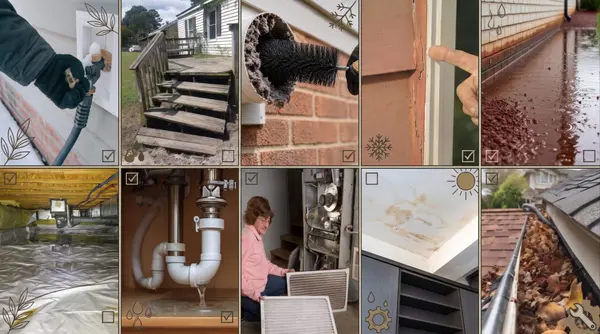
Top 10 Home Maintenance Mistakes That Cost Homeowners Thousands
Owning a home in Southern Maryland comes with plenty of responsibilities, but some of the most expensive repairs start with maintenance tasks that are easy to overlook. A clogged gutter, a slow plumbing leak, or a neglected HVAC system might seem minor today. Left unaddressed, these problems can tur

Calvert County Events This Weekend | November 12–15, 2026
Calvert County events this weekend offer a fantastic mix of family-friendly activities, local vendor markets, educational experiences, seasonal workshops, and live entertainment throughout Southern Maryland! Whether you're searching for things to do near me, planning a weekend outing, or looking for