
Great Questions to Ask a Mortgage Lender Before Buying in Southern Maryland
Questions to ask a mortgage lender should be on every homebuyer's checklist before committing to a home loan. Whether you're purchasing your first home, relocating to Southern Maryland, adding an investment property, or simply exploring your options, understanding your financing can help you make a more informed decision.
A mortgage is more than an interest rate. Loan programs, lender fees, closing costs, mortgage insurance, rate locks, underwriting requirements, and assistance programs can all influence your experience and overall cost.
For buyers considering homes in St. Mary’s County, Charles County, or Calvert County, there are also Maryland-specific questions worth discussing with a lender.
Here are some of the most important questions to ask before moving forward.
What Questions Should I Ask My Lender Before Choosing a Mortgage?
Start with the fundamentals. You want to understand what type of mortgage you're being offered, why the lender recommends it, and how its costs compare with your alternatives.
1. What loan programs could I qualify for?
Ask your lender to explain the mortgage programs that may fit your circumstances.
Depending on your eligibility and the property, possibilities may include conventional, FHA, VA, USDA, or Maryland-specific programs. Instead of asking only, “What is your best rate?” consider asking:
-
Which loan programs could I qualify for?
-
Why might one program make more sense than another?
-
What down payment does each option require?
-
Does mortgage insurance apply?
-
Are there property or occupancy requirements?
-
Are there assistance programs that can be paired with the mortgage?
Your lender should be able to explain the differences in language you understand.
2. What are the interest rate and APR?
The interest rate is important, but don't stop there. Ask about the annual percentage rate, or APR, and what costs are reflected in it.
The Consumer Financial Protection Bureau recommends comparing rates, fees, APRs, loan terms, and whether rates are fixed or adjustable when shopping for a mortgage.
Also ask whether the quoted rate is locked. If it is, find out how long the lock lasts and what could happen if your closing occurs after the lock period expires.
3. What will my estimated monthly payment include?
Ask for more than a principal-and-interest figure.
Depending on the loan and property, your total housing payment may involve property taxes, homeowners insurance, mortgage insurance, and other applicable costs.
Understanding those pieces can give you a more useful picture of the potential monthly obligation.
What Mortgage Questions Should First-Time Homebuyers Ask?
First-time buyers often focus on one question: “How much can I qualify for?”
A better conversation goes further.
Ask your lender:
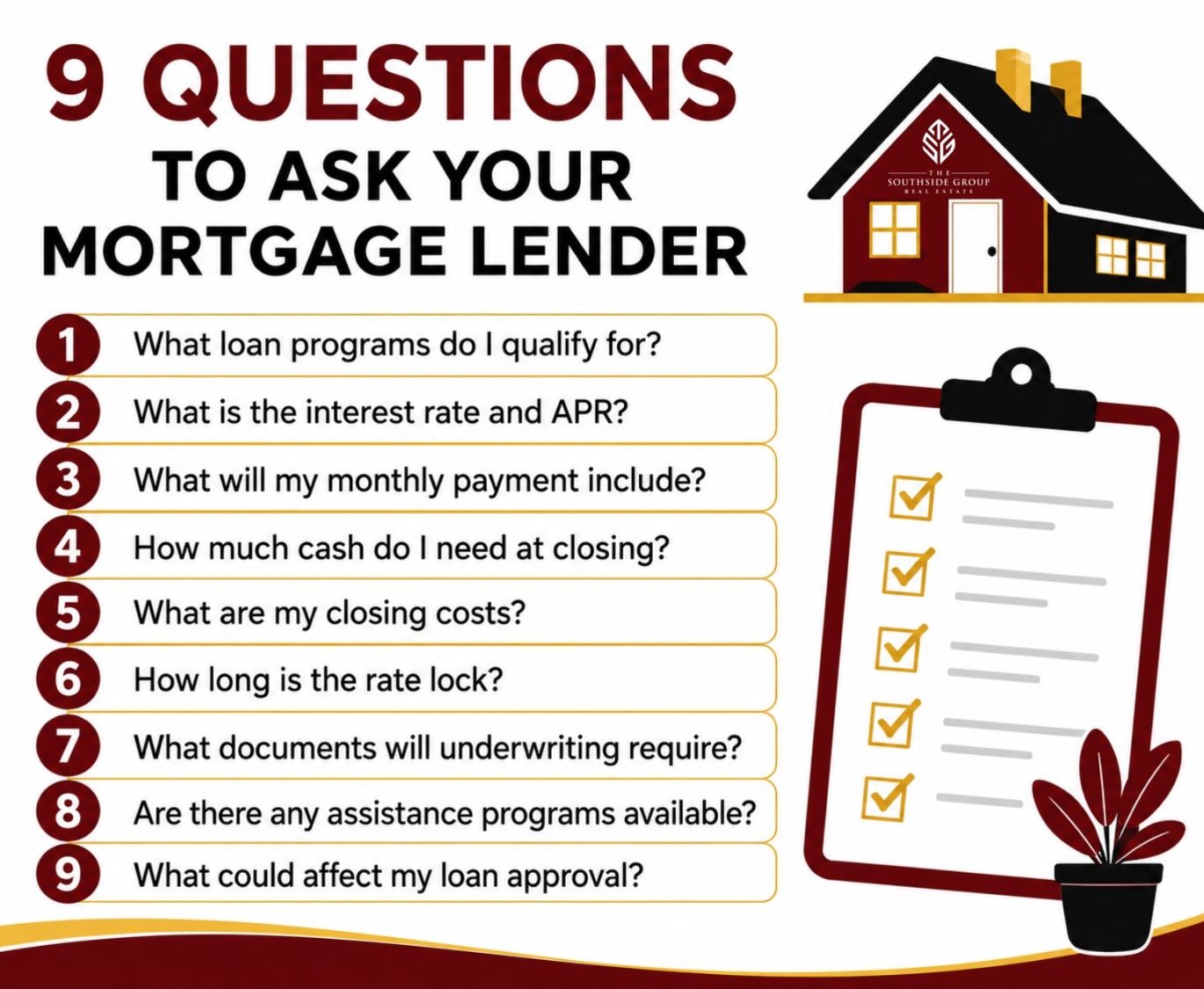
Remember that a maximum pre-approval and a comfortable personal housing budget aren't necessarily the same thing. Consider your broader financial goals and discuss financial questions with the appropriate qualified professional.
What Are the 4 C’s Required for Mortgage Underwriting?
Buyers researching mortgages frequently encounter the 4 C’s of mortgage underwriting. They provide a useful way to understand several factors lenders evaluate.
Capacity
Capacity generally concerns your ability to repay the mortgage. Income, employment and existing financial obligations may be relevant to this review.
Capital
Capital relates to financial resources and assets. Your lender may need documentation concerning funds used in the transaction and other assets relevant to your application.
Collateral
The home typically serves as collateral for a mortgage. The lender therefore has an interest in the property and its value as part of the underwriting process.
Credit
Credit history provides information about your borrowing and repayment history.
Rather than trying to predict an underwriter's decision yourself, ask your loan professional: “Is there anything in my financial profile that I should address or document before underwriting?”
That can uncover potential issues earlier in the process.
What Should Southern Maryland Buyers Ask About Maryland Mortgage Programs?
This is where mortgage conversations can become especially relevant for buyers in Southern Maryland.
Maryland offers homebuyer resources through the Maryland Mortgage Program, commonly called MMP. If you're interested in an MMP loan or associated assistance, ask about it early in your financing conversation.
4. Are you an approved lender for the Maryland Mortgage Program?
This is an important question because MMP loans are offered through approved participating lenders.
The Maryland Mortgage Program currently states that its loans are offered through more than 100 approved lenders statewide. Approved lenders are trained to help borrowers select an appropriate MMP loan and apply for available down payment assistance.
If you're considering MMP, ask the lender directly whether they participate and verify the lender through Maryland's official directory.
5. Do I qualify for Maryland down payment or closing-cost assistance?
Don't assume that needing assistance means homeownership is out of reach—and don't assume that every buyer or property qualifies.
Ask whether you may be eligible for Maryland Mortgage Program assistance and whether there are other programs relevant to your transaction.
Eligibility, available funding, program requirements, loan compatibility and other conditions can change. Your approved lender and the official program source should provide current guidance for your situation.
6. What homebuyer education requirements apply?
If you're considering an MMP loan, ask this question early rather than waiting until you're close to settlement.
Maryland Mortgage Program guidance currently states that purchase borrowers must complete qualifying homebuyer education before approval and that the certificate must be issued within 12 months before settlement. Requirements associated with other funding sources may also apply.
Completing education earlier in the process can also help you better understand financing, budgeting, closing, and homeownership responsibilities.
What Fees, Taxes, and Closing Costs Should I Ask About?
7. Can you walk me through my Loan Estimate?
This may be one of the most valuable questions on the entire list.
The Loan Estimate is a standardized document designed to help borrowers understand and compare mortgage offers. It includes information such as the estimated interest rate, monthly payment, closing costs, taxes and insurance estimates, and certain loan features.
Ask your lender to walk through it with you.
Pay particular attention to:
-
Loan amount and loan type
-
Interest rate
-
APR
-
Principal and interest
-
Estimated total monthly payment
-
Mortgage insurance, if applicable
-
Origination charges
-
Estimated closing costs
-
Estimated cash to close
-
Rate-lock information
-
Adjustable-rate or other special loan features
If something on the written Loan Estimate doesn't match what you discussed, ask why.
8. What are the estimated Maryland recordation and transfer taxes for this transaction?
Maryland real estate transactions can involve state and local taxes and recording-related charges.
Rather than relying on an online estimate that may not reflect your specific property, jurisdiction, exemptions, or transaction, ask which costs are expected to apply and where they appear in your closing estimates.
Your lender, settlement professional, and applicable government agencies can help clarify transaction-specific amounts.
9. Does a Maryland Net Tangible Benefit requirement apply to this loan?
This question may be relevant in certain refinancing situations. It should not be assumed to apply to every Maryland purchase mortgage.
If you're refinancing, ask your lender whether Maryland-specific requirements apply to your transaction, what documentation is required, and how those requirements affect the loan.
What Is a Red Flag in a Mortgage?
A mortgage red flag isn't simply a rate that's higher than you hoped. It's often a sign that you need more information before proceeding.
Potential warning signs include:
-
Pressure to commit before you've had time to understand the terms
-
Loan terms that differ significantly from previous discussions without a clear explanation
-
Fees the lender cannot or will not explain
-
Being encouraged to provide inaccurate information
-
Unexplained changes close to settlement
-
Promises of approval before required underwriting is complete
-
Difficulty obtaining or understanding required disclosures
-
A lender who focuses only on the monthly payment while avoiding questions about the loan's broader costs
The CFPB specifically advises borrowers to pay attention when information on a Loan Estimate differs significantly from what was discussed with the loan officer.
Questions aren't an inconvenience. They are part of making an informed mortgage decision.
How Do I Compare Mortgage Lenders Before Committing?
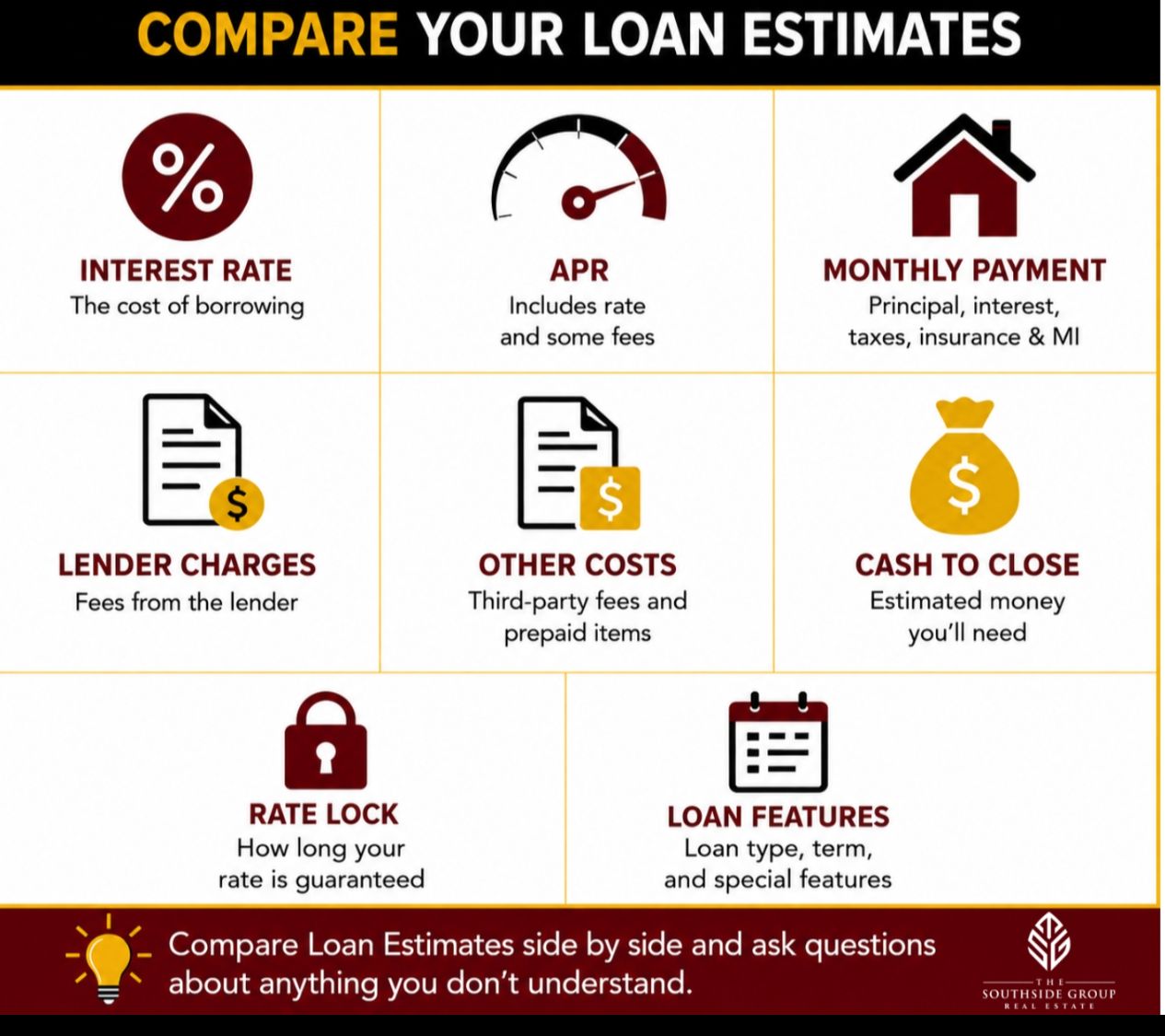
Avoid comparing lenders based solely on one advertised interest rate.
Instead, request comparable loan information and look at the complete offer.
Consider comparing:
-
Loan type and term
-
Interest rate
-
APR
-
Points
-
Origination charges
-
Estimated monthly payment
-
Estimated closing costs
-
Cash needed to close
-
Mortgage insurance requirements
-
Rate-lock terms
-
Available assistance programs
-
Communication and responsiveness
-
Ability to meet your expected closing timeline
The CFPB encourages consumers to obtain and compare Loan Estimates from multiple lenders. A standardized Loan Estimate makes it easier to compare similar offers side by side.
Remember that the lowest-looking number isn't automatically the right mortgage for your circumstances. Ask what you're paying, why you're paying it, whether terms could change, and what responsibilities come with the loan.
Why Work With a Southern Maryland Real Estate Expert
Your lender handles the financing side of the transaction, but buying a home involves much more than obtaining a mortgage.
Working with a Southern Maryland real estate professional can help you connect financing decisions with the realities of your home search—from establishing a practical price range to evaluating properties, preparing an offer, coordinating inspections, navigating contract milestones, and moving toward settlement.
We work with buyers exploring homes throughout St. Mary’s County, Charles County, and Calvert County.
Buyers searching online for Top Real Estate Agents & Realtors should look beyond a label and consider local knowledge, communication, responsiveness, experience, and the professional's ability to explain each stage of the transaction clearly.
A strong homebuying team also understands professional boundaries. Your real estate agent can help coordinate the transaction and provide real estate guidance, while mortgage, tax, legal, insurance, inspection, and settlement questions should be addressed by the appropriately qualified professionals.
Ready to Start Your Southern Maryland Home Search?
The right mortgage questions can help you approach your home search with greater clarity. Once you understand your financing options, the next step is finding a property that aligns with your needs, priorities, and budget.
Whether you're considering a home in St. Mary’s County, Charles County, or Calvert County, our Southern Maryland real estate team is ready to help you navigate the buying process.
Explore our Southern Maryland buyer resources and take the next step toward your home search.
FROM OUR BLOG


Moving Timeline: When to List Your Home for Maximum Profit 2026
Best time to sell a house is one of the most important questions Southern Maryland homeowners ask when they know a move is coming. Listing too early can leave you scrambling to prepare, while waiting for a supposedly “perfect” month could mean competing with more homes or missing a window that bette

How to Follow Up With Real Estate Leads Without Being Pushy
Following up with real estate leads can feel like a balancing act. You want to stay connected, answer questions, and turn conversations into appointments. But you also don't want potential clients to feel pressured or overwhelmed by constant calls, texts, and emails. The good news? Effective real es

Best Tacos & Mexican Food Trucks in Southern Maryland
Best Tacos & Mexican Food Trucks in Southern Maryland are worth adding to your local must-try list whether you’ve lived here for years, just bought your first home, or are spending a weekend getting to know the area before a move. Southern Maryland may be famous for Chesapeake Bay seafood, but our l