
Home maintenance checklist tasks are worth tackling now if you own a home in Southern Maryland. September gives homeowners a natural opportunity to look over the house, yard, and major systems before cooler fall weather and falling leaves become part of the routine.
Whether you own a home in St. Mary’s County, Charles County, Calvert County, or elsewhere in Southern Maryland, a little preventive attention can help you identify small maintenance needs before they become bigger inconveniences.
You don't need to complete everything in one weekend, either. Work through these 10 fall home maintenance tasks throughout September and save the checklist at the end for easy reference.
Prepare Your Southern Maryland Home’s Exterior for Fall
1. Inspect the Roof and Exterior
Start your September home maintenance outside.
From the ground or another safe location, visually inspect your roof for anything that appears loose, missing, damaged, or different from the surrounding roofing material. Also look over accessible siding, exterior trim, flashing, vents, and visible caulking.
While walking around the property, look for:
-
Loose or visibly damaged roofing materials
-
Damaged siding or trim
-
Peeling or deteriorating exterior finishes
-
Gaps around exterior penetrations
-
Deteriorated caulking
-
Loose exterior fixtures
-
Tree limbs that appear to be contacting or threatening the structure
You don't need to climb onto your roof to perform a basic seasonal check. If you notice something concerning—or can't safely evaluate an area—contact an appropriate qualified professional.
The goal isn't to turn a September checklist into a major renovation project. It's to spot potential problems early enough to decide whether they deserve professional attention.
2. Check Gutters and Downspouts
Gutters have an important job: collecting roof runoff and directing it toward the appropriate discharge areas.
Check accessible gutters for accumulated leaves, twigs, and other debris. Look for sections that appear loose, damaged, or improperly connected.
Pay particular attention to downspouts.
Ask yourself:
-
Are they securely attached?
-
Are they blocked by debris?
-
Where does the water discharge?
-
Is water being directed appropriately away from the structure?
-
Are there obvious areas where runoff collects near the house?
September is also a good time to get ready for additional leaf accumulation later in fall. Depending on the trees around your property, one gutter cleaning may not be enough for the entire season.
3. Schedule HVAC Maintenance Before Cooler Weather
Your heating system probably hasn't received much attention during the summer, which makes September a practical time to think about it.
Before you regularly need heat, test the system and make sure it appears to operate normally.
Depending on your equipment and maintenance schedule, this may also be a good time to arrange professional HVAC service.
Give Your HVAC System a Quick Fall Check
Homeowners can start with simple items such as:
-
Checking the HVAC filter and replacing it according to the system or manufacturer's recommendations
-
Making sure accessible supply and return vents aren't blocked
-
Testing the thermostat
-
Turning the heat on briefly before you actually depend on it
-
Scheduling professional maintenance when appropriate
If the system makes unusual sounds, produces unusual odors, doesn't heat properly, or shows another concerning symptom, contact a qualified HVAC professional rather than attempting repairs outside your experience.
Discovering a heating problem on a mild September day is generally much more convenient than discovering it when you actually need the system.
Check Windows and Doors Before Fall Arrives
Windows and exterior doors deserve a place on any good fall home maintenance checklist.
4. Look for Drafts Around Doors and Windows
Walk through your home and inspect accessible windows and exterior doors.
Look at weatherstripping, door sweeps, and visible caulk. Check for obvious gaps or deterioration around frames.
Potential maintenance items include:
-
Torn or missing weatherstripping
-
Worn door sweeps
-
Visible gaps around frames
-
Deteriorated exterior caulk
-
Doors or windows that no longer close properly
Addressing obvious air leaks can improve comfort as outdoor temperatures change.
For anything involving damaged frames, moisture intrusion, failed components, or significant deterioration, consider having the area professionally evaluated rather than simply covering the problem with new caulk.
5. Inspect Window Screens, Seals, and Hardware
While you're checking windows, give the screens and operating hardware some attention too.
Look for torn screens, damaged frames, deteriorating seals, and windows that are difficult to open, close, or lock.
Clean accessible tracks and sills where debris has accumulated.
September is also a convenient time to repair damaged screens and address small maintenance items you've noticed throughout the summer.
6. Check Drainage Around Your Foundation
Water management is an important part of maintaining a home.
Walk around the property after rainfall if possible and observe where water goes.
Look for:
-
Downspouts discharging too close to the structure
-
Debris blocking drainage paths
-
Areas where water visibly collects near the foundation
-
Soil erosion
-
Damaged drainage components
-
Changes that appear different from previous seasons
The goal isn't to diagnose structural or drainage problems yourself. It's to notice conditions that may deserve attention.
If you see persistent standing water, foundation concerns, significant erosion, or another potentially serious issue, consult an appropriately qualified professional.
Good seasonal maintenance often begins with simply paying attention to how your property behaves during different weather conditions.
Prepare Your Southern Maryland Lawn and Yard for Fall
September can be an important transition period for Maryland lawns and landscapes.
University of Maryland Extension guidance notes that late summer through early fall is an important period for renovation and overseeding of appropriate Maryland lawns, and the correct maintenance schedule depends on the type of turfgrass growing on the property.
7. Give Your Lawn Some Fall Attention
Start by assessing your lawn rather than automatically buying fertilizer, seed, or other treatments.
Look for:
-
Bare or thin areas
-
Compacted areas
-
Poor drainage
-
Areas damaged during summer
-
Excess debris
-
Changes in overall lawn condition
For appropriate cool-season lawns, autumn can be a useful time for aeration and overseeding when needed. However, lawn care isn't one-size-fits-all. Maryland properties may have different turf types, growing conditions, and maintenance needs.
Follow current University of Maryland Extension guidance for your particular lawn rather than assuming every yard needs the same treatment.
September is also a good reminder that a healthy landscape doesn't have to look perfectly manicured. Focus on appropriate maintenance and the actual needs of your property.
8. Prepare for Falling Leaves
The leaves may not be piling up yet, but they will eventually.
Get your leaf-management plan ready before you need it.
Check your rakes, mower, collection equipment, and other tools. Keep leaves and other debris from blocking drainage areas, walkways, and gutters.
University of Maryland Extension recommends addressing thick leaf cover on lawns and notes that leaves can sometimes be moved to planting beds, shredded in place with a mower, or composted rather than automatically treated as waste.
As fall progresses, continue monitoring gutters and drainage areas. A gutter that is clear in early September may look very different several weeks later.
9. Seal Cracks and Potential Pest Entry Points
As outdoor conditions change, some insects and other pests look for sheltered places.
University of Maryland Extension specifically recommends checking and sealing cracks and entry points around foundations, vent openings, pipe or wire penetrations, windows, screens, and doorways to help keep nuisance insects from entering homes during fall.
Take a slow walk around the exterior and look for obvious openings.
Potential areas to inspect include:
-
Door sweeps
-
Window screens
-
Utility penetrations
-
Foundation openings
-
Gaps around exterior pipes or wires
-
Damaged vent screening
-
Cracks around accessible openings
Routine sealing and maintenance can address some small gaps. Larger openings, unexplained damage, or evidence of an established pest problem may warrant professional help.
The objective is prevention—not turning your weekend maintenance checklist into a DIY pest-control project.
10. Complete Your Fall Home Safety Check
Finish your September home maintenance checklist inside the house.
Test your smoke alarms and carbon monoxide alarms according to manufacturer instructions and replace batteries when necessary.
The U.S. Fire Administration recommends regular testing of smoke alarms and having a household fire escape plan. It also recommends paying attention to alarm age and replacement requirements.
September is a convenient month to review:
-
Smoke alarms
-
Carbon monoxide alarms
-
Alarm batteries
-
Fire extinguishers
-
Flashlights and emergency supplies
-
Household escape plans
-
Exterior house-number visibility
-
Accessible electrical cords and obvious damage
If an alarm is beyond its recommended service life or isn't operating properly, replace it according to current manufacturer and safety guidance.
Don't forget the household plan itself. Make sure everyone knows what to do and where to go during an emergency.
Save This September Home Maintenance Checklist
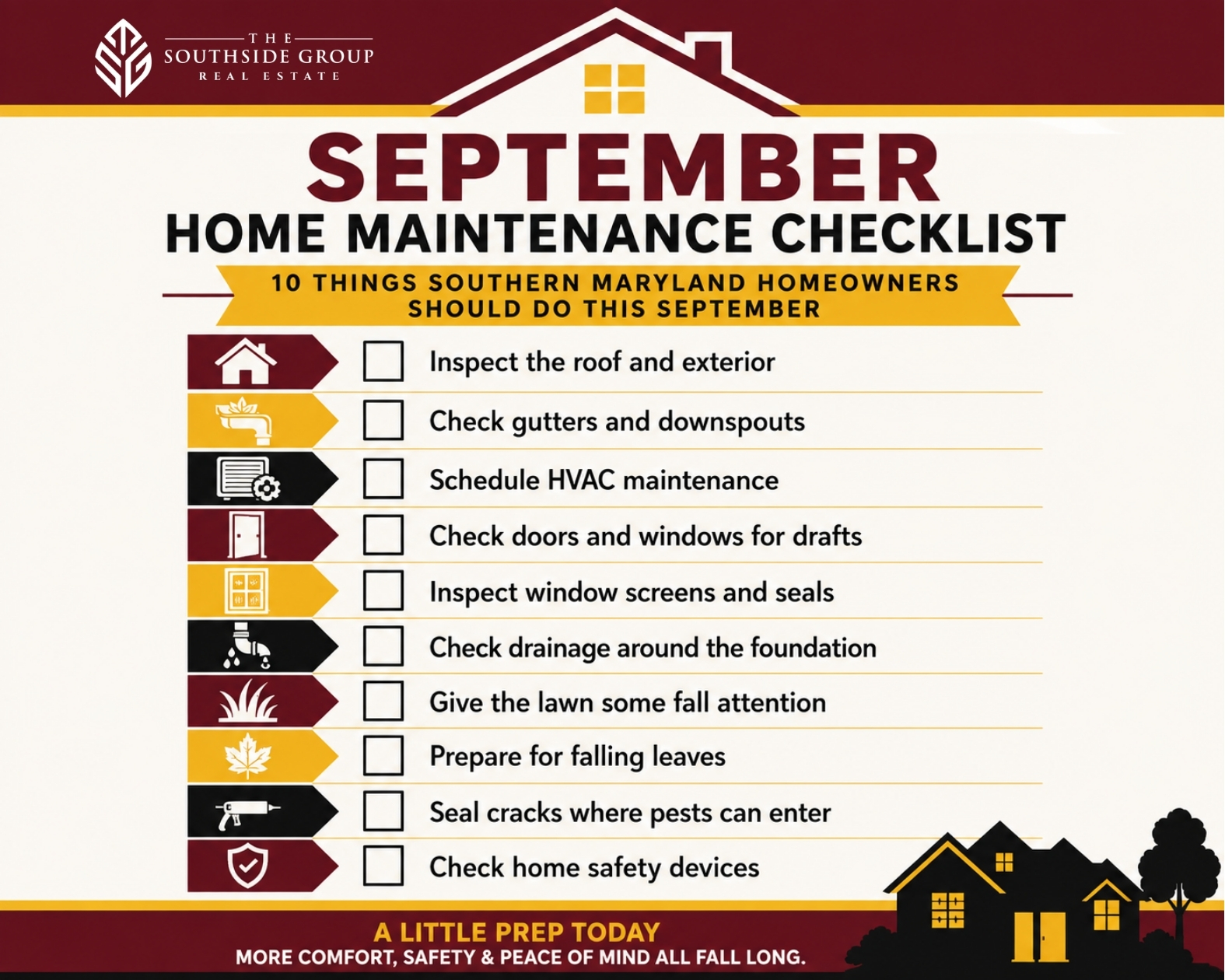
You don't have to remember all 10 tasks. Save, bookmark, screenshot, or print this quick Southern Maryland fall home maintenance checklist:
☐ Inspect the roof and exterior
Look for visible damage, deterioration, or areas that need professional attention.
☐ Check gutters and downspouts
Remove debris and make sure runoff is being directed appropriately.
☐ Schedule HVAC maintenance
Test your heating system before you regularly need it.
☐ Check doors and windows for drafts
Inspect weatherstripping, door sweeps, and visible caulk.
☐ Inspect window screens and seals
Repair damage and clean accessible tracks and sills.
☐ Check drainage around the foundation
Watch for blocked drainage paths, erosion, or persistent water accumulation.
☐ Give your lawn some fall attention
Evaluate its condition and follow Maryland-specific guidance for your turf type.
☐ Prepare for falling leaves
Get tools ready and keep leaves from blocking drainage areas.
☐ Seal potential pest entry points
Check gaps around foundations, doors, windows, vents, and utility penetrations.
☐ Check home safety devices
Test smoke and carbon monoxide alarms and review your household emergency plan.
Save this checklist and work through it during September. A few small tasks each week can make seasonal home maintenance much easier to manage.
Why Work With a Southern Maryland Real Estate Expert
Taking care of a home isn't only something to think about when you're preparing to sell. Regular maintenance can help homeowners better understand the condition of their property throughout the years they own it.
And when selling does become part of the plan, that familiarity with your home can be valuable.
Working with a Southern Maryland real estate expert can help you understand which repairs, updates, and improvements may matter before selling—without assuming you need to renovate everything.
We serve buyers and sellers throughout St. Mary’s County, Charles County, and Calvert County, including Waldorf, Hollywood, La Plata, Lexington Park, Leonardtown, Mechanicsville, and California.
If you’re searching for Top Real Estate Agents & Realtors in Southern Maryland, local market knowledge, clear communication, and trusted guidance matter. Our team can help you prioritize what makes sense for your property and selling goals.
Thinking about selling? Contact our Southern Maryland real estate team today for local guidance on preparing your home for the market.
Thinking About Your Home’s Next Chapter?
September maintenance is about preparing your home for fall—but it's also an opportunity to take a fresh look at your property's condition.
If you're considering selling a home in St. Mary’s County, Charles County, Calvert County, or elsewhere in Southern Maryland, get local guidance before deciding which repairs or improvements deserve your time and money.
Find out what your Southern Maryland home could be worth and start planning your next move with a local real estate professional.
Get Your Southern Maryland Home Value
This article provides general home-maintenance information. Every property and home system is different. Use appropriate safety precautions and consult qualified contractors or other professionals when inspection, maintenance, or repairs are beyond your experience.
FROM OUR BLOG


How to Follow Up With Real Estate Leads Without Being Pushy
Following up with real estate leads can feel like a balancing act. You want to stay connected, answer questions, and turn conversations into appointments. But you also don't want potential clients to feel pressured or overwhelmed by constant calls, texts, and emails. The good news? Effective real es

Best Tacos & Mexican Food Trucks in Southern Maryland
Best Tacos & Mexican Food Trucks in Southern Maryland are worth adding to your local must-try list whether you’ve lived here for years, just bought your first home, or are spending a weekend getting to know the area before a move. Southern Maryland may be famous for Chesapeake Bay seafood, but our l

First-Time Home Buyer Programs in Southern Maryland: 2026 Guide
Buying your first home can feel more achievable once you understand the financing and assistance programs available to you. For buyers in St. Mary’s, Calvert, and Charles counties, several Southern Maryland first-time home buyer programs may help with down payments, closing costs, student loan debt,