
What happens after your offer is accepted? For Southern Maryland home buyers, an accepted offer marks an exciting transition from searching for a home to working toward settlement. But you are not at the finish line yet. Between acceptance and getting the keys, several important steps may include submitting your earnest money deposit, completing inspections, working through mortgage underwriting and appraisal, reviewing applicable HOA or condominium documents, preparing for settlement, and completing a final walkthrough.
For first-time buyers and people relocating to Southern Maryland, this part of the home buying process can feel especially fast-paced. Understanding what comes next—and which deadlines matter—can help you move forward with greater confidence.
What Happens After Your Offer Is Accepted in Southern Maryland?
Once the seller accepts your offer and the contract is ratified, the focus changes. Instead of touring properties and preparing offers, you begin working through the requirements and deadlines that take you from contract to closing.
Your purchase contract becomes an important roadmap during this stage. Depending on your specific agreement, it may establish deadlines involving your earnest money deposit, financing, inspections, appraisal, property-related documents, and settlement.
The Maryland Mortgage Program describes offer acceptance as the point when a buyer officially moves forward toward settlement. For buyers using an eligible Maryland Mortgage Program loan, the next stages can include completing the loan application, locking the interest rate, lender review, appraisal, underwriting, program review, and ultimately closing.
Every transaction is different, however. Your specific contract—not a generic online timeline—should determine what you need to do and when.
Review Your Important Dates Right Away
One of the first things to do after your offer is accepted is review the transaction timeline with your real estate agent.
You should understand:
-
When your earnest money deposit is due
-
Which inspections or investigations are included in your contract
-
Financing and appraisal requirements
-
Any applicable HOA or condominium document deadlines
-
Your anticipated settlement date
-
Any other contingency or performance deadlines in your agreement
Missing an important deadline can create unnecessary problems. A local real estate professional can help you keep the different pieces of the transaction organized.
Complete Your Earnest Money and Financing Steps
Follow Your Earnest Money Requirements
An earnest money deposit demonstrates the buyer's commitment to the transaction and is handled according to the terms of the purchase agreement and applicable requirements.
There isn't one generic deadline or amount that every Southern Maryland buyer should assume applies. Review your ratified contract and follow the instructions provided for the amount, delivery, timing, and handling of your deposit.
When in doubt, ask rather than guess.
Keep Your Mortgage Moving
If you're financing the purchase, your lender will also become very busy after the offer is accepted.
Depending on your loan and circumstances, you may need to provide updated bank statements, employment information, income documentation, explanations, or other records requested during underwriting.
Responding quickly can help prevent avoidable delays.
This is also a particularly important time to keep your finances stable. Before making a significant financial decision, talk with your lender about whether it could affect your mortgage approval.
Schedule the Home Inspection and Review the Property
For many buyers, the inspection period is one of the most important stages after an offer is accepted.
Maryland law specifically cautions buyers that a seller's property disclosure is not a substitute for an inspection by an independent home inspection company. A professional inspection can help you better understand the condition of the property before moving farther toward closing.
Understand Your Inspection Contingency
If your contract contains an inspection contingency or other inspection provisions, pay close attention to exactly what they allow and the applicable deadlines.
An inspection can uncover anything from routine maintenance items to more significant concerns. What happens after a finding depends on your contract and circumstances, so avoid assuming that every inspection issue automatically gives a buyer the same options.
Review the findings carefully with the appropriate professionals and discuss your contractual options with your real estate agent.
Consider Property-Specific Issues in Southern Maryland
Homes throughout St. Mary’s County, Charles County, and Calvert County can have very different property characteristics.
Depending on the particular home, buyers may need to consider items such as:
-
Private well or septic systems
-
Wood-destroying insects
-
Older mechanical or structural systems
-
Waterfront or water-oriented property considerations
-
Environmental conditions or property-specific concerns
These aren't issues with every Southern Maryland home. The point is to evaluate the actual property you're buying rather than rely on assumptions about an area or property type.
Review HOA or Condo Documents When Applicable
If the property belongs to a homeowners association or condominium, another important set of documents may enter the picture.
Buyers should carefully review the applicable association information, which can contain details about rules, assessments, fees, governing documents, and other matters that may affect ownership.
How Many Days Does a Buyer Have to Review HOA Documents in Maryland?
This question requires an important distinction: Maryland homeowners associations and condominiums are governed by different statutory provisions, so buyers should not assume that one review period applies to every property.
Under Maryland's current Homeowners Association Act, when the applicable required HOA disclosures were not received five calendar days or more before the buyer entered into the contract, the statute provides qualifying purchasers five calendar days following receipt of the required disclosures to cancel the contract in writing without stating a reason and without purchaser liability, subject to the statute's requirements and exceptions.
Maryland condominium resales are treated separately. Under the current Maryland Condominium Act, qualifying purchasers may rescind a resale contract in writing within seven days following receipt of all information required under the applicable provision. The statute also addresses when required information must be provided.
Because these rights depend on the type of property, timing, transaction, documents received, and applicable law, buyers should review their specific situation with their real estate professional and, when legal interpretation is necessary, a qualified Maryland attorney.
The Appraisal, Underwriting, and Title Work Move Forward
While you're dealing with inspections and property documents, other parts of the transaction may be happening at the same time.
What Happens During the Appraisal?
For financed purchases, the lender generally requires an appraisal as part of determining whether the property provides adequate collateral for the loan.
An appraisal and a home inspection serve different purposes.
A home inspection primarily helps the buyer understand the property's condition. An appraisal is primarily connected to the lender's valuation and lending process.
If an appraisal comes in differently than expected, don't immediately assume the deal is over. The next steps depend on the financing, contract terms, appraisal results, and circumstances of the transaction. Your agent and lender can help explain the options relevant to your purchase.
Your Loan Moves Through Underwriting
Mortgage underwriting involves the lender reviewing your financial qualifications and the details necessary for the loan.
Even if you were pre-approved before making the offer, the lender may need updated information before issuing final approval.
This is why buyers should avoid assuming that pre-approval means the financing process is finished.
Stay responsive. If the lender asks for a document or explanation, address the request as quickly as reasonably possible.
Title and Settlement Preparation
Title and settlement professionals also work behind the scenes to prepare for closing.
Depending on the transaction, this stage can include reviewing title matters, preparing documents, coordinating with the lender and other parties, and getting the transaction ready for settlement.
If you receive instructions involving money transfers or wiring, verify them through trusted contact information before sending funds. Wire fraud is a serious concern in real estate transactions, and unexpected or changed wiring instructions should always be independently verified.
What Should You Avoid After Your Offer Is Accepted?
Getting an offer accepted can make buyers want to immediately start preparing for the new house. But when you're obtaining a mortgage, this isn't necessarily the right time to make major financial changes.
Until you've closed, be cautious about:
-
Opening new credit cards
-
Financing furniture, appliances, or a vehicle
-
Making unusual large transfers or deposits without documentation
-
Changing jobs without first discussing the potential mortgage implications
-
Taking on additional debt
-
Missing lender requests
-
Missing contractual deadlines
-
Assuming financing is final before your lender confirms it
A simple rule can help: before making a significant change to your finances, ask your lender whether it could affect your loan.
Your lender—not social media, a friend, or a generic home-buying checklist—is the appropriate source for guidance about your specific mortgage.
Prepare for Your Final Walkthrough and Closing
As settlement approaches, you'll enter the final stage of the home buying process after your offer is accepted.
Complete the Final Walkthrough
The final walkthrough generally gives the buyer an opportunity to see the property shortly before closing and confirm its expected condition based on the transaction.
This isn't simply an opportunity to renegotiate the house from scratch or treat the walkthrough as a brand-new home inspection.
Instead, buyers may use the walkthrough to check that the property is in the expected condition and address applicable agreed-upon items or unexpected changes with their agent.
If something doesn't look right, tell your real estate agent promptly rather than waiting until you're sitting at the settlement table.
What Happens on Closing Day?
Closing—or settlement—is when the transaction reaches its final stage.
The Maryland Mortgage Program describes closing as the point when buyers sign final loan and title documents, address applicable closing costs, and complete their home-buying journey.
Before settlement, make sure you understand where you're going, what identification or other items you're expected to bring, and how any required funds should be handled.
Once all applicable closing requirements have been completed, you'll be ready for the moment you've been waiting for: becoming the owner of your Southern Maryland home.
What Happens After Accepting an Offer? A Simple Buyer Checklist
If all of these steps seem like a lot, think about the process in a simpler sequence:
-
Review your ratified contract and deadlines.
-
Deliver the earnest money deposit according to the contract.
-
Stay in close communication with your lender.
-
Complete inspections and investigations allowed by your agreement.
-
Review applicable HOA or condominium documents.
-
Allow the appraisal, underwriting, and title process to move forward.
-
Respond quickly when your agent, lender, or settlement professional needs something.
-
Avoid unnecessary financial changes before closing.
-
Complete the final walkthrough.
-
Attend settlement and complete the closing requirements.
The exact order can overlap, and your transaction may involve additional steps. That's why personalized guidance matters.
Why Work With a Southern Maryland Real Estate Expert
Knowing what happens after your offer is accepted is easier when you have a local real estate professional helping you understand the process from contract to closing.
We work with home buyers throughout St. Mary’s County, Charles County, and Calvert County, including first-time buyers and clients relocating to Southern Maryland.
Searching online for Top Real Estate Agents & Realtors, the best real estate guidance, or how to find a local Realtor near me can give you plenty of names. What matters most is finding a professional who understands the Southern Maryland market and can provide clear, dependable guidance throughout your individual transaction.
A knowledgeable Southern Maryland real estate expert can help you stay aware of contract dates, communicate with the parties involved, understand what comes next, and know when a question needs to be directed to your lender, inspector, title professional, attorney, or another qualified specialist.
That combination of local experience, communication, and transaction knowledge can be especially valuable when you're buying your first home or relocating to an unfamiliar area.
Your Offer Was Accepted. Now Let's Get You to Closing.
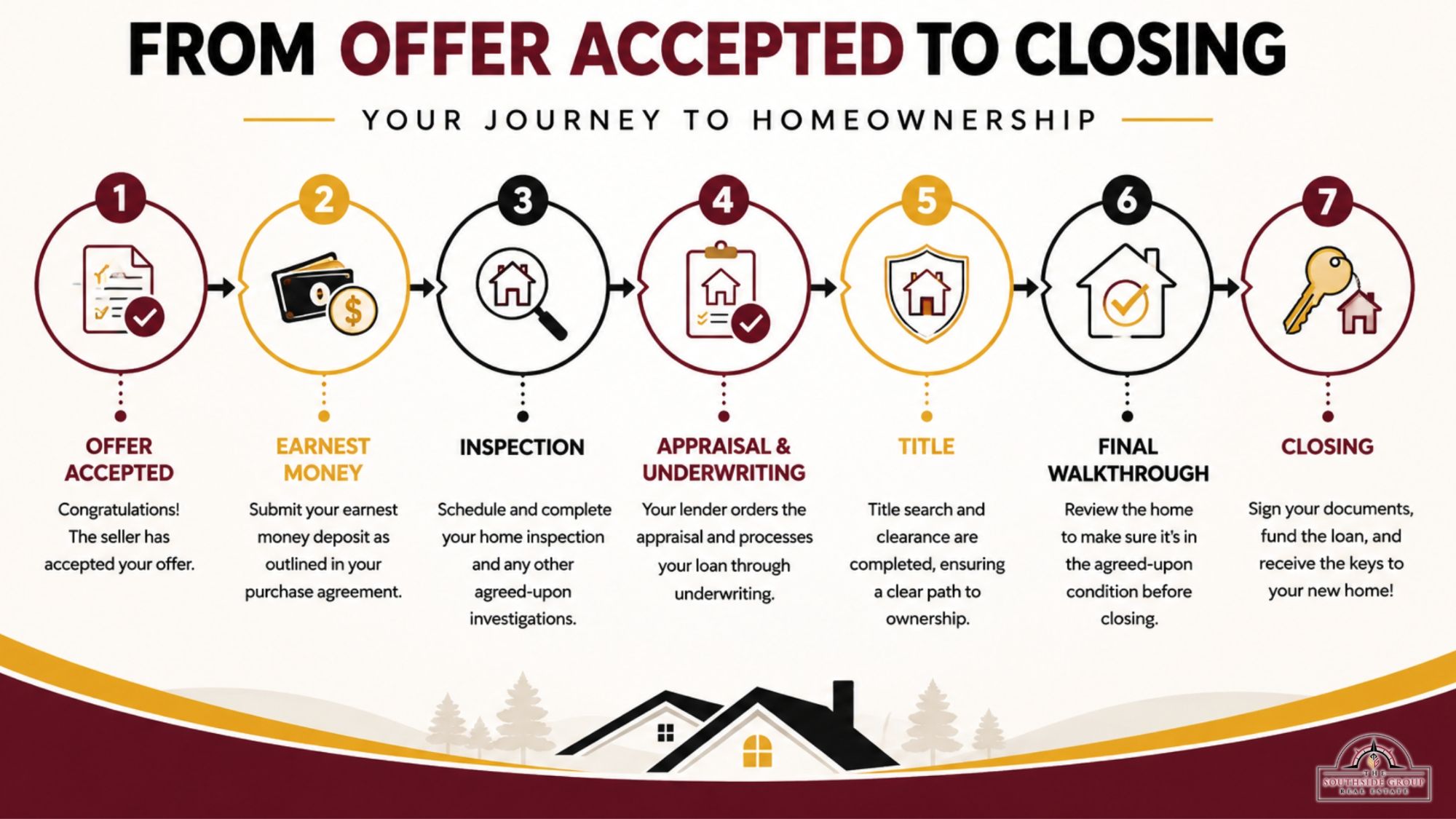
An accepted offer is worth celebrating—but it's also when the next phase of the work begins.
If you're buying a home in St. Mary’s County, Charles County, Calvert County, or elsewhere in Southern Maryland, having an experienced local professional beside you can make the path from accepted offer to settlement much easier to understand.
Whether you're preparing to make an offer or already have one accepted, explore our Southern Maryland buyer resources and learn how we can help you navigate your next move with confidence.
Ready for the next step? Explore our Southern Maryland home-buyer resources and start planning your path to closing.
This article provides general educational information and is not legal, tax, lending, or financial advice. Contract terms and individual transactions vary. Buyers should consult the appropriate qualified professional for advice about their specific circumstances.
FROM OUR BLOG


How to Follow Up With Real Estate Leads Without Being Pushy
Following up with real estate leads can feel like a balancing act. You want to stay connected, answer questions, and turn conversations into appointments. But you also don't want potential clients to feel pressured or overwhelmed by constant calls, texts, and emails. The good news? Effective real es

Best Tacos & Mexican Food Trucks in Southern Maryland
Best Tacos & Mexican Food Trucks in Southern Maryland are worth adding to your local must-try list whether you’ve lived here for years, just bought your first home, or are spending a weekend getting to know the area before a move. Southern Maryland may be famous for Chesapeake Bay seafood, but our l
First-Time Home Buyer Programs in Southern Maryland: 2026 Guide
Buying your first home can feel more achievable once you understand the financing and assistance programs available to you. For buyers in St. Mary’s, Calvert, and Charles counties, several Southern Maryland first-time home buyer programs may help with down payments, closing costs, student loan debt,