
If you have enough sunshine and yard space, growing your own apples, peaches, figs, or even pawpaws can be an appealing way to make more use of your property. The good news is that many fruit trees in Southern Maryland can grow successfully when you choose the right tree for the site and understand the maintenance involved.
Apples, pears, peaches, plums, cherries, figs, pawpaws, and persimmons are among the options Maryland homeowners can consider. But choosing a fruit tree involves more than finding one you like at a garden center. Sun exposure, drainage, mature size, pollination, disease resistance, and ongoing care can all affect your results.
Here is what Southern Maryland homeowners should know before making room for a backyard fruit tree.
What Fruit Trees Grow Well in Southern Maryland?
Maryland's climate allows homeowners to grow a surprisingly broad range of fruit. According to University of Maryland Extension guidance, Maryland gardeners can grow both pome fruits, such as apples and pears, and stone fruits, including peaches, plums, apricots, nectarines, and cherries.
There are also less conventional choices, including native pawpaw and non-native Asian persimmon. Figs deserve special attention in our part of the state because University of Maryland Extension notes that gardeners in Southern Maryland are among those who tend to have less difficulty overwintering them.
Apples and Pears
Apples are an obvious backyard-orchard choice, but they are not necessarily a plant-it-and-forget-it tree. Apples can face insect and disease problems, so selecting disease-resistant cultivars and an appropriate rootstock can make management easier.
Rootstock is especially important because it influences characteristics such as the mature size of a grafted fruit tree. A smaller tree can make pruning, monitoring, and harvesting more manageable in a residential yard.
Pears are another possibility. Both apples and pears may require another compatible cultivar for successful cross-pollination, depending on the variety.
Peaches, Plums, and Cherries
Peaches, nectarines, plums, apricots, and cherries are collectively known as stone fruits. They can be grown in Maryland, but homeowners should understand the challenges before planting.
Stone fruits flower relatively early, which can expose blossoms to damaging spring frosts. They can also be susceptible to diseases and insect pests. University of Maryland Extension recommends planting them where they will have excellent soil drainage and air circulation.
For someone who enjoys gardening and does not mind regular monitoring, stone fruit can be rewarding. For someone looking for an almost maintenance-free tree, it may not be the best place to start.
Pawpaws
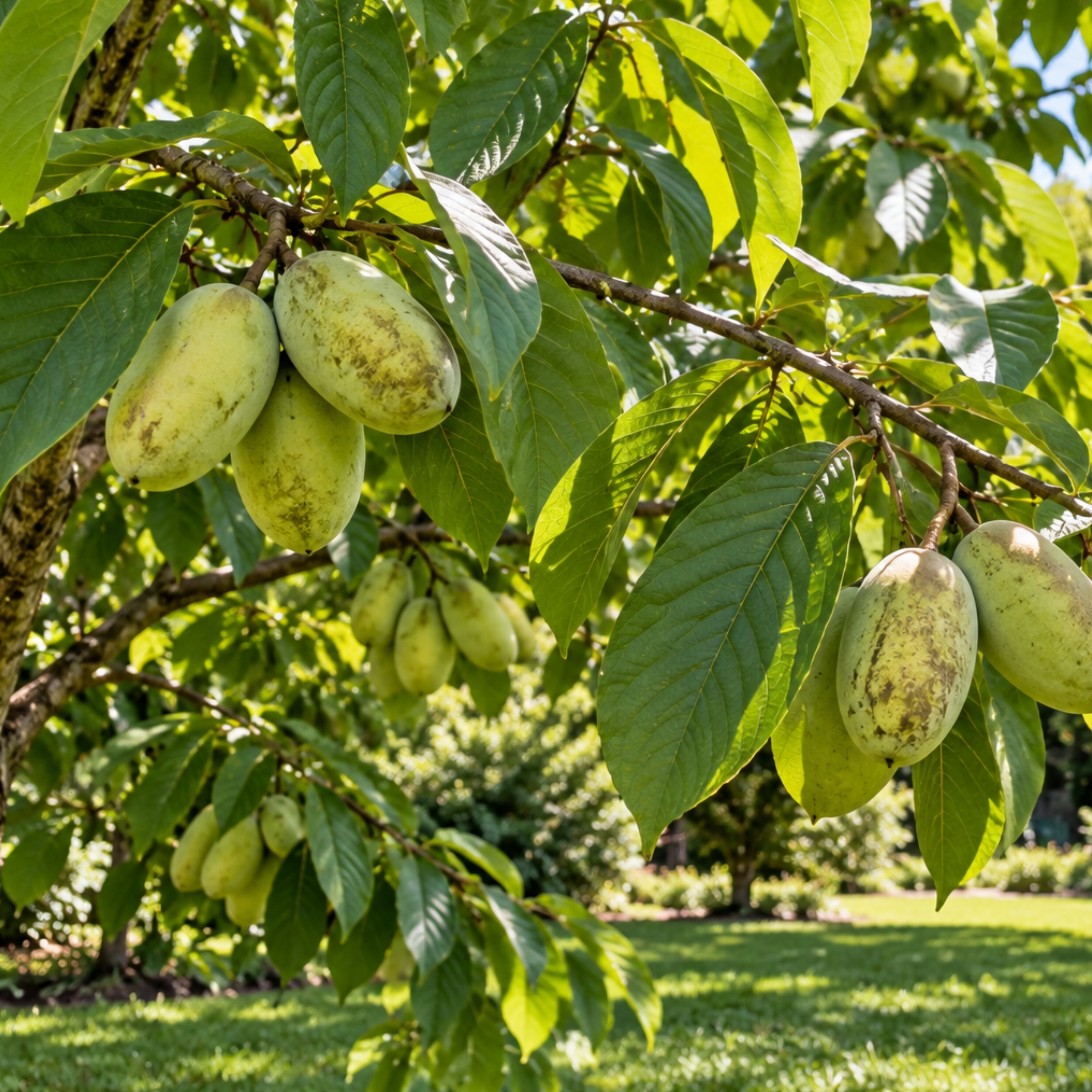
For a fruit with a genuine Maryland connection, consider the pawpaw.
Pawpaw is native to Maryland and can be grown in residential gardens. It tolerates more shade than many common fruit trees, although fruit production can decline with less sunlight.
Pollination is another important consideration. Pawpaws commonly require genetically different trees for cross-pollination, so homeowners interested in fruit production should plan the planting accordingly.
Persimmons
Asian persimmons are among the less common non-native fruits that can grow in Maryland. They give homeowners another option beyond traditional apples and peaches.
As with any fruit tree, cultivar selection and the individual conditions of your property should come before appearance alone.
Figs
Although technically different from the traditional orchard trees many people picture, figs are particularly interesting for Southern Maryland properties.
University of Maryland Extension reports that figs can be grown in the ground or containers and have relatively few pest and disease problems. Southern Maryland is also among the warmer parts of the state where gardeners generally have less difficulty overwintering them.
Figs still need the right location. They perform best with abundant sunlight, and severe winter cold can damage aboveground growth.
Which Fruit Tree Is Easiest to Grow in Maryland?
There is no single fruit tree that is easiest for every Maryland property.
Your soil, sunlight, available space, drainage, cultivar, and willingness to prune and monitor pests all matter. In fact, University of Maryland Extension generally describes tree fruits as requiring more effort and expense than small fruits such as strawberries, blackberries, raspberries, and blueberries.
If you specifically want a tree, there are ways to reduce the workload.
Disease-resistant apple cultivars paired with dwarfing rootstocks can make apples more manageable. Pawpaw may appeal to homeowners interested in a native fruit. Figs are another interesting Southern Maryland option because they have relatively few insect and disease problems compared with many traditional orchard fruits.
Instead of asking only which tree is easiest, ask which tree is best suited to the conditions and amount of maintenance you are willing to provide.
When Should You Plant Fruit Trees in Southern Maryland?
Timing matters when establishing a fruit tree.
University of Maryland Extension recommends late February through March, before buds open, as the preferred planting period for fruit plants in Maryland. Mid-September through mid-October is another option for many fruits, but stone fruits should be planted in spring so they have more time to establish.
Before planting, evaluate the site itself.
Most fruit plants perform best in full sun. University of Maryland Extension recommends a site receiving at least eight hours of direct summer sunlight for most fruits. Good drainage is equally important because standing water and poorly drained soil can create problems for roots.
Consider:
-
How much direct sunlight reaches the location
-
Whether water pools after heavy rain
-
The tree's mature height and spread
-
Distance from buildings, fences, utilities, and other trees
-
Whether another cultivar will be needed for pollination
-
How you will access the tree for pruning and harvesting
Those considerations are especially important on residential properties where today's small nursery tree can eventually occupy considerably more space.
Do You Need More Than One Fruit Tree?
Sometimes.
Pollination requirements depend on the fruit and cultivar. Many apples, pears, and sweet cherries are self-unfruitful, meaning a compatible second cultivar is needed to provide pollen.
Planting two trees of the exact same cultivar does not necessarily solve the problem. For example, University of Maryland Extension explains that two genetically identical apple trees cannot cross-pollinate each other. Compatible cultivars with overlapping bloom periods are needed.
Pawpaw also commonly requires cross-pollination from a genetically different plant.
This is one reason homeowners should check pollination requirements before bringing a fruit tree home. A little research can prevent planting a tree that flowers beautifully but fails to produce the harvest you expected.
When Should You Fertilize Fruit Trees in Maryland?
More fertilizer is not automatically better.
University of Maryland Extension recommends fertilizing fruit plants according to soil-test results and the needs of the plant. When fertilizer is needed, most fruit plants are fertilized around flowering time in spring.
Overfertilizing can encourage excessive leafy growth and can contribute to other plant-health problems. Late-summer and fall fertilization is generally discouraged because it can interfere with the plant's transition into winter dormancy.
For a new backyard orchard, consider testing the soil before planting. That can help identify nutrient or pH issues before the tree is established.
What Should You Look for When Buying a Fruit Tree?
The rows of flowering trees at a garden center can make an impulse purchase tempting, but fruit trees deserve more planning.
Before buying, identify:
-
The exact fruit and cultivar
-
The rootstock, if applicable
-
Expected mature size
-
Disease resistance
-
Sun and soil requirements
-
Pollination requirements
-
Whether the cultivar is appropriate for Maryland
-
Whether you have enough space for one or more mature trees
University of Maryland Extension recommends buying appropriate varieties from local garden centers, nurseries, or specialized fruit nurseries, preferably in the Mid-Atlantic region. It also notes that fruit-tree selection at general home-improvement stores may be more limited.
Bare-root trees are another option. Regardless of where you buy, inspect the plant and make sure you understand what you are purchasing rather than selecting solely on fruit photos or the current size of the tree.
Planning Fruit Trees Around a Southern Maryland Property
Fruit trees can be part of a larger plan for how you use your outdoor space.
Before planting, think beyond the first growing season. A tree that looks small near a patio, fence, shed, or walkway today may eventually need considerably more room. Fruit production can also mean pruning, watering, harvesting, fallen fruit, and wildlife activity.
If you are evaluating a home with gardening in mind, look at the property itself. Where does the sun fall throughout the day? Does the yard drain well? Is there enough usable space for a mature tree and potentially a pollination partner?
Those are practical questions whether you're already settled into a home or comparing properties through Southern Maryland communities.
The goal is not simply to find a property with a large yard. It is to find outdoor space that works for the way you actually want to use it.
FROM OUR BLOG
Calvert County Community Events | October 1–4, 2026
Calvert County events this weekend bring together one of the county’s biggest annual traditions, fall farm activities, waterfront events, fossils, farmers markets and community gatherings from October 1–4, 2026. If you’re searching for things to do in Calvert County this weekend, this is an especial
Charles County Community Events | October 1–4, 2026
Charles County events this weekend offer plenty of ways to welcome October throughout Waldorf, White Plains, Indian Head, Marbury and other communities across Southern Maryland. From October 1–4, 2026, the calendar includes seasonal craft shopping, pumpkin-patch adventures, live jazz, educational ac
St. Mary’s County Community Events | October 1–4, 2026
St. Mary’s County events this weekend are bringing fall fun to Leonardtown, Mechanicsville, and communities throughout Southern Maryland from October 1–4, 2026. If you’ve been searching for things to do in St. Mary’s County this weekend, this is a busy start to October. The calendar includes Leonard