
Southern Maryland Mold Prevention: How to Protect Your Home in Humid Weather
Humidity is part of life in Southern Maryland. Between warm summers, heavy rain, and seasonal temperature changes, homeowners in St. Mary's, Calvert, and Charles counties have good reasons to pay attention to moisture inside their homes.
Southern Maryland mold prevention starts with a simple principle: control moisture before mold has an opportunity to grow. Whether you own a waterfront property, a home with a basement, or a house with a crawl space, routine inspections and humidity management can help protect your property.
Here's what Southern Maryland homeowners should know about preventing mold, recognizing moisture problems, and maintaining a healthier indoor environment.
Why Mold Is a Concern for Southern Maryland Homeowners
Mold is a natural part of the environment, but it becomes a problem indoors when excess moisture allows it to grow on building materials and household surfaces.
According to the Maryland Department of Health's mold guidance, mold thrives in damp conditions. Common sources of indoor moisture include leaks, condensation, flooding, and elevated humidity.
In Southern Maryland, homeowners should pay particular attention to:
-
Basements and crawl spaces where moisture can accumulate.
-
Bathrooms, kitchens, and laundry rooms that generate humidity.
-
Roofs, windows, and foundations where water may enter.
-
HVAC systems that produce condensation.
-
Areas affected by heavy rain or drainage problems.
Homes in communities such as Leonardtown, Lusby, and Waldorf may have different construction styles and drainage conditions. The important consideration is the condition of the individual property, not simply its location.
A newer home is not automatically protected from moisture problems, and an older home does not necessarily have mold. Proper maintenance matters in either case.
Keep Indoor Humidity at the Right Level
One of the most effective ways to prevent mold is to maintain appropriate indoor humidity.
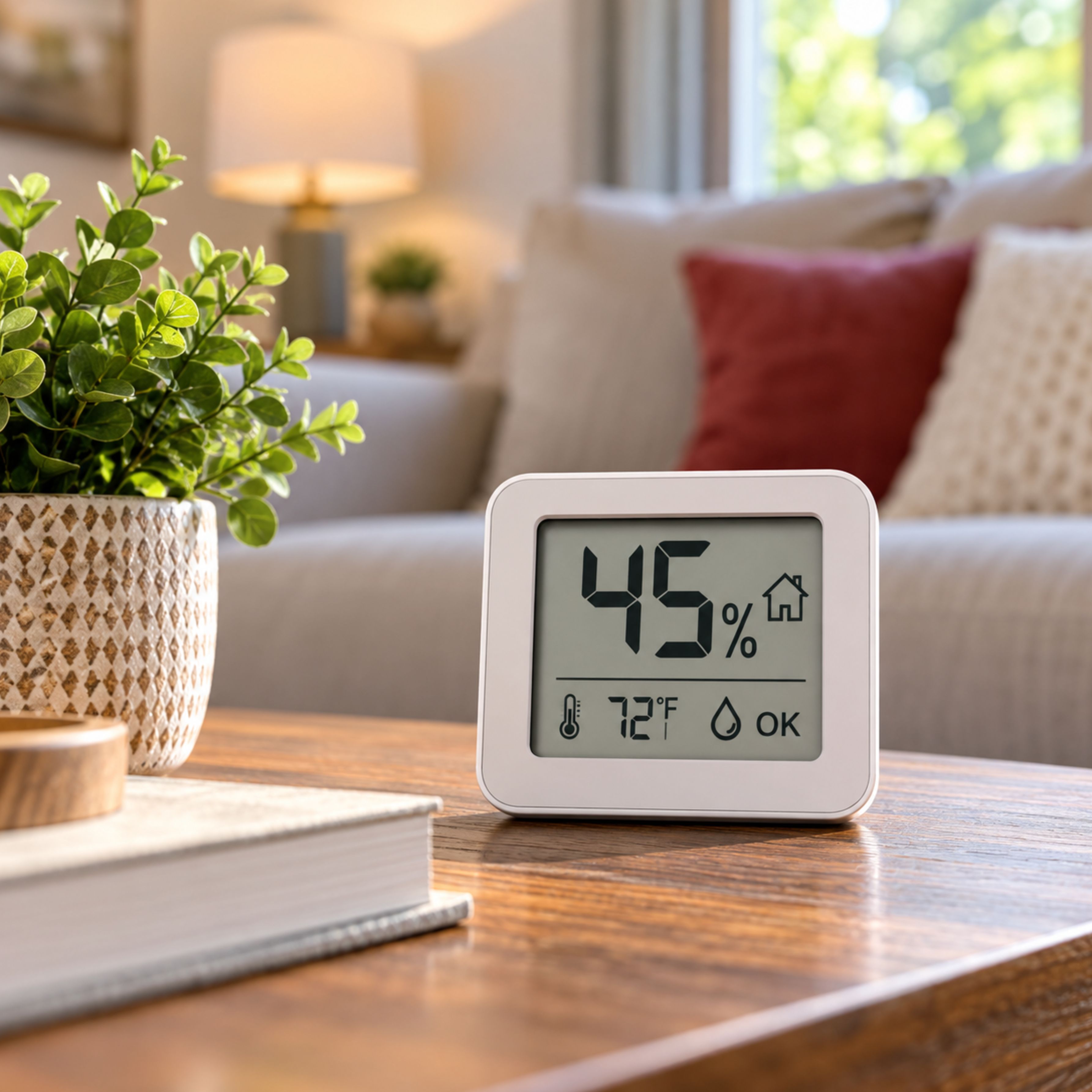
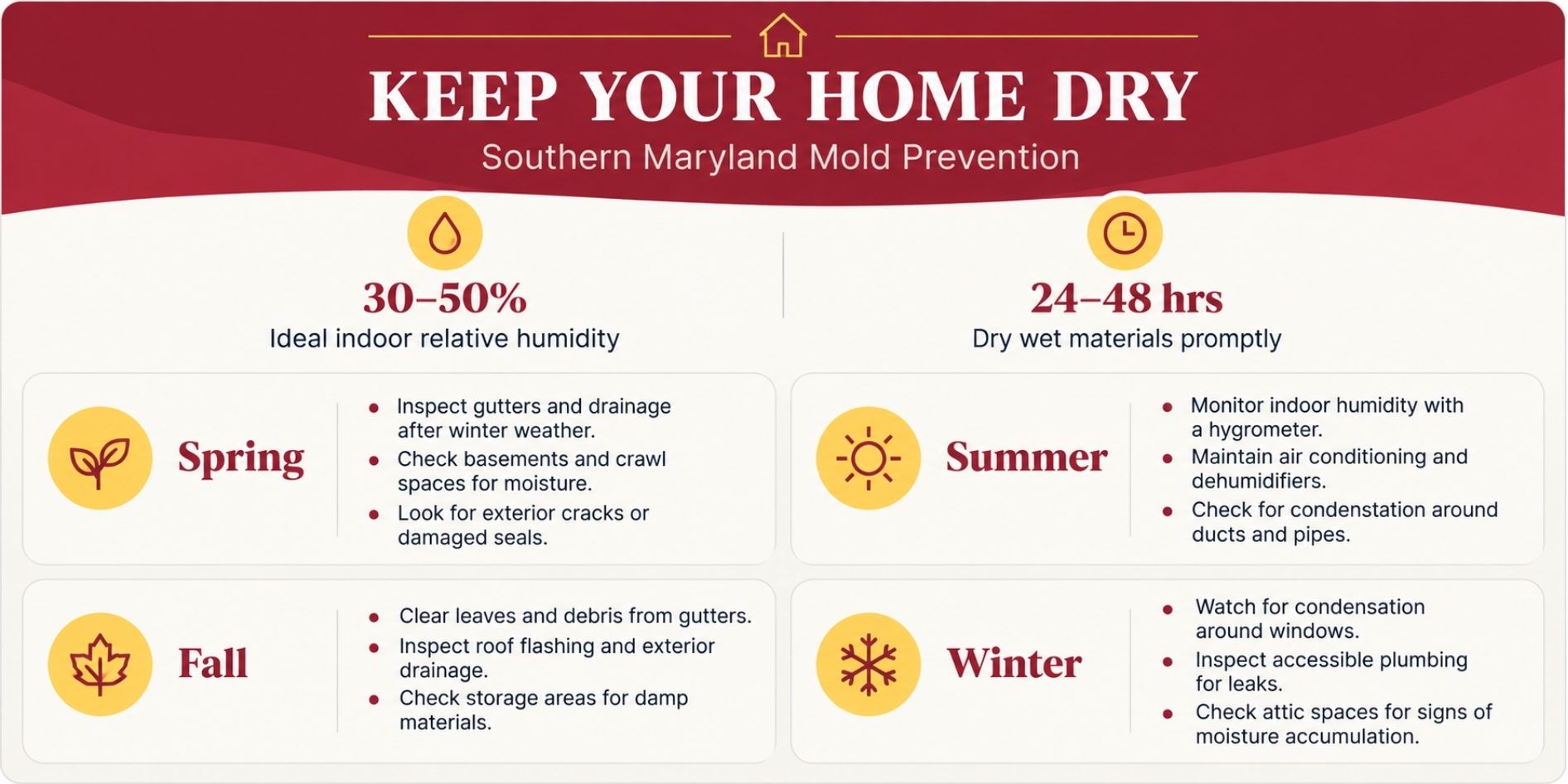
The U.S. Environmental Protection Agency's mold and moisture guide recommends keeping indoor relative humidity below 60%, ideally between 30% and 50%.
A small digital hygrometer can help you monitor humidity in different parts of your home.
Practical Ways to Control Humidity
-
Run air conditioning when appropriate to help remove moisture.
-
Use a properly sized dehumidifier in damp areas.
-
Empty and clean dehumidifier reservoirs as directed by the manufacturer.
-
Avoid leaving windows open when outdoor air is especially humid.
-
Investigate persistent condensation on windows, pipes, and walls.
Remember that humidity can vary from room to room. A comfortable living room does not necessarily mean a basement or crawl space has the same moisture conditions.
If indoor humidity remains high despite normal equipment operation, investigate possible moisture sources rather than relying entirely on a dehumidifier.
Prevent Mold in Basements, Crawl Spaces, and Attics
Some of the most important areas to inspect are spaces homeowners rarely visit.
Basement and Crawl Space Moisture Control 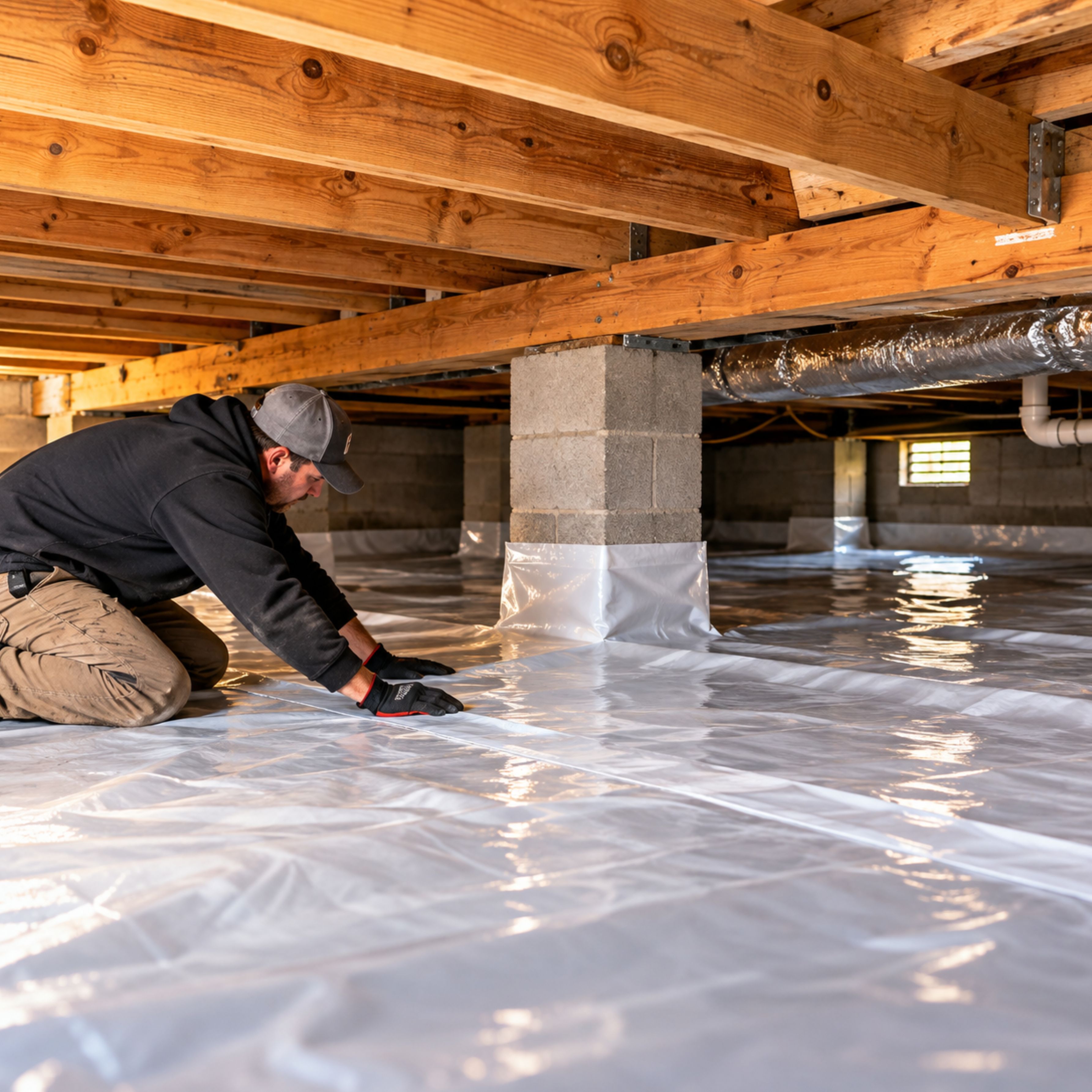
Basements and crawl spaces can experience moisture from groundwater, plumbing leaks, condensation, or inadequate drainage.
Check these areas periodically for damp insulation, standing water, musty odors, or discoloration.
Helpful preventive measures include:
-
Keeping gutters and downspouts clear.
-
Checking that water drains away from the foundation.
-
Inspecting exposed plumbing for leaks.
-
Evaluating damaged or missing crawl space vapor barriers.
-
Using moisture-control equipment where appropriate.
Crawl space ventilation and encapsulation requirements depend on the home's design. A qualified contractor can evaluate the correct approach before major changes are made.
Attic and Roof Moisture Problems
Attics can develop moisture problems when roof leaks, condensation, or ventilation defects go unnoticed.
Look for water stains, wet insulation, damaged roof materials, or visible growth on wood surfaces.
Bathroom exhaust fans should discharge outdoors rather than into the attic. If moisture problems persist, have the roof and attic ventilation evaluated.
Improve Ventilation and Maintain Your HVAC System
Ventilation helps remove moisture generated by everyday activities.
Cooking, showering, washing clothes, and drying laundry all introduce moisture into the indoor environment.
To reduce buildup:
-
Run bathroom exhaust fans during showers and afterward as needed.
-
Use a kitchen exhaust fan that vents outdoors when cooking.
-
Confirm that clothes dryers exhaust outside.
-
Inspect HVAC condensate drains and drip pans.
-
Replace HVAC filters according to equipment recommendations.
Air conditioning can help reduce humidity, but an improperly maintained system may contribute to moisture problems.
If you notice water collecting near indoor HVAC equipment, contact a qualified technician.
Also remember that ventilation and dehumidification are not interchangeable. Bringing humid outdoor air into a home may increase indoor moisture rather than reduce it.
Stop Water Intrusion Before Mold Develops 
A plumbing leak or roof problem can create mold-friendly conditions even when indoor humidity is otherwise controlled.
The EPA recommends drying water-damaged materials within 24 to 48 hours when possible to help prevent mold growth.
Start by identifying and stopping the water source.
Then take appropriate steps to dry affected areas:
-
Repair leaking pipes, fixtures, or roofing.
-
Remove standing water safely.
-
Dry wet surfaces and materials promptly.
-
Check surrounding spaces for concealed moisture.
-
Replace materials that cannot be adequately dried or cleaned.
Outside the home, maintain gutters, downspouts, grading, and drainage systems.
After significant storms, inspect accessible areas for signs of water intrusion.
Floodwater and sewage contamination require additional precautions. Extensive damage, contaminated water, or electrical hazards should be handled by qualified professionals.
For more guidance, review the EPA's mold cleanup recommendations.
Recognize Early Warning Signs of Mold
Mold is not always immediately visible.
One of the first indications may be a persistent musty odor, particularly in a basement, closet, bathroom, or other enclosed area.
Other warning signs include:
-
Visible spotting or fuzzy growth on surfaces.
-
Recurring condensation.
-
Water stains on ceilings or walls.
-
Peeling paint or deteriorating drywall.
-
Damp carpeting or insulation.
-
Musty smells that return after cleaning.
Not every stain indicates mold. However, recurring moisture should always be investigated.
Small areas of mold on suitable hard surfaces may be manageable using appropriate EPA cleaning guidance and protective precautions.
Porous materials, extensive contamination, recurring growth, or moisture inside wall cavities may require professional assessment and remediation.
Painting over mold or repeatedly cleaning the surface without correcting the moisture source does not solve the underlying problem.
A Seasonal Mold Prevention Checklist for Maryland Homes
Mold prevention works best as part of regular home maintenance rather than an occasional emergency project.
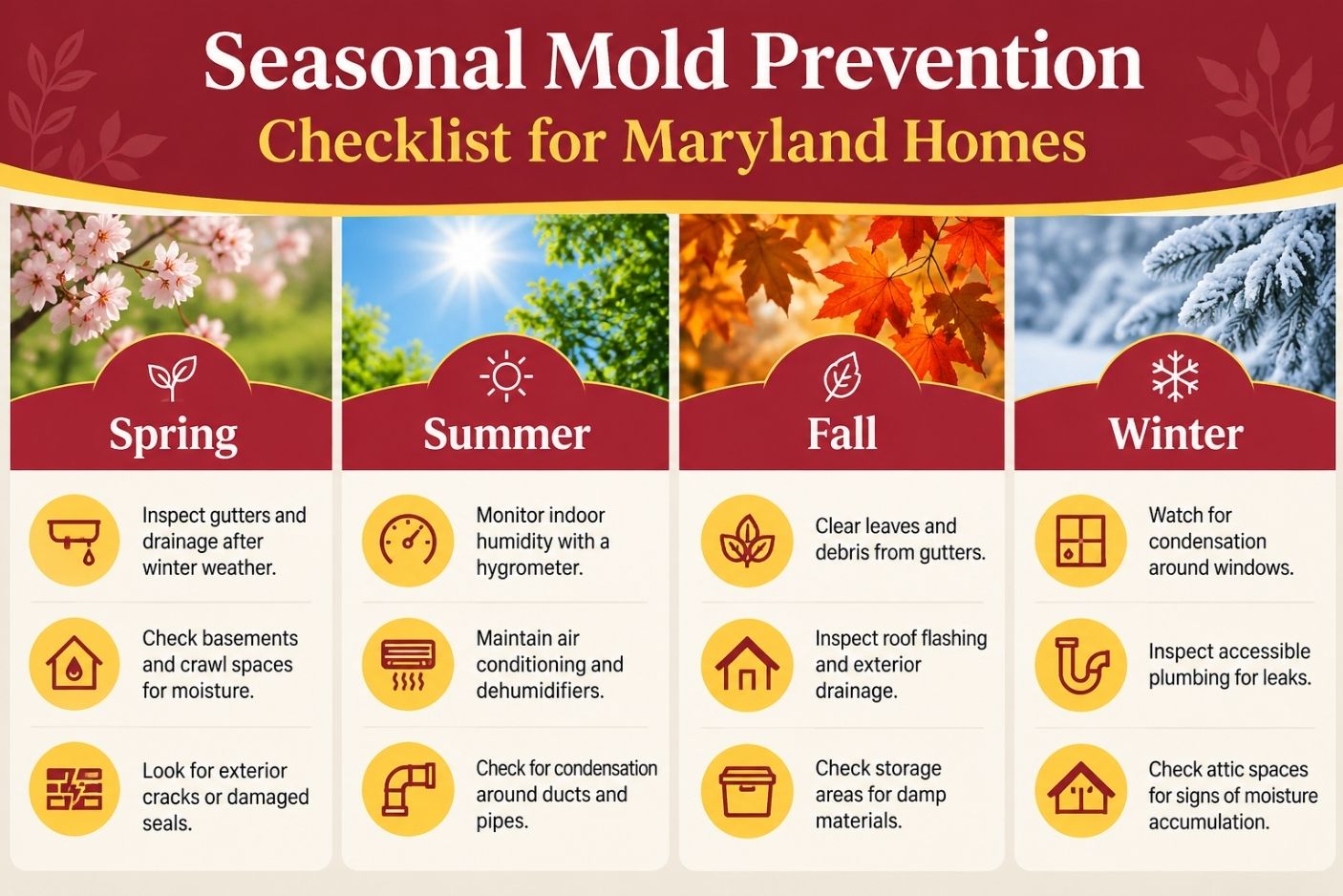
Keep a record of repairs, inspections, and recurring concerns. This makes it easier to identify patterns and explain completed maintenance work when needed.
Why Moisture Prevention Matters When Buying or Selling a Home
Moisture control is not only a home maintenance concern. It can also become an important consideration during a real estate transaction.
For buyers, a home inspection can help identify visible water damage, drainage concerns, and conditions that warrant additional evaluation.
When viewing a property, pay attention to musty odors, water stains, foundation drainage, and the condition of accessible basements or crawl spaces.
A general home inspection may not identify every concealed moisture problem. Depending on the findings, additional evaluation by a qualified specialist may be appropriate.
For sellers, addressing known leaks and moisture problems before listing can help clarify the property's condition and reduce uncertainty during inspections.
Keep documentation of completed repairs, professional evaluations, and applicable warranties. Sellers should also understand their Maryland disclosure obligations and obtain appropriate guidance when completing required forms.
If you're preparing to sell, explore our Southern Maryland seller resources to better understand the steps involved.
Maintaining a dry, well-cared-for home is worthwhile whether you're planning to move soon or stay for years.
For additional property and community information, you can also explore Southern Maryland communities and learn more about the local housing market.
Frequently Asked Questions About Mold Prevention in Southern Maryland
Can mold grow in a Maryland home during winter?
Yes. Mold can grow whenever sufficient moisture is present, including during colder months. Window condensation, plumbing leaks, and moisture in poorly ventilated spaces can create suitable conditions.
Does a dehumidifier prevent mold completely?
No. A dehumidifier helps control airborne moisture, but it cannot repair leaks, correct drainage problems, or remove existing mold. Effective prevention requires both humidity management and moisture-source control.
Should you test for mold if you notice a musty smell?
Not necessarily. A persistent musty odor warrants investigation for moisture and hidden growth. If visible mold is present, routine sampling may not be needed to determine that cleanup is necessary. A qualified professional can advise when testing would be useful.
Can mold return after it has been cleaned?
Yes. Mold can return if the underlying moisture source remains. Proper cleanup, complete drying, and correcting the original water problem are essential to reducing recurrence.
Questions About Buying or Selling a Home in Southern Maryland?
Whether you're maintaining your current home, preparing to sell, or evaluating a property to purchase, understanding moisture concerns is part of making informed real estate decisions.
The Southside Group Real Estate, helps buyers and sellers navigate real estate throughout St. Mary's, Calvert, and Charles counties.
If you have questions about buying or selling a home, contact The Southside Group Real Estate. We're happy to help you plan your next step.
FROM OUR BLOG


Golden Beach Real Estate Market Update | October 26, 2026
Golden Beach, Maryland, has a limited selection of homes currently available, but additional properties are expected to enter the market soon. This week's Golden Beach real estate market update highlights three active homes for sale, two coming-soon properties, and one home currently under contract.

Southern Maryland Pest Control Tips for Homeowners
Southern Maryland Pest Control Tips: Protect Your Home Year-Round Owning a home in Southern Maryland means enjoying everything from wooded landscapes and waterfront communities to established neighborhoods and rural properties. But the same environment that makes the region appealing can also create

Luxury Home Upgrades in Southern Maryland
Simple Ways to Make Your Southern Maryland Home Feel More Luxurious A luxurious home doesn't have to come with a luxury price tag. Sometimes, the smallest changes make the biggest difference in how a space looks, feels, and functions. Whether you own a waterfront property in Calvert County, a tradit