
Building a recognizable personal brand in real estate does not require posting on social media every day, creating elaborate videos, or spending hours developing content.
It requires something much more manageable: knowing what you want to be known for, sharing useful information consistently, and building genuine connections with the people you serve.
For real estate agents in Southern Maryland, personal branding can be especially valuable. Buyers and sellers often want more than property information. They want to understand the communities they are considering, navigate real estate decisions, and work with a professional who communicates clearly.
Whether you are a new agent establishing your presence or an experienced agent looking to improve your marketing, a simple weekly content plan can help you stay consistent without allowing content creation to take over your schedule.
This guide explains how to define your brand, develop content pillars, repurpose existing material, and create a four-week content calendar you can actually maintain.
Why Personal Branding Matters for Real Estate Agents
Your personal brand is the professional impression people develop through your communication, expertise, values, and interactions.
It is not simply your logo, headshot, colors, or social media profile.
A strong real estate personal brand helps potential clients understand three important things:
① Who you serve and what types of real estate questions you help answer.
② What knowledge and perspective you bring to the process.
③ What they can expect when communicating with you.
For example, an agent who regularly explains homebuying steps, discusses local housing conditions, and answers common questions may become recognizable for providing clear, practical guidance.
That recognition develops through repeated, useful interactions rather than constant promotion.
Personal branding also helps agents maintain a more consistent professional presence between transactions. Instead of appearing online only when announcing a new listing, agents can share information that remains valuable throughout the year.
The goal is not to become an influencer. It is to become a recognizable, credible real estate resource.
Build your personal brand with confidence while staying compliant. Review Maryland’s real estate advertising requirements and the FTC’s guidance on endorsements, influencers, and reviews to help keep your marketing transparent and professional.
Define Your Personal Brand and Build Local Expertise 
Before deciding what to post, establish what your content should communicate.
Start with three questions:
① Who am I trying to help?
② What real estate questions can I answer well?
③ What do I want people to remember about working with me?
Your answers should guide your content topics, tone, and presentation.
Identify your professional focus
A newer agent might emphasize educational content, explaining real estate terminology and helping buyers understand the purchase process.
An experienced agent might focus on market interpretation, transaction preparation, property presentation, or helping clients evaluate their options.
You do not need to claim expertise you have not yet developed. Sharing accurate information, explaining your research, and acknowledging when a question requires additional professional guidance can also build credibility.
Make local knowledge part of your brand
For agents working in Southern Maryland, local content creates opportunities to demonstrate relevant knowledge.
Consider covering communities throughout Charles County, Calvert County, and St. Mary's County, depending on the areas you serve.
Useful topics include:
✔ How to interpret local housing market reports.
✔ Questions to consider when comparing property types.
✔ Where to find official county planning and zoning information.
✔ How buyers can research transportation options and public amenities.
✔ What sellers should review before preparing a home for the market.
When discussing neighborhoods, use objective property and community information. Avoid describing who belongs in a particular area or making assumptions about residents based on protected characteristics.
Local expertise should help consumers make informed decisions, not steer them toward or away from communities.
Choose Four Content Pillars That Make Posting Easier
Content pillars are recurring categories that organize your marketing ideas.
Instead of starting from a blank page every week, you can rotate through four reliable themes.
1. Local Market Education
Explain market terminology, housing trends, inventory, pricing, and the difference between asking prices and closed sales. Use current, properly sourced information rather than unsupported market claims.
2. Buyer and Seller Guidance
Answer common transaction questions. Explain preapproval, showing preparation, contingencies, inspections, and seller preparation in accessible language.
3. Community Knowledge
Share public amenities, local events, community resources, and factual information about places you serve. Verify business information and event details before publishing.
Show how you prepare for appointments, research property information, organize transactions, or answer client questions. Protect confidential information and obtain permission before featuring clients.
These four pillars create variety while reinforcing a consistent professional identity.
They also make planning easier because each new idea fits into an existing category.
Turn One Idea Into Multiple Pieces of Content
One of the biggest misconceptions about real estate marketing is that every social media post needs an entirely new idea.
In practice, one well-researched topic can become several useful pieces of content.
Imagine creating a short educational video answering this question:
What should a buyer review before making an offer on a home in Southern Maryland?
You could repurpose that topic into:
✔ A 60-second video introducing three considerations.
✔ A longer blog post explaining financing, contingencies, and property research.
✔ A carousel summarizing questions to ask before submitting an offer.
✔ An email answering a common buyer question.
✔ A short FAQ post addressing one detail from the original video.
The key is to adapt the information to the format rather than publishing identical material everywhere.
A short video should communicate one clear takeaway. A blog post can explain the topic in more depth. An email can provide a practical checklist.
Repurpose blog posts into videos
If you already publish real estate articles, identify one question or takeaway from each article and turn it into a short video.
For example, a blog about preparing a home for sale could become three videos covering decluttering, maintenance considerations, and preparing for photography.
Repurpose videos into written content
Your videos can also provide the foundation for blog posts.
Start with the transcript, verify the information, organize it under helpful headings, and expand areas that need more explanation.
This approach reduces the time spent brainstorming while creating multiple opportunities for potential clients to discover your expertise.
A Simple Weekly Content Schedule for Busy Agents
Consistency matters more than creating an unrealistic posting schedule.
A manageable starting point is three primary posts each week, supported by a small amount of planning and intentional engagement.
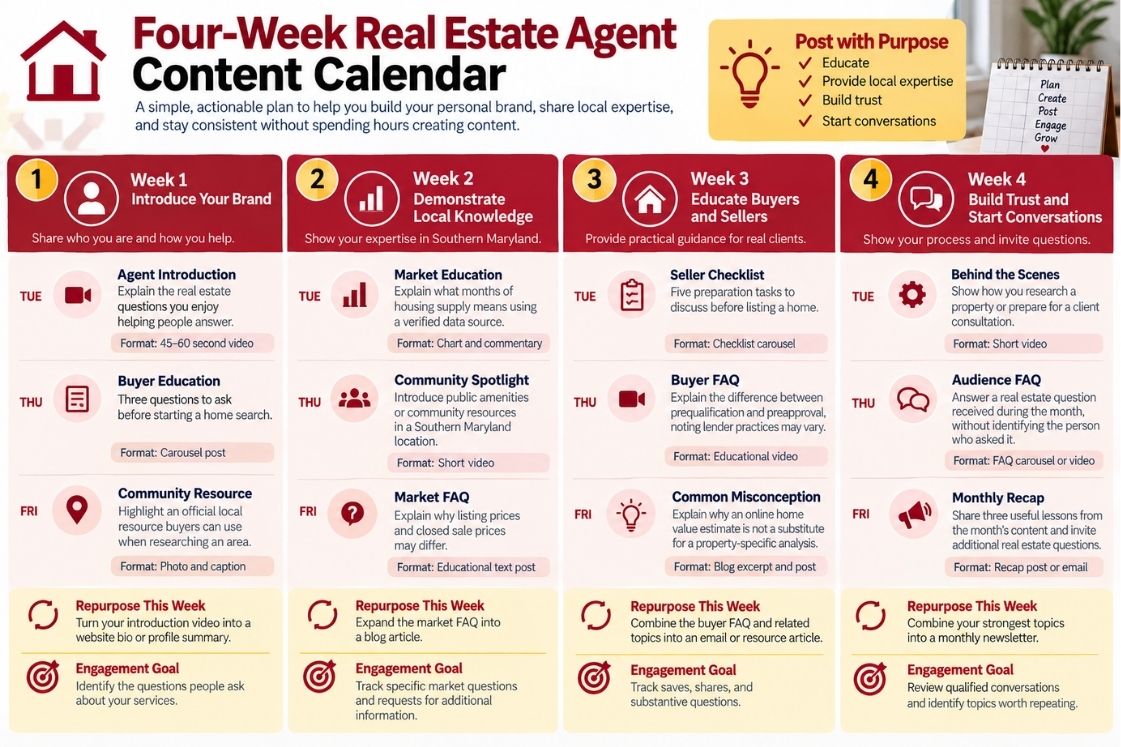
Repurpose: Combine the strongest educational topics into a monthly newsletter. Engagement goal: Review qualified conversations and identify topics worth repeating.
At the end of four weeks, you will have a small library of educational content and a clearer understanding of which topics resonate with your audience.
You can then repeat the structure using new questions, updated market information, and fresh examples.
Measure Meaningful Engagement, Not Just Likes 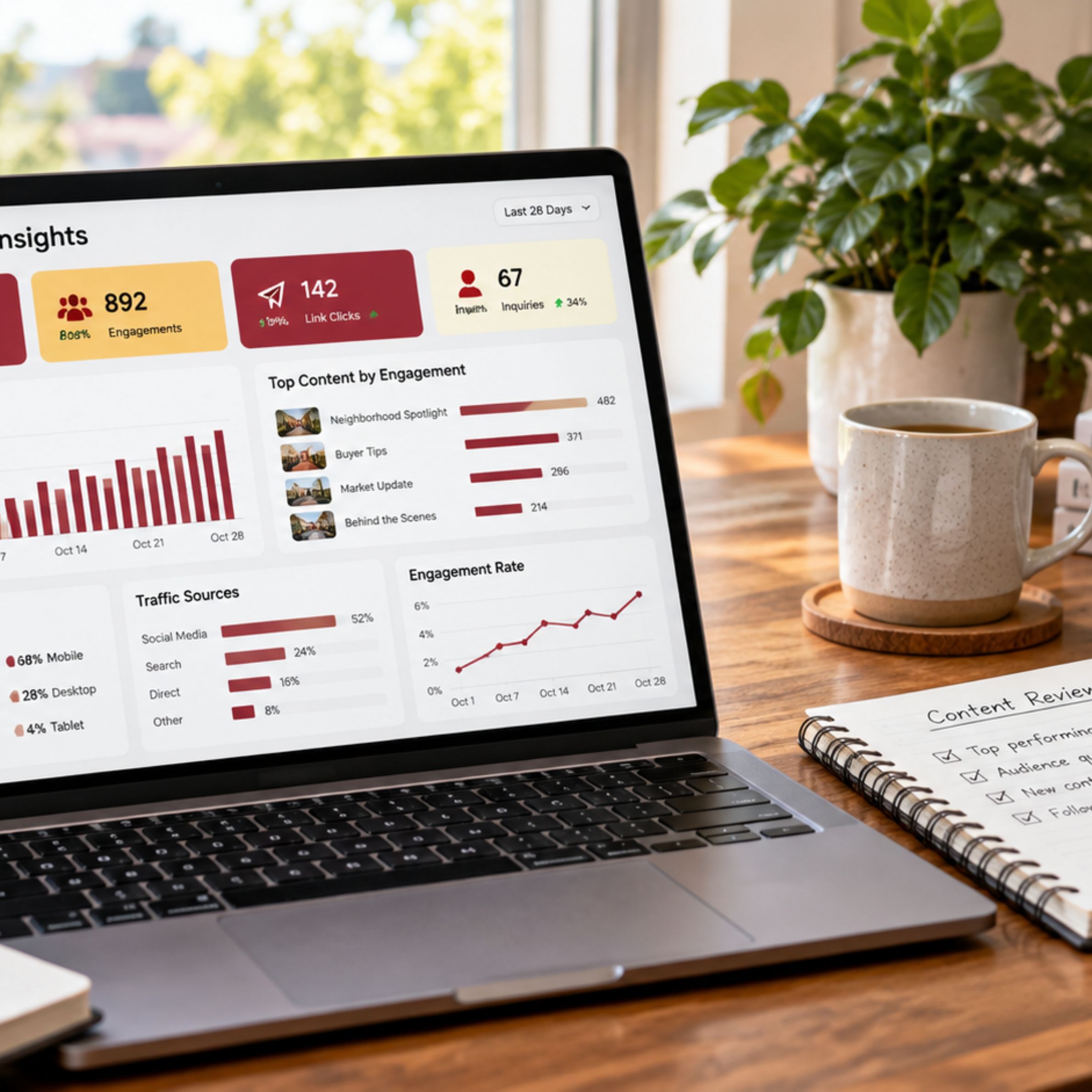
Posting consistently is useful, but content performance should not be measured only by views, likes, or follower counts.
A post that receives fewer views but leads to a thoughtful question from a potential client may be more relevant to your business than a widely viewed post with little meaningful interaction.
Track a few indicators that connect to your marketing goals.
|
Metric |
What it helps you understand |
|---|---|
|
Saves and shares |
Whether people find your content worth keeping or passing along |
|
Relevant comments |
Which topics generate real questions or discussion |
|
Qualified inquiries |
Whether content encourages potential clients to reach out |
|
Website visits |
Whether people explore additional information |
|
Follow-up conversations |
Whether engagement develops into a meaningful professional connection |
Use available platform analytics, website reporting, and CRM records where appropriate.
Avoid three common mistakes: posting only promotional content, copying trends unrelated to your audience, and changing strategies before gathering enough information to evaluate them.
Also avoid treating every interaction as a sales opportunity. A helpful response to a genuine question can be valuable even when the person is not ready to buy or sell.
Review results monthly. Identify the topics that produced useful conversations, and use those findings to guide the next calendar.
How Brokerage Support Can Strengthen Your Marketing
Personal branding is an individual responsibility, but the professional environment surrounding an agent can influence how efficiently they develop their marketing approach.
When evaluating a brokerage, consider asking about training opportunities, content guidance, marketing technology, brand standards, and opportunities to collaborate with other professionals.
A useful brokerage conversation might include questions such as:
✔ What resources are available to help agents understand advertising requirements?
✔ Is guidance available for creating consistent marketing routines?
✔ What technology can agents use to organize contacts and follow-up activity?
✔ How does the brokerage approach professional development and accountability?
The answers can help agents assess whether a brokerage's approach aligns with their business goals.
For agents considering a change, evaluating the professional environment is just as important as reviewing the tools themselves.
Frequently Asked Questions About Real Estate Personal Branding
How often should a real estate agent post on social media?
There is no universal posting frequency that works for every agent. Starting with two or three useful posts each week can provide a manageable routine. Review engagement and adjust based on your capacity and audience.
What should a new real estate agent post without listings?
New agents can share buyer and seller education, explain real estate terminology, highlight verified community resources, and document professional learning. Useful content does not require an active listing.
Do real estate agents need to appear on camera?
No. Video can be useful, but agents can also create educational graphics, blog articles, written posts, and narrated presentations. Choose formats that communicate information clearly and that you can maintain consistently.
How can agents create content without spending hours every week?
Use recurring content pillars, plan topics in advance, record multiple short videos during one session, and repurpose existing educational material. A repeatable process reduces the need to develop entirely new ideas for every post.
How long does it take to build a personal brand in real estate?
There is no reliable universal timeline. Results depend on content quality, consistency, audience relevance, existing relationships, and market conditions. Focus on developing a sustainable routine and evaluating meaningful engagement over time.
Build a Brand You Can Maintain
Personal branding for real estate agents does not need to be complicated.
Start by defining what you want to be known for. Choose a few content pillars that reflect your knowledge. Create a manageable weekly schedule, repurpose useful material, and pay attention to the conversations your content generates.
The four-week calendar in this guide provides a starting point, not a formula for guaranteed results.
The most effective long-term approach is one you can maintain while continuing to serve clients and develop your professional skills.
Grow Your Real Estate Career With the Right Support
Building a successful real estate business takes more than hard work. The right training, tools, guidance, and professional environment can help agents develop stronger systems and grow with confidence.
Interested in learning more about The Southside Group Real Estate?
FROM OUR BLOG


Golden Beach Real Estate Market Update | October 26, 2026
Golden Beach, Maryland, has a limited selection of homes currently available, but additional properties are expected to enter the market soon. This week's Golden Beach real estate market update highlights three active homes for sale, two coming-soon properties, and one home currently under contract.

Southern Maryland Pest Control Tips for Homeowners
Southern Maryland Pest Control Tips: Protect Your Home Year-Round Owning a home in Southern Maryland means enjoying everything from wooded landscapes and waterfront communities to established neighborhoods and rural properties. But the same environment that makes the region appealing can also create

Luxury Home Upgrades in Southern Maryland
Simple Ways to Make Your Southern Maryland Home Feel More Luxurious A luxurious home doesn't have to come with a luxury price tag. Sometimes, the smallest changes make the biggest difference in how a space looks, feels, and functions. Whether you own a waterfront property in Calvert County, a tradit