
If your sinks are draining slowly, your toilets are making strange noises, or your yard smells like sewage, your septic system may be telling you something is wrong.
For homeowners in St. Mary's, Calvert, and Charles counties, recognizing septic warning signs early can help prevent sewage backups, property damage, and potentially expensive repairs.
Understanding septic tank signs in Southern Maryland is particularly important for homes that rely on private wastewater treatment instead of public sewer service.
Here's something many homeowners don't realize: a septic tank is normally full of wastewater. The real concern is whether too much sludge or scum has accumulated, wastewater cannot flow properly, or the drainfield is struggling to absorb it.
Let's look at 10 warning signs, what they might mean, and when it's time to call a septic professional.
What Does It Mean When Your Septic Tank Is Full? 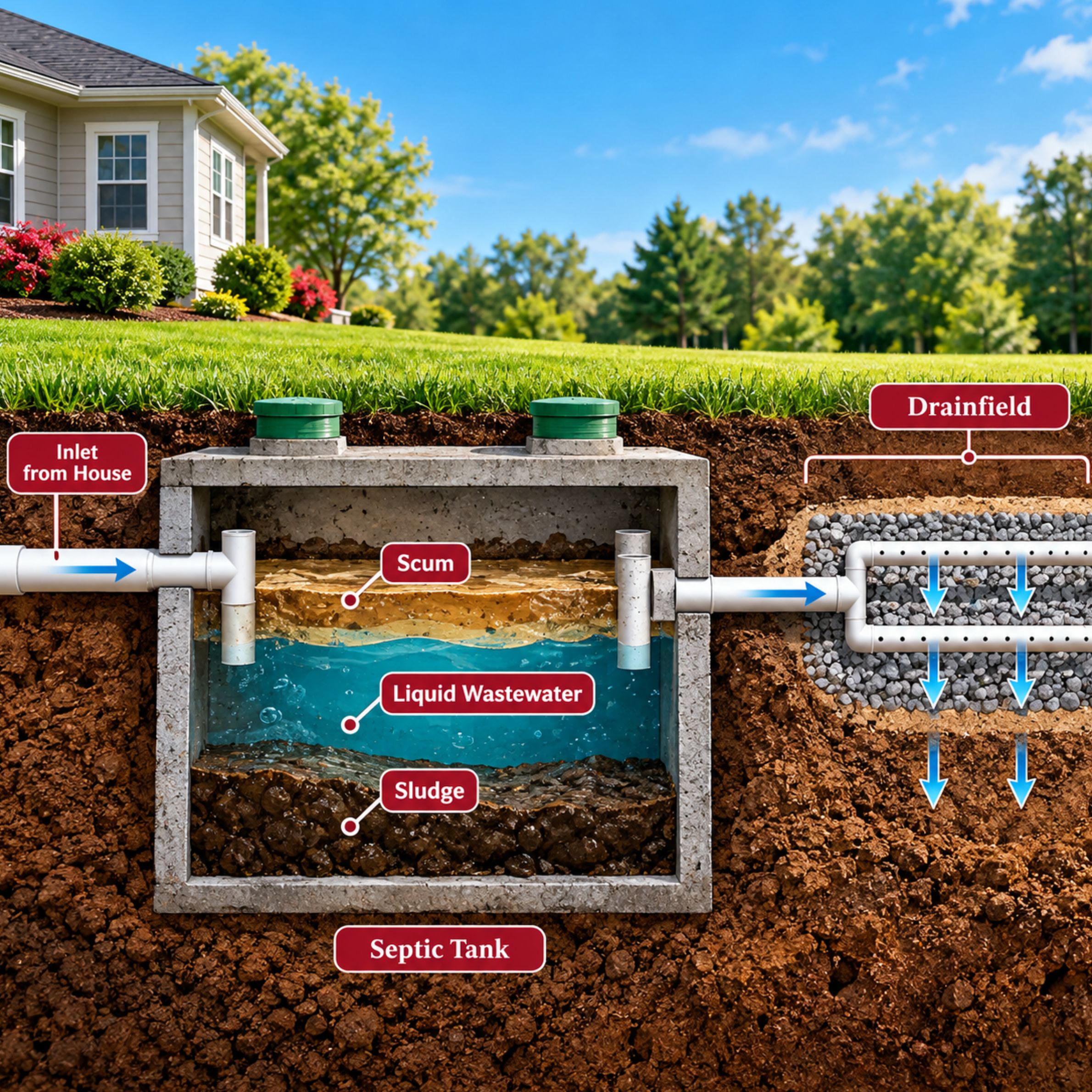
A conventional septic system consists of a buried tank and a drainfield.
Wastewater from the house enters the septic tank. Heavier solids settle to the bottom, forming sludge. Grease and lighter materials rise to the top, creating a scum layer. The liquid wastewater between those layers flows toward the drainfield, where it receives additional treatment in the soil.
Because a properly functioning septic tank normally maintains a liquid level near its outlet, seeing wastewater inside the tank does not automatically indicate a problem.
Common causes of septic system problems
-
Excessive sludge and scum accumulation
-
Blocked sewer pipes, outlets, or effluent filters
-
Excessive household water use
-
Saturated or malfunctioning drainfields
-
Failed pumps or electrical components
Pumping removes accumulated solids, but it does not correct every septic system problem. Know what’s normal—and what may signal a problem. Explore the EPA’s Septic System FAQs.
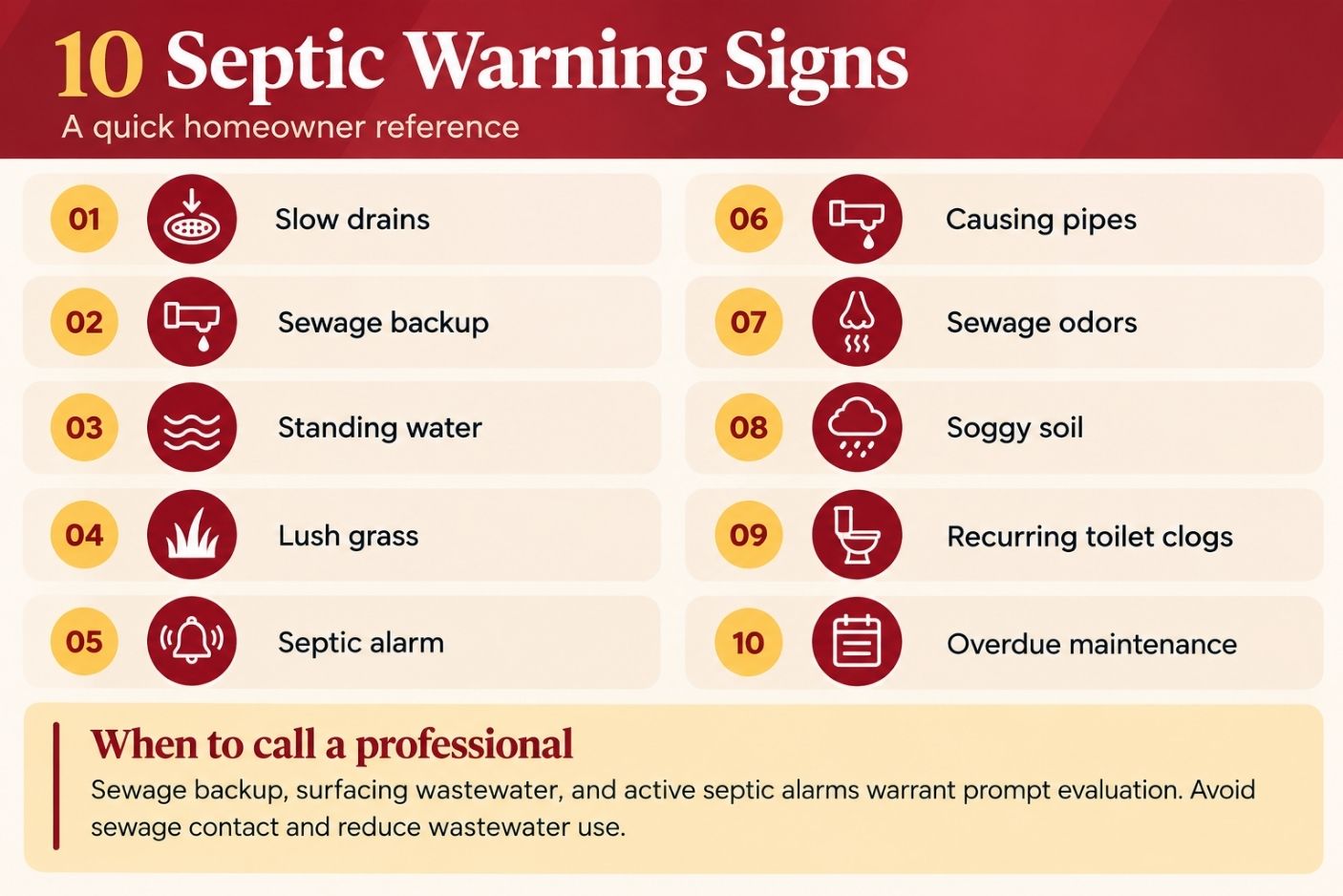
10 Warning Signs Your Septic Tank May Need Attention
1. Slow-Draining Sinks, Tubs, and Showers
Water taking longer than usual to drain may be an early warning sign.
A single slow drain often indicates a localized clog. However, multiple slow drains throughout the house can suggest a problem with the main sewer line or septic system.
If the problem persists, arrange a professional evaluation.
2. Gurgling Sounds in Toilets or Drains
Bubbling or gurgling noises may indicate restricted wastewater flow or plumbing ventilation problems.
You might hear these sounds when flushing a toilet, draining a bathtub, or running the washing machine.
Gurgling alone does not confirm that the septic tank needs pumping, but recurring noises deserve attention.
3. Sewage Backing Up Into Household Plumbing
Sewage appearing in a bathtub, shower, toilet, or floor drain is a serious warning sign.
Possible causes include a blocked sewer line, an overloaded septic system, or a drainfield that cannot accept wastewater.
Stop using plumbing fixtures and contact a qualified professional promptly. Avoid contact with sewage because it may contain harmful microorganisms.
4. Persistent Sewage Odors Inside or Outside
Persistent sewage odors may occur near drains, septic tank access points, plumbing cleanouts, or the drainfield.
Possible causes include damaged plumbing, vent problems, leaks, or wastewater reaching the surface.
Do not assume an unpleasant smell means the tank simply needs pumping. A professional should identify the source.
5. Standing Water Near the Septic Tank 
Unexpected pooling near a septic tank may indicate a wastewater problem.
Rainfall, grading, and surface drainage can also create puddles, so standing water is not automatically evidence of septic failure.
Water that appears during dry weather, returns repeatedly, or has a sewage odor should be investigated.
6. Soft, Soggy Soil Over the Drainfield
The drainfield allows wastewater to move into the soil for further treatment.
When the ground becomes saturated or wastewater cannot disperse properly, the area may feel unusually soft or wet.
Southern Maryland properties have varying soil and drainage conditions. Persistent saturation over a drainfield deserves professional evaluation.
7. Unusually Green or Lush Grass Above the Drainfield
A noticeably greener or faster-growing section of lawn can sometimes indicate excess wastewater nutrients near the surface.
However, sunlight, fertilizer, irrigation, and soil differences can produce similar effects.
This sign becomes more concerning when accompanied by sewage odors, wet soil, or drainage problems.
8. Toilets Flushing Poorly or Backing Up Repeatedly
An occasional toilet clog may be a routine plumbing issue.
Repeated problems affecting multiple toilets, especially when other fixtures are being used, can suggest a larger blockage or wastewater disposal problem.
Avoid repeatedly relying on chemical drain cleaners. Have the system properly diagnosed.
9. Septic Pump or Treatment-System Alarm Activating
Some septic systems have pumps, electrical controls, or advanced treatment equipment with warning alarms.
An activated alarm may indicate high water levels, electrical problems, or equipment failure.
Follow the manufacturer's instructions and contact the appropriate service provider. Not all conventional septic systems have alarms.
10. Overdue Pumping or Unknown Maintenance History
If you do not know when your septic system was last inspected or pumped, it is worth checking your maintenance records.
This is a maintenance risk factor rather than a physical symptom.
A septic professional can measure accumulated sludge and scum to determine whether pumping is necessary.
How Often Should You Pump Your Septic Tank in Southern Maryland?
The appropriate pumping schedule depends on tank size, household water use, the amount of solids entering the system, and the equipment installed.

These are general recommendations, not a guarantee that every Southern Maryland property can follow the same schedule. Systems with pumps or advanced treatment equipment may have different maintenance requirements.
Review the EPA's septic system maintenance recommendations and consult a qualified professional for your specific property.
Pumping may temporarily lower wastewater levels, but it will not repair a damaged or failed drainfield.
What to Do When You Notice Septic System Warning Signs
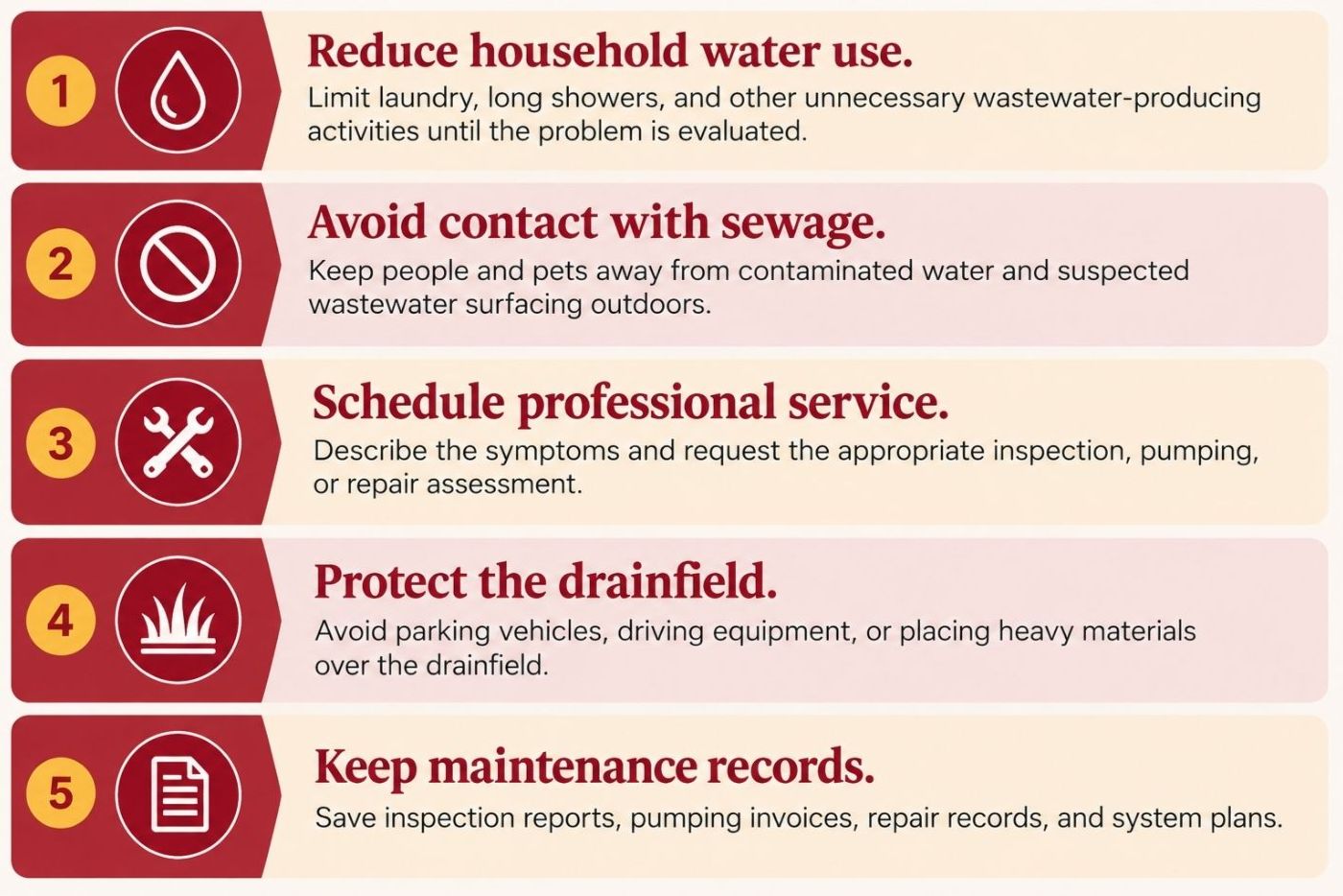
Never enter a septic tank or attempt to inspect its interior yourself. Septic tanks can contain dangerous gases and present serious confined-space hazards.
Septic System Considerations in St. Mary's, Calvert, and Charles Counties
Septic system conditions can vary across Southern Maryland because individual properties have different soil characteristics, drainage patterns, groundwater conditions, and system designs.
A home in Leonardtown may have a different wastewater system configuration than one in Prince Frederick or La Plata.
The location alone does not determine whether a septic system is adequate or functioning properly.
Local Records and Permits Matter
When evaluating a septic system, try to locate:
-
Original septic permits or available system plans
-
Tank and drainfield locations
-
Pumping and inspection records
-
Documentation of previous repairs
-
Information about advanced treatment equipment, if applicable
For St. Mary's County properties, the St. Mary's County Health Department septic system resources provide information about on-site wastewater systems and related requirements.
Homeowners in Calvert and Charles counties should consult their local environmental health authorities for property-specific records, repair approvals, and permit requirements.
Why Septic Maintenance Matters When Buying or Selling a Home
A septic system can become an important part of a real estate transaction, especially when a property depends on privately maintained wastewater treatment.
For Homebuyers
When purchasing a home with a septic system, consider arranging an inspection by a qualified septic professional.
A general home inspection may not include a comprehensive evaluation of the tank, distribution components, and drainfield.
Ask about the system's age, type, location, permits, maintenance history, and previous repairs.
If you're exploring Southern Maryland homes for sale, understanding whether a property uses public sewer or private septic can help you plan inspections and maintenance responsibilities.
For Home Sellers
Organizing septic maintenance records before listing your property can make it easier to answer buyer questions.
If you know about recurring backups, sewage odors, or drainage problems, consider a professional evaluation before marketing the home.
Inspection findings may affect repair planning, negotiations, or transaction timing. Maryland sellers should also review applicable disclosure obligations with an appropriate real estate or legal professional.
For additional preparation guidance, explore our Southern Maryland seller resources.
A documented maintenance history does not guarantee that a septic system is problem-free, but it gives buyers and sellers more useful information.
FAQ's: Signs Your Septic Tank Is Full
Can a septic tank be full without showing warning signs?
Yes. A septic tank normally contains wastewater near its operating level. Excess sludge and scum can also accumulate without obvious symptoms. Professional inspections and maintenance records help determine when pumping is needed.
Will pumping a septic tank fix a drainfield problem?
Not necessarily. Pumping removes accumulated solids and liquid from the tank, but it does not repair damaged drainfield pipes, unsuitable soil conditions, or a failed drainfield. A septic professional should diagnose the underlying problem.
Can heavy rain cause septic system problems?
Yes. Heavy rainfall can saturate soil and interfere with wastewater absorption in a drainfield. Avoid unnecessary water use during suspected system problems, and have persistent backups or surfacing wastewater evaluated.
Should I get a septic inspection before buying a home in Southern Maryland?
A septic-specific inspection is a sensible part of evaluating a property with a private wastewater system. Ask about the system's location, age, type, permits, maintenance records, and inspection findings. The scope and timing of inspections should be discussed with your real estate professional and qualified septic inspector.
Buying or Selling a Home With a Septic System in Southern Maryland?
A property's septic system is an important part of understanding its condition and ongoing maintenance responsibilities.
Whether you're preparing to sell a home in St. Mary's County, considering a property in Calvert County, or buying in Charles County, The Southside Group Real Estate can help you navigate the real estate side of the process and coordinate appropriate questions for qualified inspectors.
For practical local guidance, contact The Southside Group Real Estate to discuss your Southern Maryland real estate plans.
FROM OUR BLOG


Calvert County Community Events | October 22–25, 2026
Your Weekend Guide to Halloween Fun, Fall Festivals & Family-Friendly Activities in Southern Maryland Calvert County events this weekend bring spooky Halloween adventures, colorful fall festivals, outdoor activities, and plenty of community fun to Southern Maryland from Thursday, October 22, through

Charles County MD Events This Weekend | October 22–25, 2026
Charles County MD events this weekend are bringing Halloween thrills, fall festivals, trick-or-treating, and plenty of community fun to Southern Maryland from Thursday, October 22, through Sunday, October 25, 2026! If you've been searching for "Halloween events near me," "free things to do in Charle

Who Is Considered a First-Time Home Buyer in Maryland?
First-time home buyer Maryland rules may be more flexible than you think. You do not necessarily have to be buying your first house ever to qualify as a first-time homebuyer under certain Maryland programs. For the Maryland Mortgage Program (MMP), Maryland currently defines a first-time homebuyer as