
When you find a home you want to buy, one of the decisions you may face is how much earnest money to include with your offer. For buyers trying to understand earnest money in Maryland, there is an important point to know from the start: there is not one deposit amount that is right for every transaction.
Your earnest money should fit the property, your offer strategy, your available funds, your financing, and the terms of your contract. A larger deposit may demonstrate commitment to a seller, but putting more money at risk is not automatically the right strategy.
For buyers in St. Mary's, Calvert, and Charles counties, understanding how the deposit works before making an offer can help you make a more informed decision.
What Is Earnest Money in a Maryland Real Estate Transaction?
Earnest money is a deposit connected to your offer to purchase a home. It is sometimes called an earnest money deposit or good faith deposit.
The deposit is not the same thing as your mortgage down payment. It is money provided in connection with the real estate contract and, when held by a Maryland real estate broker, is treated as trust money under Maryland law.
The Maryland Real Estate Commission's guidance on real estate deposits explains that trust money held by a broker must be deposited into the broker's trust account promptly after both parties accept the contract of sale. Maryland law also governs how trust money is maintained and distributed.
Assuming the transaction proceeds to settlement, your deposit is generally accounted for as part of the money involved in completing the purchase according to your contract and settlement documents.
Is There a Required Earnest Money Amount in Maryland?
Buyers should not assume Maryland has a single required earnest money percentage that applies to every ordinary residential resale offer.
Instead, the amount is part of the terms of the transaction. That is why rules of thumb you may see online should not automatically determine how much you offer on a particular Southern Maryland home.
The better question is not simply, "What percentage should I put down?"
It is:
What deposit makes sense for this property, this offer, and the amount of financial risk I am comfortable accepting under the contract?
That decision should be made before you submit the offer, not after the contract has already been accepted.
How Much Earnest Money Should You Consider Offering?
There is no one-size-fits-all answer. Several factors can influence the deposit that makes sense.
Purchase price
The home's purchase price provides important context. Rather than choosing an arbitrary amount because another buyer used it on a different property, consider your deposit as part of your complete offer.
Competition for the property
If several buyers are competing for the same home, the seller may compare more than the offered purchase prices. Deposit terms can be one element of that comparison.
A meaningful earnest money deposit may help communicate that you are committed to completing the purchase, but it does not guarantee that the seller will choose your offer.
Your available cash
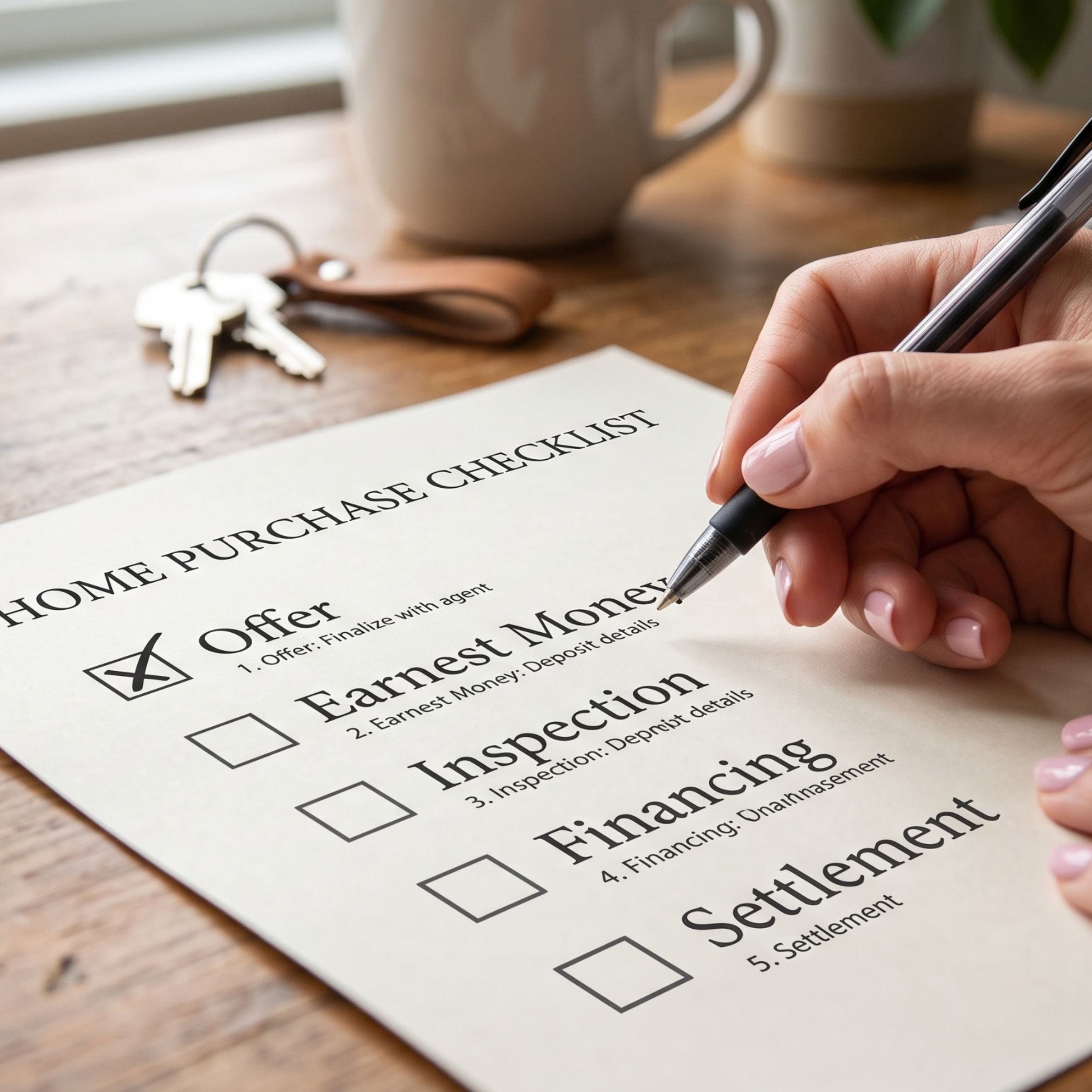
Do not evaluate the deposit in isolation.
Home buyers may also need funds for inspections, appraisal-related expenses, down payment, closing costs, moving expenses, repairs, and other costs associated with buying and owning a home.
Before increasing a deposit to make an offer look stronger, consider how that decision affects the rest of your finances.
If financing is part of your purchase, preparing for mortgage pre-approval can also help you understand your broader home-buying budget before you make an offer.
Your contract contingencies
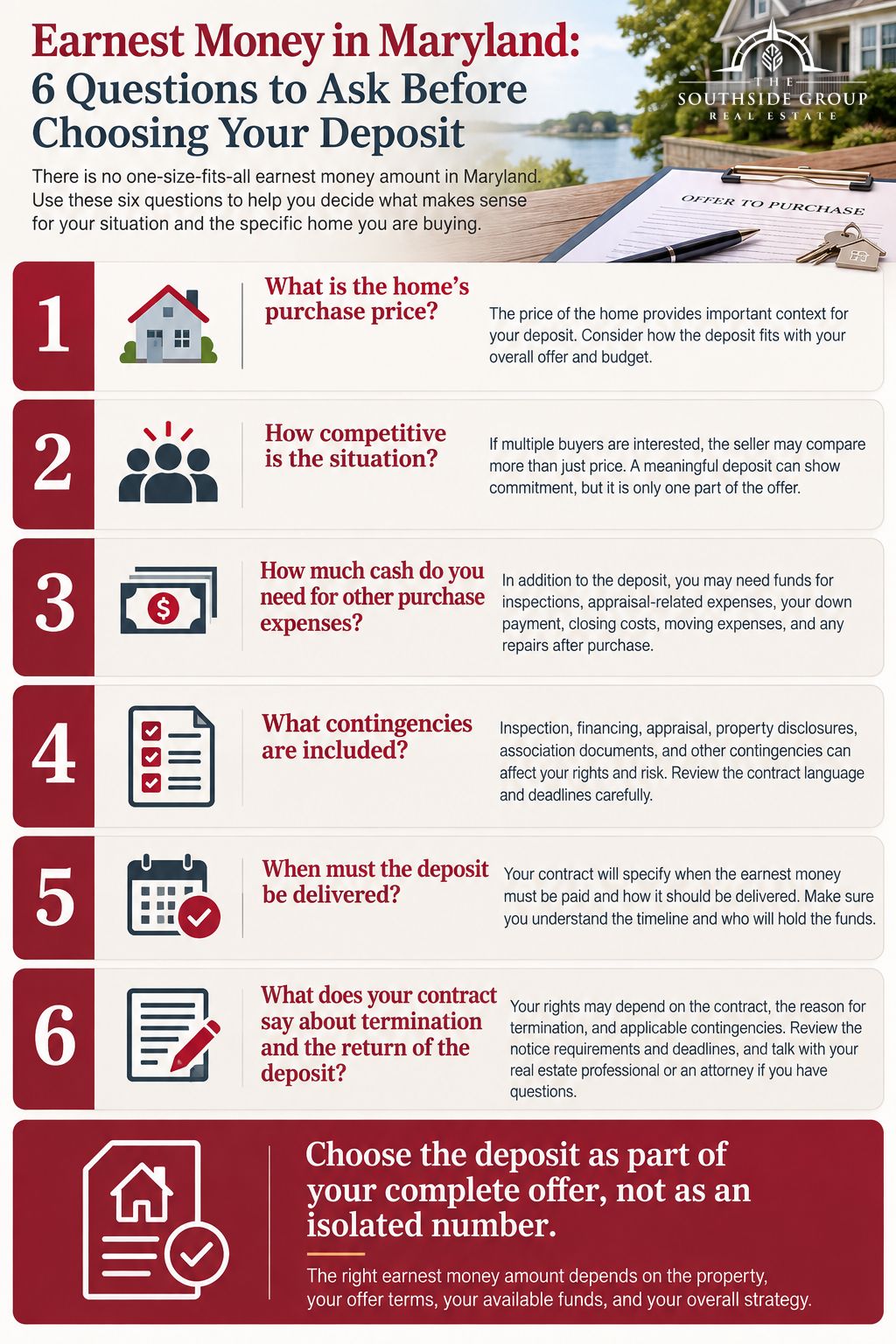
The amount of earnest money is only one part of the risk equation. The language and deadlines in the purchase contract matter too.
Inspection, financing, appraisal, property disclosures, association documents, and other contract provisions may affect a buyer's rights depending on the transaction and the exact language used.
Do not assume that paying an earnest money deposit means you can automatically cancel for any reason and receive it back.
The rest of your offer
A seller evaluates an offer as a package. Price, financing, settlement timing, contingencies, deposit terms, and other contract provisions can all matter.
That is why simply increasing earnest money without considering the rest of the offer may not be the best strategy.
Can a Larger Earnest Money Deposit Make Your Offer Stronger?
Potentially, but bigger is not always better.
From a seller's perspective, a substantial deposit can be one indication that a buyer intends to follow through with the transaction. In a competitive situation, that may be useful.
But earnest money is not a bidding shortcut.
A seller may prefer another offer because of its price, financing, timing, contingencies, or other terms. Increasing your deposit also means more of your money is tied to the transaction and potentially subject to a dispute if the deal does not close and the parties disagree about who is entitled to the funds.
A stronger strategy is to decide how much earnest money you are comfortable committing after considering the entire offer.
If you are still looking for a property, you can browse available Southern Maryland homes and begin evaluating your offer strategy before you find the home you want to pursue.
What Happens to Your Earnest Money After the Offer Is Accepted?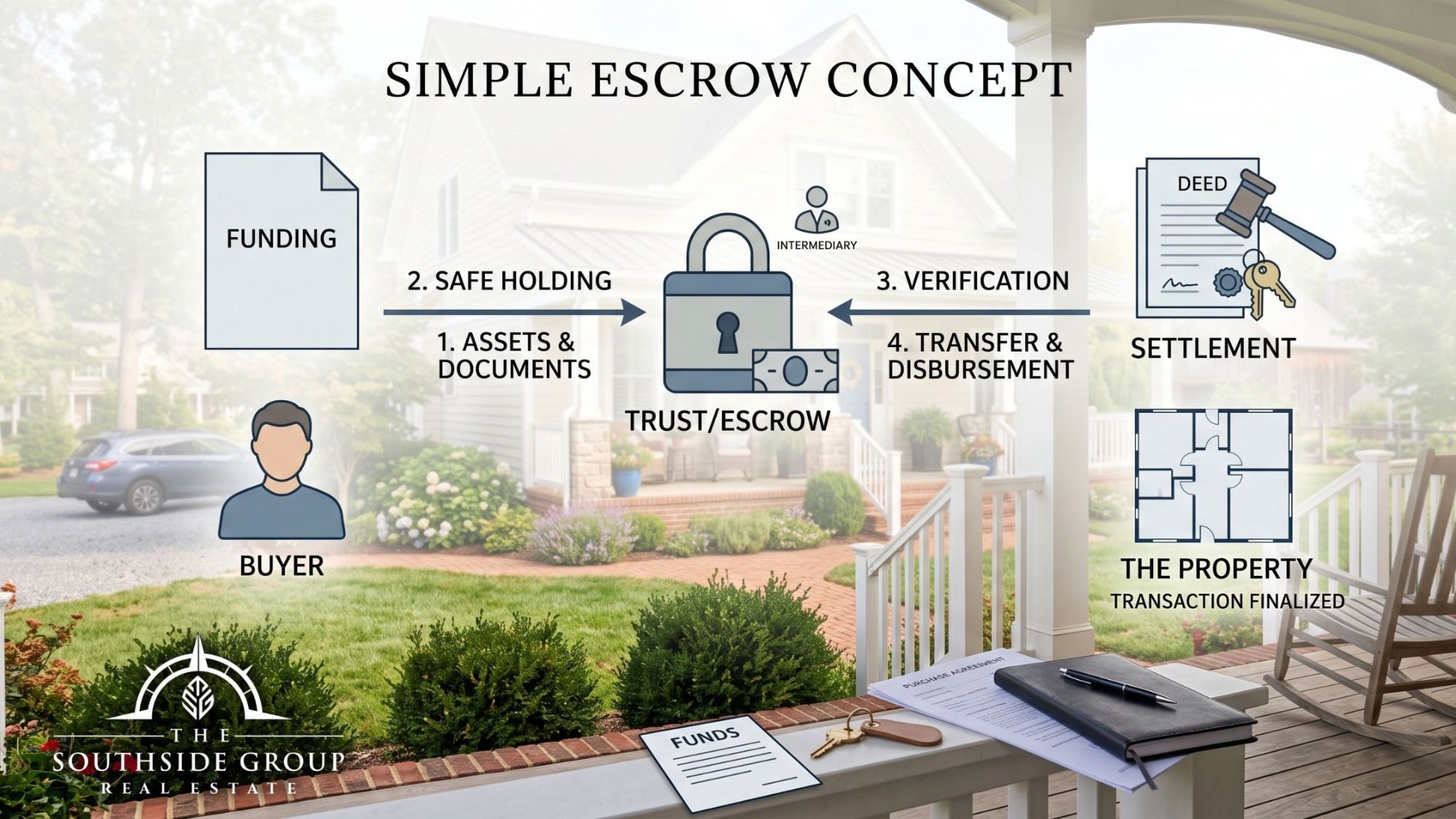
Maryland has specific rules governing trust money.
When a real estate broker is holding the funds, the Maryland Real Estate Commission states that trust money must be deposited into the broker's trust account promptly after both parties accept the contract.
Maryland law also provides rules governing how long a broker maintains trust money and the circumstances under which it can be distributed. Those circumstances can include completion or termination of the transaction, proper written instructions from the parties, a court order, or certain statutory procedures.
For a buyer, the practical takeaway is simple: know who will hold your deposit, understand when it must be delivered, keep documentation showing that you delivered it, and follow the deadlines in your contract.
Can You Get Your Earnest Money Back in Maryland?
Sometimes, but whether a buyer is entitled to the deposit depends on the contract and the circumstances surrounding the termination.
This is an area where buyers should be especially careful about general advice online.
Maryland law includes procedures governing the disposition of trust money, and Maryland updated part of its residential deposit-return process effective October 1, 2026. Chapter 716 of the 2026 Laws of Maryland amended Real Property §10-803 regarding termination under contingency clauses and the distribution of trust money.
Under the applicable statutory process, when a purchaser terminates a qualifying residential real estate contract under the terms of a contingency and requests return of the trust money in writing, the law establishes procedures involving notice to the seller, the holder of the money, and potential court or mediation action.
Separate Maryland law also governs trust money maintained by real estate brokers. The Maryland Real Estate Commission explains that deposit disputes can arise when parties disagree about the facts or reasons a transaction ended, which is why funds may not simply be released based on one party's request.
The safest approach is to read the actual contract carefully and pay close attention to notice requirements and deadlines. If there is a dispute about entitlement to a deposit or you need an interpretation of your legal rights, consult an appropriately qualified Maryland attorney.
Earnest Money: Frequently Asked Questions
Is earnest money required when buying a house in Maryland?
The amount and terms of a deposit are addressed through the purchase transaction and contract rather than by relying on a universal percentage. Buyers should review the specific offer and contract terms before committing funds.
Does earnest money go toward buying the house?
When the transaction proceeds to settlement, the deposit is generally accounted for as part of the funds involved in completing the purchase according to the contract and settlement documents. It is not the same thing as a mortgage down payment.
Can I lose my earnest money if I back out of a Maryland home purchase?
Potentially. Whether a buyer is entitled to a return can depend on the contract, the reason for termination, applicable contingencies, deadlines, notices, and Maryland law. Buyers should not assume every cancellation automatically results in a refund.
When is earnest money due in Maryland?
Follow the delivery requirements and deadlines stated in your contract. When a Maryland real estate broker holds trust money, state rules govern its handling after contract acceptance.
Is a bigger earnest money deposit always better?
No. A larger deposit may demonstrate commitment, but it also puts more of your funds into the transaction. Deposit size should be considered alongside price, financing, contingencies, available cash, and the rest of the offer.
Earnest Money Tips for Southern Maryland Home Buyers
If you are preparing to buy in St. Mary's, Calvert, or Charles County, consider your earnest money deposit as part of the overall offer strategy—not as a standalone number. Whether you are buying in Leonardtown, Lexington Park, Prince Frederick, or Waldorf, keep these points in mind before submitting an offer:
-
Decide how much cash you are comfortable committing as a deposit.
-
Confirm how and when the deposit must be delivered.
-
Understand who will hold the money.
-
Review the contingencies and deadlines in your proposed contract.
-
Consider how the deposit fits with your financing and other purchase expenses.
-
Keep records of payments and important transaction notices.
-
Do not increase the deposit simply because you assume a larger amount guarantees acceptance.
Most importantly, evaluate the deposit and the rest of the offer on a property-by-property basis. What makes sense for one Southern Maryland home may not be appropriate for another.
Buying a home involves more than getting an offer accepted. The goal is to structure an offer you understand and can confidently carry through to settlement. The Southside Group Real Estate can help you evaluate the property and overall structure of your offer before you submit it. Start by exploring Southern Maryland homes for sale, then contact our team when you are ready to discuss your home search and offer strategy.
FROM OUR BLOG

Parks and Hiking Trails in Southern Maryland: A Local Guide
You do not have to leave Southern Maryland to find wooded trails, Chesapeake Bay shoreline, Patuxent River views, paved walking routes, and places for a longer hike. Southern Maryland parks and trails range from easy, relatively short walks to multi-mile routes through forests, wetlands, and waterfr
Buyer Backs Out in Southern Maryland: What Happens?
A signed real estate contract is more than an agreement to keep negotiating. Once a buyer and seller are under contract, both parties have obligations defined by the contract, its addenda, applicable contingencies, and Maryland law. So, what happens when a buyer backs out in Southern Maryland? The a

Can You Buy a Home With Little to No Money Down in Maryland?
If saving 20% for a down payment feels like the biggest obstacle between you and buying a home, there is good news: you may not need anywhere close to 20% down to buy a home in Maryland. For buyers exploring Southern Maryland down payment assistance, several financing paths may reduce the amount of