
Before signing a lease in Maryland, renters should understand exactly what they are agreeing to—not just the monthly rent. A lease can establish your financial obligations, maintenance responsibilities, property rules, renewal terms, and what happens when you eventually move out.
For renters across Southern Maryland, including St. Mary’s, Charles, and Calvert counties, taking time to review the lease and inspect the property can help reduce misunderstandings after move-in. Homeowners and rental-property investors can benefit from the same approach by making expectations clear from the beginning.
This article provides general educational information. Maryland rental requirements can change, and individual leases and circumstances vary.
What Should You Review Before Signing a Lease in Maryland?
A rental may look perfect during a showing, but the lease determines many of the rules that will govern the tenancy.
Maryland’s Office of the Attorney General recommends written leases even in circumstances where an oral lease may be legally permitted because putting the agreement in writing can help landlords and tenants avoid disputes. Maryland also requires a written lease for a tenancy of a year or longer or when the landlord owns five or more rental units in the state. Maryland DHCD Renter & Landlord Resources
Read the Entire Lease Before You Sign
Don't focus only on the monthly rent. Review provisions covering:
- Monthly rent and the payment due date
- Lease start and expiration dates
- Security deposit and other charges
- Renewal procedures
- Late-payment provisions
- Maintenance and repair responsibilities
- Utilities
- Pets
- Parking
- Guests and occupancy
- Property or community rules
- Procedures for ending the lease
- Early-termination provisions
If something in the lease is different from what you were told during a showing or conversation, ask about the difference before signing.
Get Important Agreements in Writing
Suppose a property owner or manager promises to replace an appliance, repair damaged flooring, allow a pet, or make another change before you move in. Don't assume a conversation alone will prevent future confusion.
Ask how the agreement should be documented and make sure you understand whether it is actually part of your rental agreement.
The same principle applies to fees. If you're asked to pay money before the lease is finalized, understand what the payment is for and whether it is refundable. Maryland's Attorney General specifically recommends clarifying refundability and having that information documented on a receipt. Maryland Tenants’ Bill of Rights
What Costs Should You Understand Before Renting a Home?
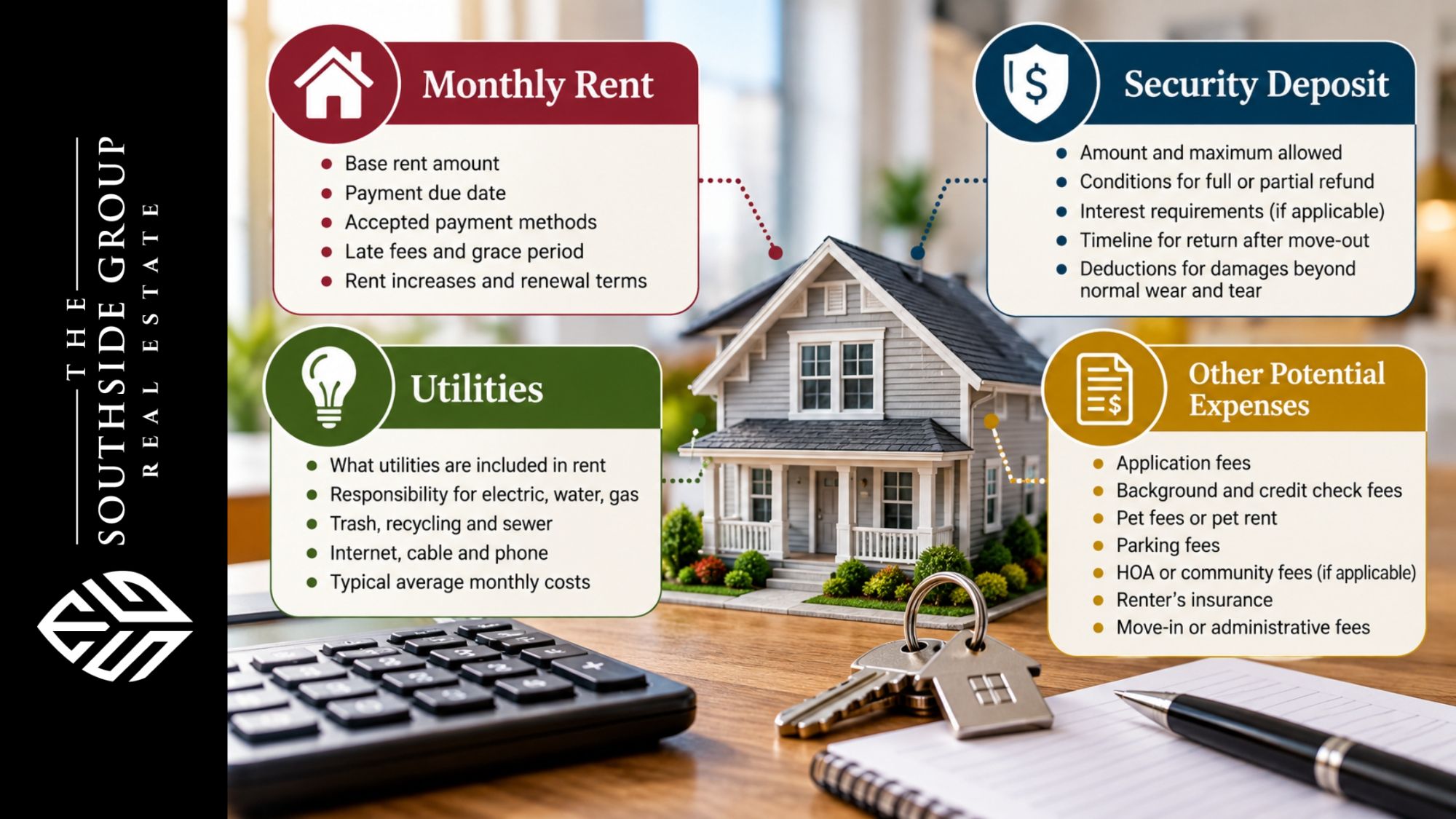
Monthly rent is only part of the cost of renting a property.
Before signing a lease in Maryland, consider what you will need at move-in and what recurring expenses you will be responsible for throughout the tenancy.
Rent, Security Deposits and Upfront Costs
Depending on the rental, your upfront expenses could include rent, a security deposit, moving expenses, and other applicable charges.
One particularly important Maryland rule changed in recent years. Under current Maryland law, a residential landlord generally may not require a security deposit exceeding one month's rent. The statute contains a limited exception allowing up to two months' rent when specified utility-assistance conditions are met and the tenant and landlord agree in writing. Maryland law also requires a receipt for the security deposit. Maryland General Assembly
That makes older online articles stating that Maryland landlords can routinely charge two months' rent for a security deposit potentially outdated.
For current requirements, renters and property owners can consult the Maryland General Assembly's security-deposit statute.
Which Utilities Are Included?
Ask exactly which expenses are included in your rent and which are your responsibility. Depending on the property, these could include electricity, water and sewer, gas, trash collection, internet, lawn care, or other services.
This can be particularly important when comparing two rentals. A property with lower advertised rent isn't necessarily less expensive if the tenant is responsible for substantially more services.
For single-family rentals in Southern Maryland, also determine whether the home uses public water and sewer or a private well and septic system and what, if any, responsibilities the lease assigns to you.
A useful question is:
“What will this property realistically cost me each month beyond the advertised rent?”
Inspect the Rental Property Before You Sign or Move In
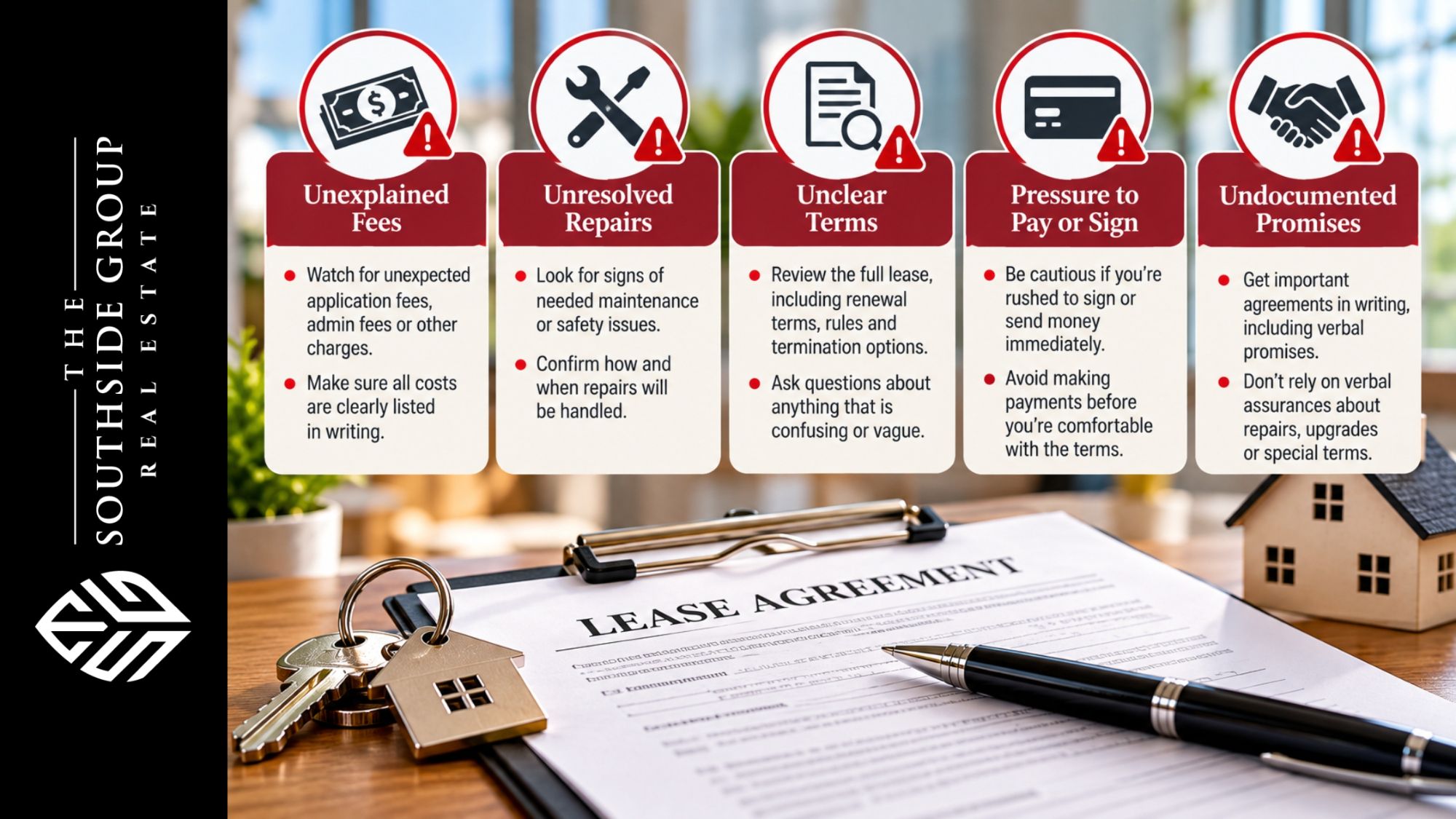
A careful inspection isn't only about deciding whether you like a property. It gives you an opportunity to identify its condition and ask questions before you take possession.
Document the Property's Condition
Look beyond staging and appearance. Check visible components such as doors, windows, walls, flooring, plumbing fixtures, appliances, and other features included with the rental.
Where appropriate, document existing damage with dated photographs or video and keep copies of written communications about issues you identify.
Maryland's security-deposit law also establishes specific tenant rights concerning inspections and deposit documentation, so renters should review the current requirements rather than relying on an old checklist or article. Maryland General Assembly
Watch for Rental Red Flags
Some issues deserve additional questions before you commit. Examples include pressure to transfer money or sign immediately, significant unresolved maintenance problems, unexplained fees, terms that don't match the advertisement, uncertainty about who owns or manages the property, or important promises that aren't reflected in writing.
A red flag doesn't automatically mean a rental is unsuitable. It means you should slow down, verify the information, and understand what you're agreeing to before paying or signing.
Understand Maryland Rental Rules and Required Disclosures
Rental laws aren't identical from state to state, which is why generic national lease advice shouldn't be your only resource.
For Maryland-specific requirements, prioritize current state and local government information.
Lead-Based Paint and Older Maryland Rentals
Older rental properties require particular attention.
The Maryland Department of the Environment states that owners of rental homes built before 1978 generally must register affected properties with the state and comply with applicable lead-risk requirements unless an exemption applies. At tenant turnover, applicable properties must meet Maryland's risk-reduction requirements, and tenants are entitled to specified documentation. U.S. EPA Lead-Based Paint Disclosure guidance
Tenants in affected pre-1978 rentals should receive a Notice of Tenant's Rights, applicable lead inspection documentation, and federal lead-hazard information
Renters and property owners can review the U.S. EPA Lead-Based Paint Disclosure guidance for current information.
Security Deposits and Documentation
Maryland law regulates how security deposits are handled, including receipts, storage, permissible deductions, interest, and return requirements. For example, the statute generally requires a landlord to return the deposit, plus applicable interest and less amounts properly withheld, within 45 days after the tenancy ends. Maryland General Assembly
Tenants should retain their lease, deposit receipt, payment records, move-in documentation, and important correspondence for their records.
This article is educational and isn't a substitute for legal advice regarding a particular lease or dispute.
What Should Southern Maryland Renters Consider About the Property and Location?
The lease itself matters, but so does how the property fits your everyday life.
Someone renting in Lexington Park may have very different commuting priorities from someone searching in Waldorf or La Plata.
Think About Your Daily Commute
If you're considering rentals in California, Hollywood, or elsewhere near major employment centers in St. Mary's County, evaluate the trip you will actually make—not simply the mileage shown on a map.
The same applies to residents traveling through Charles or Calvert County or toward the Washington metropolitan area.
Consider testing your expected commute during the time of day you normally travel. Also investigate access to the services and destinations that matter to you.
Ask About Property-Specific Responsibilities
Southern Maryland includes everything from apartments and planned communities to detached homes on larger lots. That can create very different rental responsibilities.
Before signing, determine whether the lease addresses parking, pets, lawn maintenance, trash collection, storage, HOA or community requirements, exterior maintenance, and well or septic responsibilities where applicable.
A tenant considering a house in Leonardtown, for example, shouldn't assume its maintenance responsibilities will be identical to those of an apartment or townhouse elsewhere in the region.
What Are 5 Things That Should Be Included in a Lease?
When reviewing a rental agreement, five fundamental areas deserve close attention:
- Rent and payment terms: Know the rent amount, due date, acceptable payment methods, and applicable late-payment provisions.
- Lease duration and renewal terms: Understand when the lease begins and ends and what happens afterward.
- Security deposit and applicable fees: Determine what you must pay and under what terms.
- Maintenance and utility responsibilities: Know what the landlord handles and what the tenant is expected to handle.
- Property rules and termination provisions: Review policies involving pets, parking, occupancy, property use, renewal, and ending the tenancy.
These aren't necessarily the only provisions that Maryland law or your particular situation may require. Think of them as a practical starting checklist, not a substitute for reviewing the entire agreement.
Questions to Ask Before Signing a Lease
The best time to resolve uncertainty is before your signature is on the agreement.
Ask what is due before move-in, which utilities are included, who handles repairs, how maintenance requests are submitted, whether pets are permitted, whether additional recurring charges apply, what the parking rules are, whether HOA or community restrictions apply, what happens when the lease expires, and what the agreement says about ending the lease early.
You should also know who to contact when something goes wrong and how important notices should be delivered.
If an answer materially affects your decision to rent the property, make sure you understand how that answer is reflected in the written agreement.
Before You Sign: A Southern Maryland Rental Checklist
Before signing a lease in Maryland, take one final pass through the essentials. Read the full agreement, calculate the costs beyond rent, understand your security deposit, clarify utilities, document the property's condition, investigate unusual fees or terms, review applicable disclosures, and make sure the property works for your daily routine.
Tenants should feel comfortable asking questions. Likewise, homeowners and investors benefit from clear lease terms and well-documented expectations.
For Maryland-specific consumer information, the Maryland Tenants’ Bill of Rights is a useful resource for both renters and rental-property owners. Maryland General Assembly
Why Work With a Southern Maryland Real Estate Expert?
Real estate decisions in Southern Maryland can vary considerably by property type and location. Local knowledge can help consumers understand the market across St. Mary's County, Charles County, and Calvert County, whether they're renting now, managing an investment property, or considering buying in the future.
Our team serves communities throughout the region, including Waldorf, Hollywood, La Plata, Lexington Park, Leonardtown, Mechanicsville, and California.
If you're searching for Top Real Estate Agents & Realtors with experience throughout Southern Maryland, contact our team today to discuss your real estate goals.
And if renting has you wondering whether homeownership might be your next move, you can Browse Homes for Sale throughout Southern Maryland.
FROM OUR BLOG


Parks and Hiking Trails in Southern Maryland: A Local Guide
You do not have to leave Southern Maryland to find wooded trails, Chesapeake Bay shoreline, Patuxent River views, paved walking routes, and places for a longer hike. Southern Maryland parks and trails range from easy, relatively short walks to multi-mile routes through forests, wetlands, and waterfr
Buyer Backs Out in Southern Maryland: What Happens?
A signed real estate contract is more than an agreement to keep negotiating. Once a buyer and seller are under contract, both parties have obligations defined by the contract, its addenda, applicable contingencies, and Maryland law. So, what happens when a buyer backs out in Southern Maryland? The a

Can You Buy a Home With Little to No Money Down in Maryland?
If saving 20% for a down payment feels like the biggest obstacle between you and buying a home, there is good news: you may not need anywhere close to 20% down to buy a home in Maryland. For buyers exploring Southern Maryland down payment assistance, several financing paths may reduce the amount of