
A signed real estate contract is more than an agreement to keep negotiating. Once a buyer and seller are under contract, both parties have obligations defined by the contract, its addenda, applicable contingencies, and Maryland law.
So, what happens when a buyer backs out in Southern Maryland?
The answer depends largely on why the buyer wants to terminate and whether the contract gives the buyer a valid right to do so. A buyer using an applicable contingency within its terms can be in a very different position from a buyer who simply changes their mind and refuses to close.
For buyers and sellers in St. Mary's County, Calvert County, and Charles County, understanding that distinction can help prevent assumptions about earnest money, cancellation rights, and what happens next.
This article provides general real estate information, not legal advice. Contract disputes should be reviewed with a qualified Maryland real estate attorney.
Can a Buyer Back Out of a Real Estate Contract in Maryland?
A buyer may be able to terminate a Maryland real estate contract, but signing a contract does not normally create an unrestricted right to cancel whenever the buyer changes their mind.
The first place to look is the signed contract and any addenda.
Maryland REALTORS® maintains statewide residential contract forms and separate forms covering matters such as financing, appraisal, property inspections, the sale of other real estate, and other transaction-specific issues.
Whether a buyer can terminate without breaching the agreement may depend on:
-
The contingencies included in the signed contract
-
Whether a contingency's requirements were satisfied
-
Contract deadlines
-
Required notices
-
Property disclosures
-
HOA or condominium documents
-
Financing provisions
-
Other terms negotiated by the parties
This is why two Southern Maryland transactions can have very different outcomes even when both involve a buyer who no longer plans to close.
What Reasons Can a Buyer Back Out of a Contract?
There is no single list that automatically applies to every Maryland home purchase. The buyer's rights depend on the agreement, applicable law, and the circumstances.
Several issues commonly appear in residential transactions.
Financing
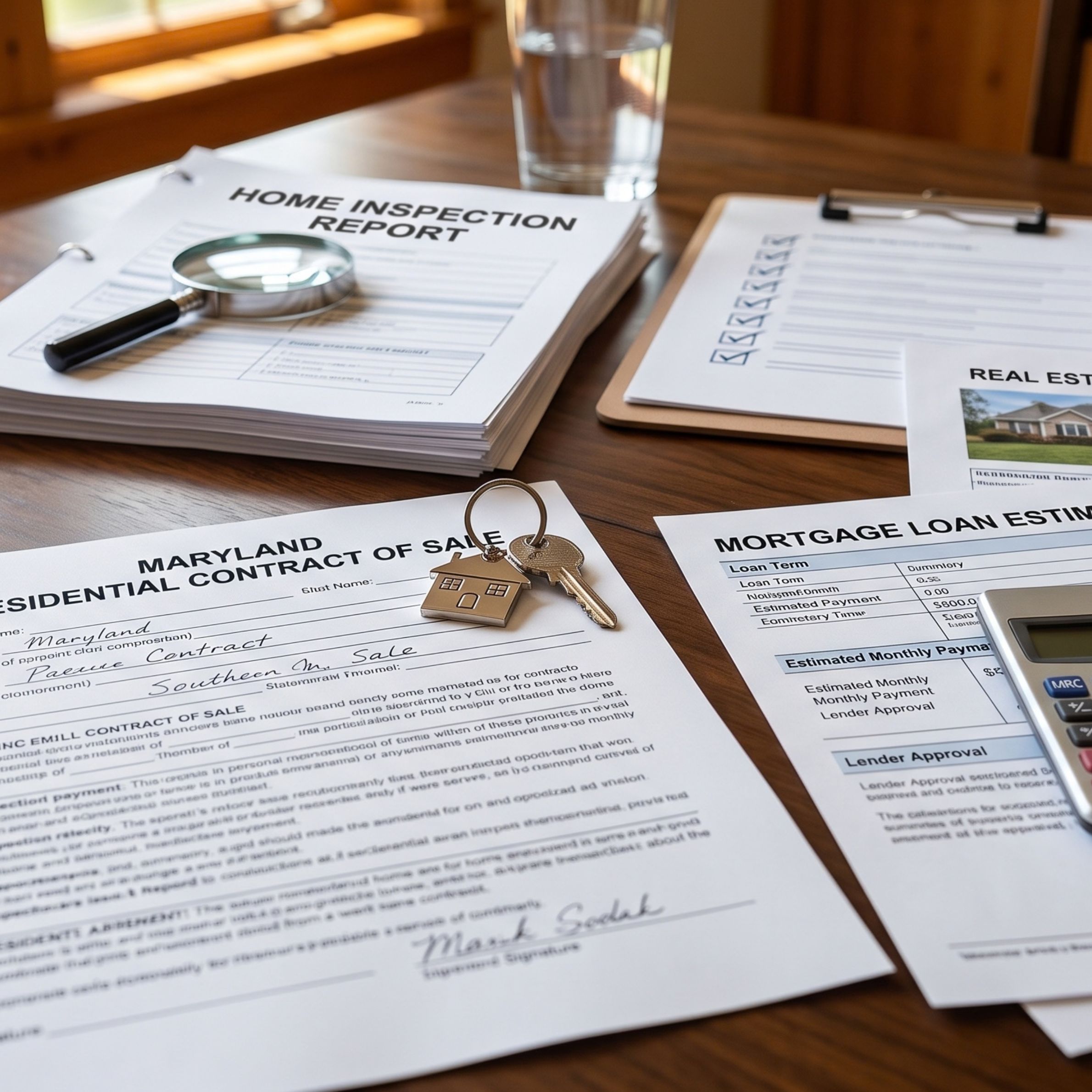 When a purchase is contingent on financing, the financing addendum can establish important requirements concerning the buyer's loan efforts and what happens if financing cannot be obtained as required.
A financing contingency should not be treated as permission to casually abandon the transaction. Buyers need to understand and follow the actual terms and deadlines in their agreement.
Maryland also treats financing-related earnest-money releases differently from certain other contingency-based terminations. Maryland REALTORS® explains that the expedited deposit process established for specified contingencies excludes financing contingencies.
Buyers preparing to purchase can learn more about mortgage pre-approval before beginning a home search.
Home Inspection
An inspection can affect a transaction when the contract contains the applicable inspection provisions.
Depending on the agreement, an inspection may allow the buyer to take actions specified in the contract or inspection addendum. The exact rights, notice requirements, and deadlines matter.
A buyer should not assume that discovering an unwanted condition automatically creates an unlimited cancellation right. The signed documents determine what options are available.
Appraisal
An appraisal issue may also create options when an applicable appraisal contingency is part of the transaction.
Maryland REALTORS® specifically identifies appraisal clauses among the contingencies covered by Maryland's expedited earnest-money procedure when the requirements for that procedure are met.
Again, the existence and wording of the applicable contingency matter.
HOA, Condominium, Property Disclosure, and Title Issues
Some termination rights can also arise from Maryland law rather than simply from a negotiated inspection or appraisal provision.
For example, Maryland law provides certain purchasers with cancellation or rescission rights associated with required condominium, homeowners association, and residential property disclosures when statutory requirements are met.
These are specific legal protections with their own requirements and time periods. They should not be confused with a general right to cancel any Maryland home purchase because the buyer changed their mind.
What Happens to the Earnest Money Deposit?
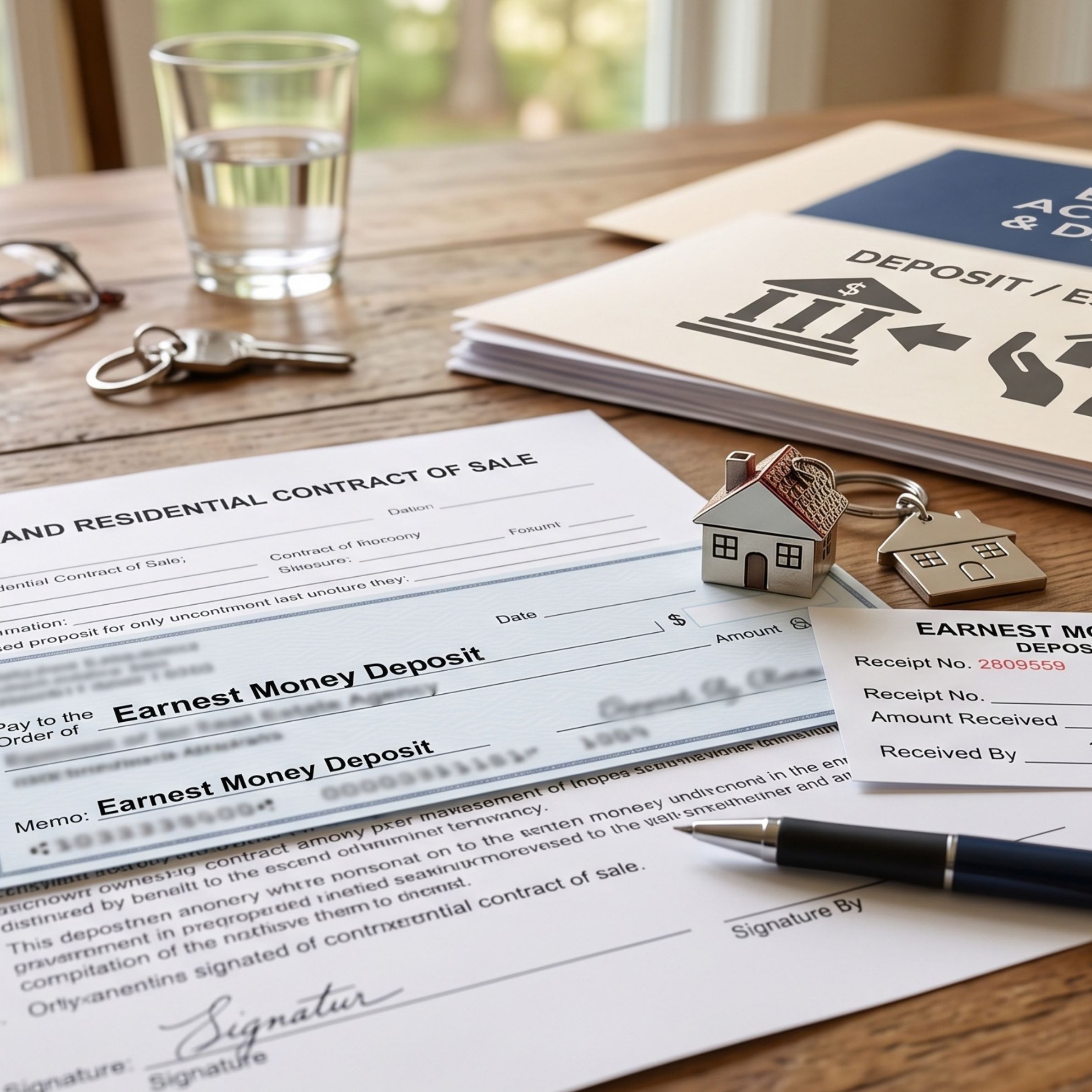 One of the first questions after a contract termination is often, "Who gets the deposit?"
There is not one answer that applies to every termination.
If a buyer properly terminates under an applicable contingency or statutory right, the contract and Maryland law may provide a path for return of the deposit. If the buyer defaults without a contractual or legal basis for termination, the outcome may be different.
Maryland has specific procedures governing how escrowed earnest money can be distributed.
Maryland REALTORS® explains that when a buyer terminates pursuant to certain specified contingencies, including appraisal, home or environmental inspection, HOA notices, condominium notices, title matters, and certain property disclosures, an expedited process may apply.
Under that process, a seller disputing the return must take the action required by Maryland law within the applicable period. Financing contingencies are excluded from that particular expedited procedure and follow a different deposit-release process.
That distinction is important. A buyer or seller should not assume that the deposit is automatically released simply because one party believes they are entitled to it.
What If the Buyer Simply Changes Their Mind?
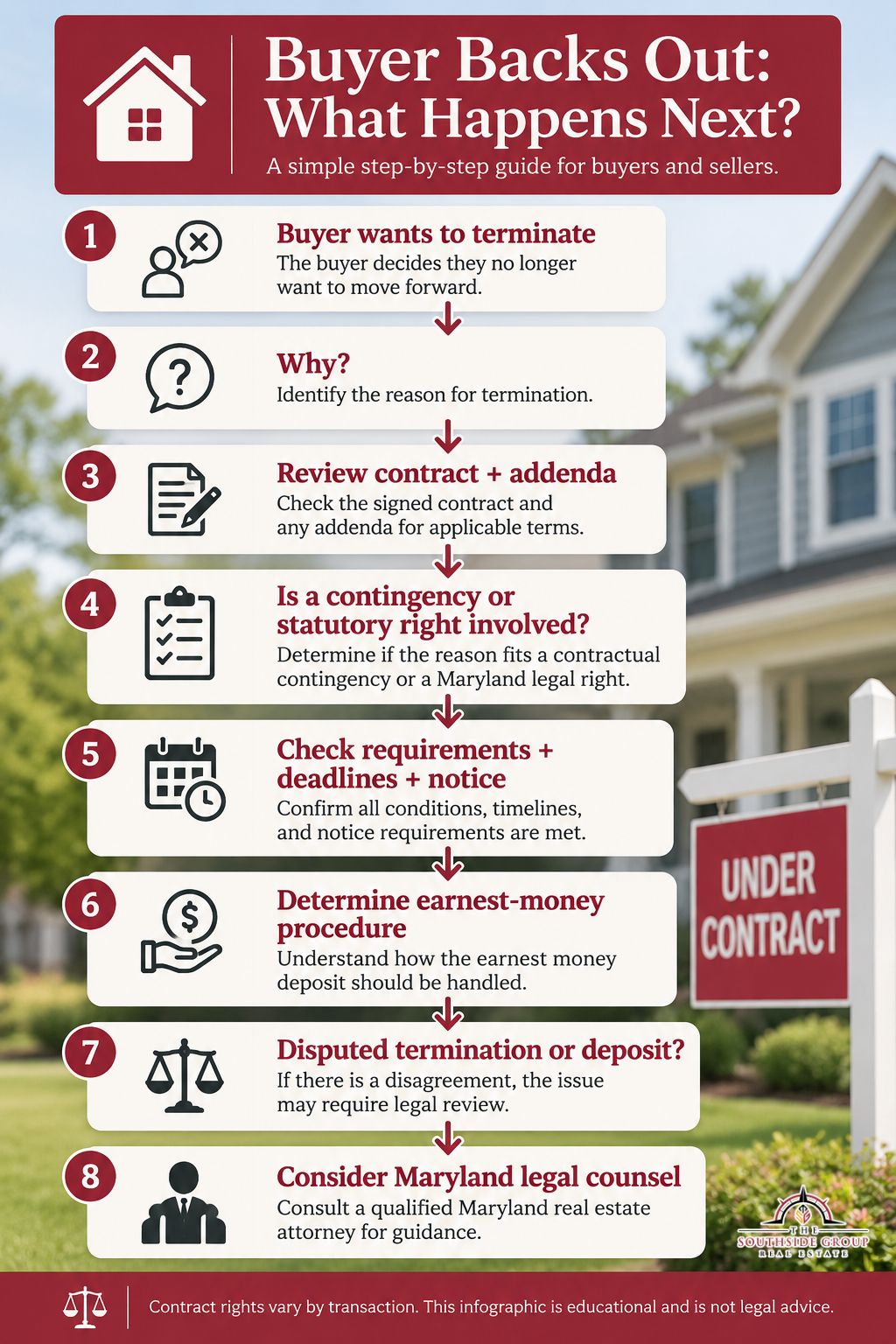
Cold feet are different from exercising a valid contractual or statutory termination right.
Maryland does provide specific cancellation rights in certain residential real estate situations, but there is no blanket rule allowing every buyer to cancel every signed residential purchase contract simply because they reconsidered the purchase.
A buyer who wants to walk away because they found another house, no longer like the property, or simply regret their decision should first determine whether their contract provides a legitimate basis for termination.
Walking away without one can create a contract dispute.
Potential consequences can depend on the contract and circumstances, including disputes over the earnest money deposit and possible claims for contractual remedies.
Buyers who become uncertain after signing should speak with their real estate professional promptly and obtain legal advice when their right to terminate is unclear.
Can a Seller Sue If a Buyer Backs Out?
Potentially, yes.
If a buyer breaches a real estate contract rather than properly exercising a termination right, the seller may have contractual remedies. Exactly which remedies are available depends on the agreement and circumstances.
Maryland appellate decisions involving breached real estate contracts show why the wording matters. Depending on the contract, provisions involving deposit forfeiture, liquidated damages, actual damages, or other remedies can affect what a seller may pursue.
That does not mean every failed transaction should or will result in a lawsuit.
For a Southern Maryland seller, the practical first step is to determine whether the buyer actually terminated under an enforceable contractual or statutory right. If the parties disagree about whether the buyer was entitled to terminate, the seller should consider consulting a Maryland real estate attorney before making decisions about the deposit, legal remedies, or the status of the property.
How Common Is It for a Buyer to Back Out of a Contract?
Contracts do terminate, but it is important not to confuse national statistics with local Southern Maryland market data.
The National Association of REALTORS® reported in July 2025 that 6% of contracts in its national REALTORS® Confidence Index measure had been terminated during the preceding three months. NAR also reported that the measure had ranged from 4% to 7% since March 2023.
That is national survey data. It is not a St. Mary's County, Calvert County, or Charles County cancellation rate.
The more useful lesson for an individual transaction is that termination is possible, but the reason for the termination matters much more than a national percentage when determining what happens to the buyer, seller, and deposit.
What Should Southern Maryland Sellers Do If a Buyer Backs Out?
Receiving a termination notice can be frustrating, especially after a home has been under contract and preparations for settlement are underway.
Rather than immediately assuming the buyer has breached the contract, sellers should focus on the documents and the stated reason for termination.
Useful next steps can include:
-
Review the termination notice. Identify exactly why the buyer says the contract is being terminated.
-
Review the contract and addenda. Determine which contingency or provision the buyer is relying on.
-
Check the deadlines. Many contractual rights depend on timely action and proper notice.
-
Address the earnest money correctly. Do not assume that refusing to sign a release necessarily determines who receives the deposit.
-
Keep relevant communications and documents. Accurate records can become important when the parties disagree.
-
Get legal advice when necessary. A disputed deposit or alleged breach can become a legal matter.
-
Discuss the property's marketing status. Before treating a home as fully available again, confirm the status of the existing contract.
Sellers considering their next steps can also review Southern Maryland seller resources.
If a Buyer Backs Out of a Contract FAQ's
Can a seller sue if a buyer backs out?
Potentially. If a buyer breaches a Maryland real estate contract rather than properly terminating under the contract or applicable law, the seller may have remedies. What a seller can pursue depends on the contract and circumstances, so disputed cases should be reviewed by a Maryland real estate attorney. Maryland case law demonstrates that the contract's remedy provisions can affect whether a seller may pursue a deposit, damages, or other relief. Maryland Courts
Does Maryland have a buyer's remorse law for real estate?
Maryland has specific statutory cancellation rights for certain residential real estate situations, but buyers should not treat those rights as a general cooling-off period for every home purchase. For example, Maryland statutes establish rescission or cancellation rights connected with certain property, condominium, and HOA disclosures. The requirements and deadlines vary. Maryland General Assembly
How common is it for a buyer to back out of a contract?
NAR reported in July 2025 that 6% of contracts in its national REALTORS® Confidence Index measure had terminated during the preceding three months. The measure had ranged from 4% to 7% since March 2023. Those figures are national and should not be presented as a Southern Maryland termination rate. National Association of REALTORS®
What reasons can a buyer back out of a contract?
Possible reasons can involve financing, inspections, appraisal, title issues, HOA or condominium disclosures, property disclosures, or other negotiated contingencies or statutory rights. Not every protection applies to every contract. Maryland REALTORS® identifies several types of contingencies in its guidance on earnest-money releases.
What Should Buyers Do Before Trying to Cancel?

Buyers should avoid treating contract cancellation as an informal decision. Before attempting to terminate, review the signed contract, addenda, deadlines, notice requirements, and the specific reason you believe you have a right to cancel.
Do not assume that losing interest in the property is the same as having a contractual right to terminate. Buyers should also avoid making assumptions about the earnest money deposit, since contract termination and deposit distribution can involve separate requirements and procedures.
If you are uncertain whether a contingency, contract provision, or Maryland law gives you a right to terminate, speak with your real estate professional and consider consulting a qualified Maryland real estate attorney before taking action.
Whether you are dealing with a contract issue or preparing for your next move, The Southside Group Real Estate can help you understand the Southern Maryland real estate process and coordinate next steps with the appropriate professionals. Buyers who are continuing their search can browse available homes in Southern Maryland, or you can contact The Southside Group Real Estate for local real estate guidance.
For transaction-specific legal questions or a contract dispute, consult a qualified Maryland real estate attorney.
FROM OUR BLOG


Earnest Money in Maryland: How Much Should You Offer?
When you find a home you want to buy, one of the decisions you may face is how much earnest money to include with your offer. For buyers trying to understand earnest money in Maryland, there is an important point to know from the start: there is not one deposit amount that is right for every transac

Parks and Hiking Trails in Southern Maryland: A Local Guide
You do not have to leave Southern Maryland to find wooded trails, Chesapeake Bay shoreline, Patuxent River views, paved walking routes, and places for a longer hike. Southern Maryland parks and trails range from easy, relatively short walks to multi-mile routes through forests, wetlands, and waterfr

Can You Buy a Home With Little to No Money Down in Maryland?
If saving 20% for a down payment feels like the biggest obstacle between you and buying a home, there is good news: you may not need anywhere close to 20% down to buy a home in Maryland. For buyers exploring Southern Maryland down payment assistance, several financing paths may reduce the amount of