
A busy year in real estate does not always mean a profitable or productive year. You may have generated hundreds of leads, completed multiple transactions, invested in marketing, and spent countless hours serving clients. But which activities actually moved your business forward?
A real estate agent year-end business review helps you answer that question with numbers rather than assumptions.
Whether you are a newer agent building your foundation or an experienced agent looking to improve profitability, reviewing your business can reveal which strategies deserve more attention, where money is being wasted, and what needs to change.
Use this checklist to evaluate eight essential areas of your real estate business, then complete the annual review worksheet to create an actionable plan for the next quarter.
1. Review Your Lead Sources and Conversion Rates 
Not every lead source produces the same quality of opportunity. A marketing channel might generate plenty of inquiries but relatively few signed clients. Meanwhile, a smaller referral network could produce more meaningful conversations and completed transactions.
Start by reviewing where your leads originated.
Common lead sources include:
-
Past clients and referrals
-
Sphere of influence
-
Open houses
-
Website inquiries and organic search
-
Social media
-
Paid online advertising
-
Community networking
-
Brokerage-provided opportunities, if applicable
For each source, record the number of leads, appointments, signed clients, and closed transactions.
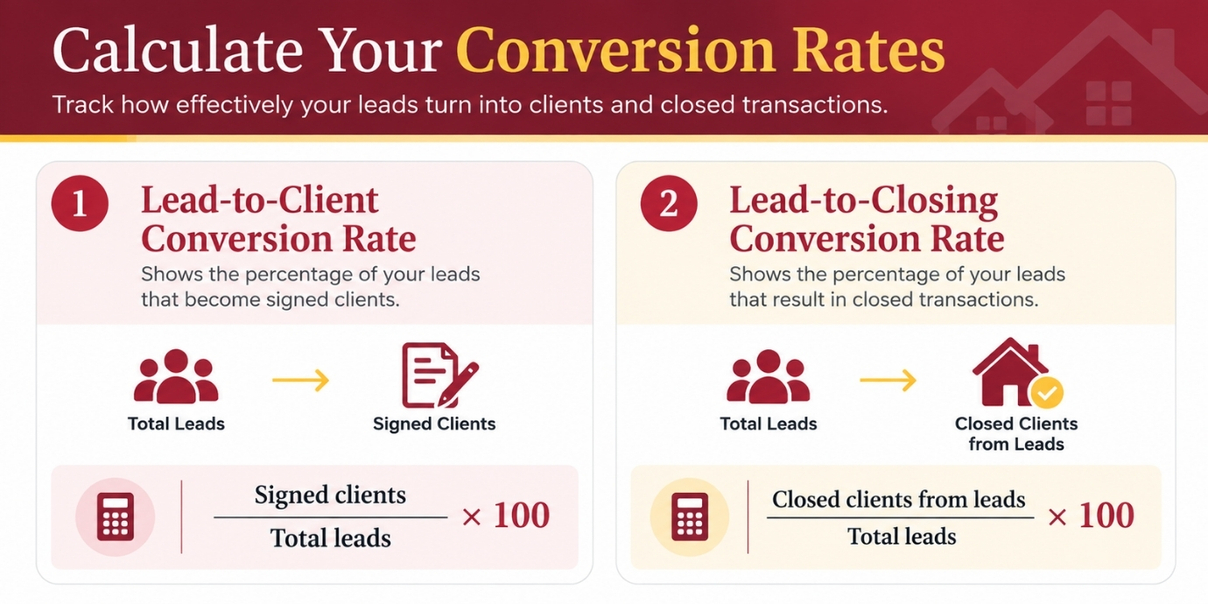
For example, if you generated 120 leads and signed 12 clients, your lead-to-client conversion rate was 10%.
Make sure you define a lead consistently and compare leads from similar periods. A lead generated in December may not close until the following year.
Questions to ask: Which lead sources produced actual clients? Which required the most follow-up? Which sources should receive more attention next year?
2. Evaluate Your Transaction Performance and Revenue
Transaction count is important, but it does not tell the whole story.
The National Association of REALTORS® publishes annual member research on transaction activity, income, and business expenses. These industry findings can provide context, but your own market, experience, and business model should guide your performance assessment.
Review these metrics:
|
Performance metric |
What to record |
|---|---|
|
Closed buyer sides |
Number of buyer-side closings |
|
Closed seller sides |
Number of listing-side closings |
|
Total closed volume |
Dollar value of closed transaction sides |
|
Gross commission income |
Commission earned before business expenses |
|
Average commission per side |
Gross commission income ÷ closed sides |
|
Pending or canceled transactions |
Pipeline and transaction outcomes |
|
Year-over-year change |
Differences from the prior year |
Look beyond the totals. Consider how much time each transaction required, whether your pipeline remained consistent, and whether your business depended too heavily on one source of clients.
A strong review also identifies what worked operationally. Perhaps improved buyer consultations helped establish expectations, or better transaction checklists reduced last-minute problems.
The goal is to understand not just how much business you completed, but how efficiently you completed it.
3. Measure Marketing Return on Investment
Marketing activity should support measurable business objectives.
Start by listing your major marketing investments, including paid advertising, photography, printed materials, website services, email marketing, events, and promotional campaigns.
Then connect each investment to outcomes such as inquiries, appointments, signed clients, and closed transactions.
Calculate marketing ROI
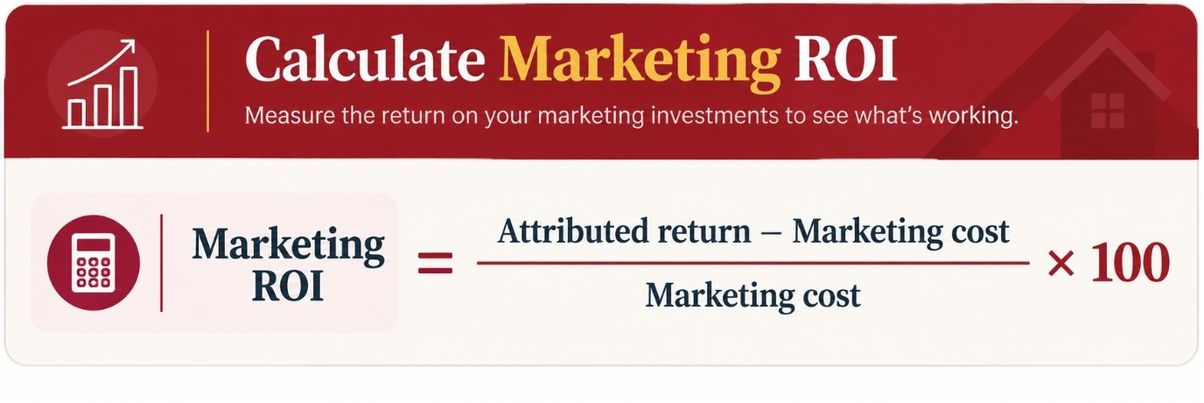
For a practical agent review, define attributed return consistently. You might use gross commission income attributed to a campaign, but this produces a gross-revenue-based measure, not a true profit-based ROI. A profit-based calculation should account for additional costs.
For example, a campaign costing $2,000 that produces $6,000 in attributed gross commission income has a 200% gross-revenue-based return after subtracting the campaign cost. It does not mean the agent earned $4,000 in net profit.
Also evaluate marketing that contributes to longer-term relationships. Some campaigns generate future referrals or improve awareness without producing an immediate closing.
Year-end questions: Which campaigns produced qualified conversations? What was the cost per signed client? Which activities should be continued, improved, or discontinued?
4. Review Business Expenses and Profitability
An agent can increase gross commission income while retaining less money if operating expenses rise faster than revenue.
Group your expenses into categories:

-
Brokerage fees and transaction-related charges
-
CRM, software, and technology subscriptions
-
Marketing and advertising
-
Professional dues, licensing, and education
-
Insurance
-
Vehicle and travel expenses
-
Office supplies and equipment
-
Contract services and administrative support
Separate business expenses from personal spending and review your records with a qualified tax professional when necessary. Keep your real estate business financially healthy by tracking expenses and understanding where your money goes. Learn why the IRS recommends keeping accurate business records and explore NAR’s insights on REALTORS® navigating a tougher market.
Two useful calculations are:
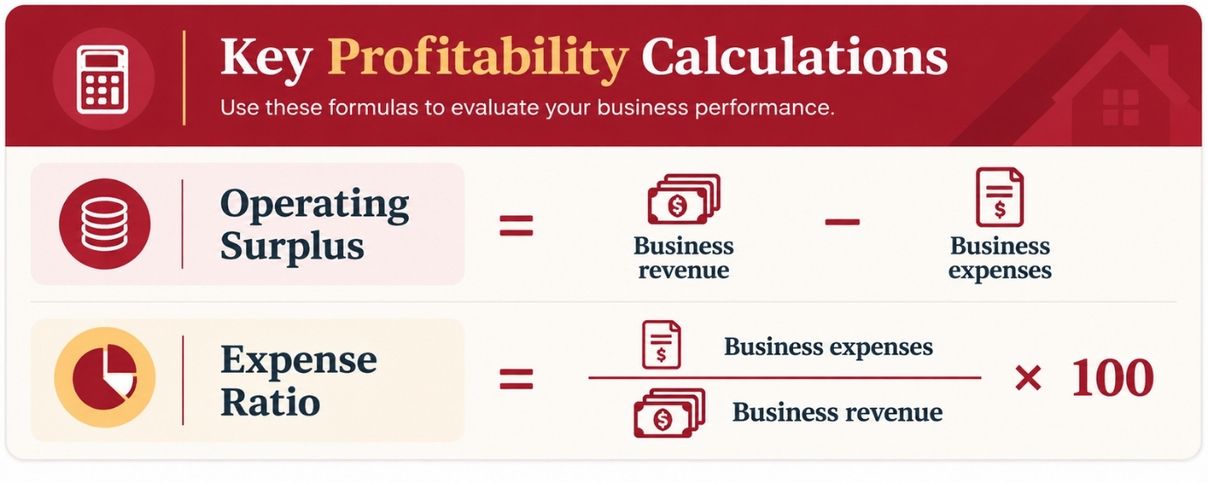
Operating surplus is a simplified management measure. It is not necessarily taxable income, take-home pay, or accounting net profit.
Look for recurring subscriptions you rarely use, campaigns with limited measurable return, and activities that consume substantial time without contributing to your goals.
Do not automatically cut every expense. Some tools, professional services, and educational investments may improve efficiency or client service even when their immediate financial return is difficult to measure.
5. Assess Your Client Experience
Real estate is a relationship-driven business. A year-end review should examine how clients experienced working with you, not simply whether their transactions closed.
Consider your performance in five areas:
-
Communication: Did clients understand what would happen next?
-
Responsiveness: Were questions and concerns addressed promptly?
-
Expectation setting: Were timelines, responsibilities, and potential challenges explained?
-
Problem solving: How effectively were transaction issues handled?
-
Post-closing follow-up: Did you maintain appropriate contact after the transaction?
Review feedback, testimonials, referrals, repeat business, and any recurring concerns. Client feedback should be collected and used with appropriate privacy protections and permissions.
Consider asking former clients:
What was the most helpful part of working together, and what could I have done to make the experience better?
Look for patterns rather than treating one positive or negative comment as a complete measure of your service.
6. Identify Your Biggest Lessons and Mistakes
Numbers explain what happened. Reflection helps you understand why.
Set aside time to answer these questions:
-
What were my three biggest business wins?
-
Which activities consumed time without producing meaningful results?
-
Where did I lose opportunities because of inconsistent follow-up?
-
Which transaction challenges could better systems have prevented?
-
What skill, habit, or process should I improve?
Common mistakes include measuring success only by transaction volume, investing in marketing without tracking results, neglecting past clients, and setting goals without reviewing progress.
For each lesson, identify one corrective action. If inconsistent follow-up was a problem, for example, schedule daily CRM follow-up blocks and review overdue tasks weekly.
The purpose is not to criticize your past performance. It is to turn experience into better business decisions.
7. Build Your Next-Quarter Action Plan
A year-end review becomes valuable when it changes what you do next.
Choose no more than three primary priorities for the coming 90 days. Each should include a measurable outcome, specific actions, and a review date.
|
Priority |
Example action |
Measurement |
|---|---|---|
|
Improve follow-up |
Schedule five CRM follow-up sessions weekly |
Completed follow-up activities |
|
Strengthen referrals |
Create a consistent past-client contact schedule |
Conversations and referral inquiries |
|
Improve profitability |
Audit subscriptions and marketing spending |
Monthly expense totals |
These are examples, not production benchmarks or promised outcomes.
Break each priority into weekly actions and review your progress monthly. For newer agents, emphasize controllable activities such as conversations, appointments, education, and follow-up consistency. Experienced agents can also evaluate delegation, transaction efficiency, and return on business investments.
Consider whether your brokerage environment fits your goals
Your annual review may also reveal areas where professional support could make a difference.
Consider whether your current brokerage environment aligns with your needs for training, leadership accessibility, technology, collaboration, accountability, and business planning.
Ask what resources are actually available, what they cost, and how they fit your business model. Brokerage support should be evaluated through specific conversations and verified information rather than assumptions.
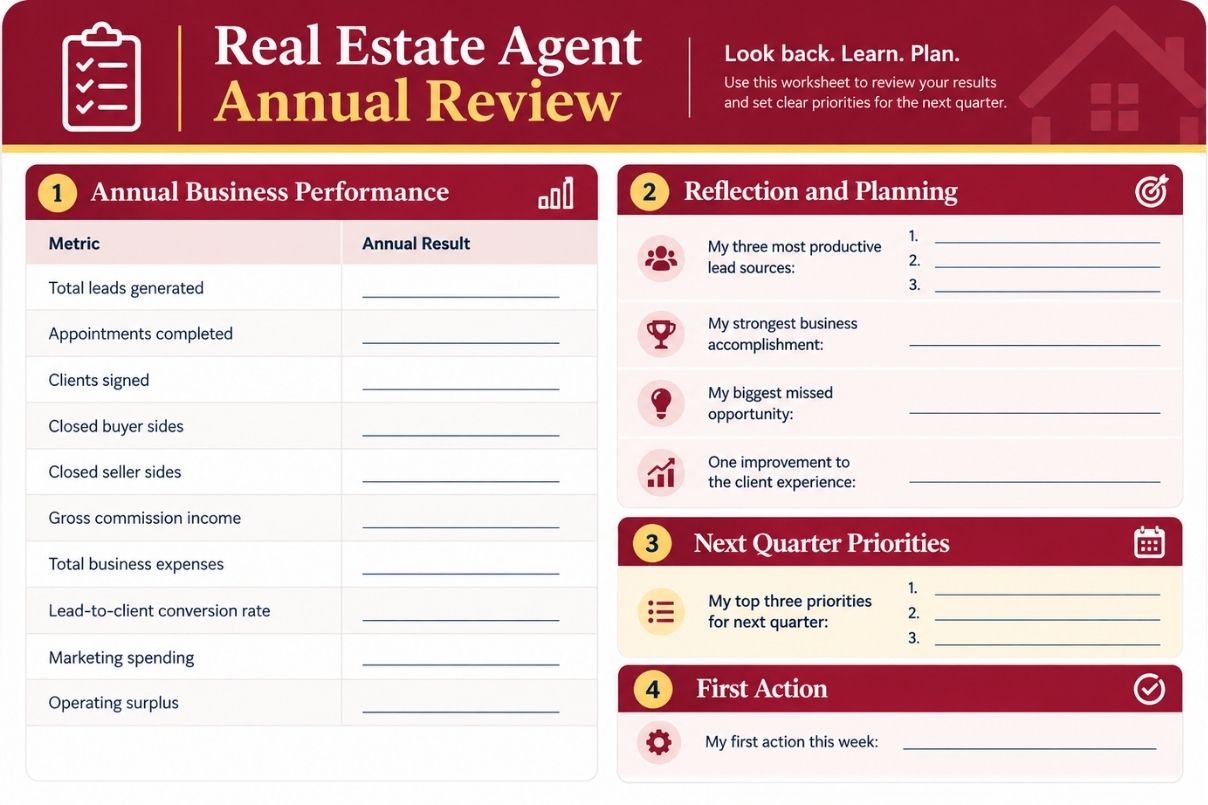
8. Real Estate Agent Annual Review
Turn Your Review Into a Better Business Plan
A real estate agent year-end business review is more than an exercise in recording transactions and expenses. It is an opportunity to understand how your business operates, which relationships and activities produce value, and where focused improvements may make the greatest difference.
Complete the worksheet, identify your three most important priorities, and schedule your first quarterly progress review.
The most useful business plan is one you can measure, revisit, and improve.
Grow Your Real Estate Career With the Right Support
Building a successful real estate business takes more than hard work. The right training, tools, guidance, and professional environment can help agents develop stronger systems and grow with confidence.
Interested in learning more about The Southside Group Real Estate?
FROM OUR BLOG


Charles County Events This Weekend | October 29 – November 1, 2026
Charles County events this weekend are bringing Halloween excitement, spooky adventures, community celebrations, and plenty of opportunities to enjoy Southern Maryland! Whether you're searching for Halloween events near Waldorf, free trunk-or-treat activities, or something fun to do in La Plata and

St. Mary's County Events This Weekend | October 29 – November 1, 2026
St. Mary's County events this weekend bring together Halloween celebrations, live music, corn mazes, creative activities, and community gatherings across Southern Maryland! Whether you're searching for family-friendly fun near Lexington Park, a night of music in Leonardtown, or seasonal adventures a

Southern Maryland Mold Prevention: Homeowner Guide
Southern Maryland Mold Prevention: How to Protect Your Home in Humid Weather Humidity is part of life in Southern Maryland. Between warm summers, heavy rain, and seasonal temperature changes, homeowners in St. Mary's, Calvert, and Charles counties have good reasons to pay attention to moisture insid